2YDM | pdb_00002ydm

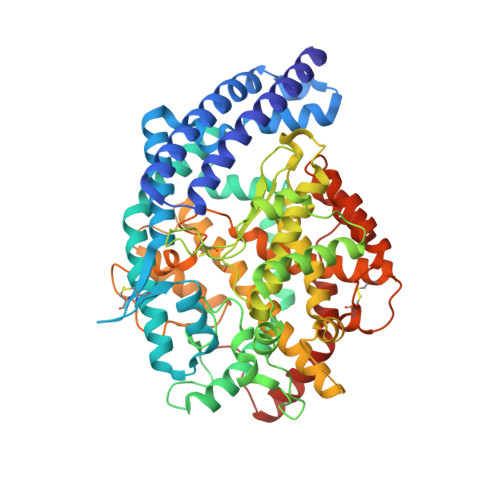
Structural characterization of angiotensin-I converting enzyme in complex with a selenium analogue of captopril


Experimental Data Snapshot

  • Method: X-RAY DIFFRACTION
  • Resolution: 2.44 Å
  • R-Value Free: 
    0.263 (Depositor), 0.260 (DCC) 
  • R-Value Work: 
    0.214 (Depositor), 0.210 (DCC) 
  • R-Value Observed: 
    0.217 (Depositor) 

Starting Model: experimental
View more details

wwPDB Validation 3D Report Full Report

Validation slider image for 2YDM

Ligand Structure Quality Assessment 


This is version 3.0 of the entry. See complete history

Literature

Structural Characterization of Angiotensin-I Converting Enzyme in Complex with a Selenium Analogue of Captopril

Akif, M.Masuyer, G.Schwager, S.L.U.Bhuyan, B.J.Mugesh, G.Isaac, R.E.Sturrock, E.D.Acharya, K.R.

(2011) FEBS J 278: 3644

  • DOI: https://doi.org/10.1111/j.1742-4658.2011.08276.x
  • Primary Citation Related Structures: 
    2YDM, 3ZQZ

  • PubMed Abstract: 

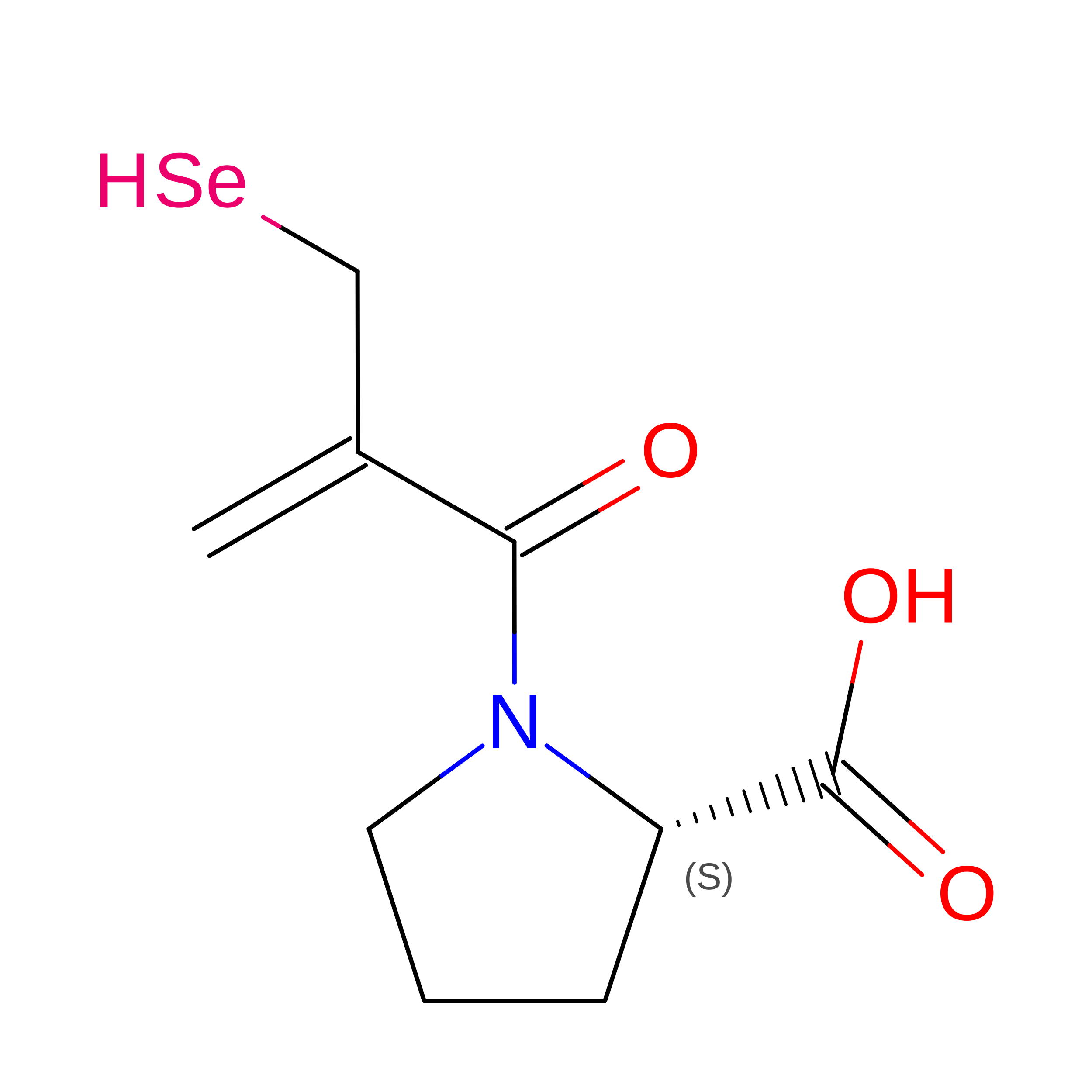
    Human somatic angiotensin I-converting enzyme (ACE), a zinc-dependent dipeptidyl carboxypeptidase, is central to the regulation of the renin-angiotensin aldosterone system. It is a well-known target for combating hypertension and related cardiovascular diseases. In a recent study by Bhuyan and Mugesh [Org. Biomol. Chem. (2011) 9, 1356-1365], it was shown that the selenium analogues of captopril (a well-known clinical inhibitor of ACE) not only inhibit ACE, but also protect against peroxynitrite-mediated nitration of peptides and proteins. Here, we report the crystal structures of human testis ACE (tACE) and a homologue of ACE, known as AnCE, from Drosophila melanogaster in complex with the most promising selenium analogue of captopril (SeCap) determined at 2.4 and 2.35 Å resolution, respectively. The inhibitor binds at the active site of tACE and AnCE in an analogous fashion to that observed for captopril and provide the first examples of a protein-selenolate interaction. These new structures of tACE-SeCap and AnCE-SeCap inhibitor complexes presented here provide important information for further exploration of zinc coordinating selenium-based ACE inhibitor pharmacophores with significant antioxidant activity.


  • Organizational Affiliation
    • Department of Biology and Biochemistry, University of Bath, Bath, UK.

Macromolecule Content 

  • Total Structure Weight: 69.31 kDa 
  • Atom Count: 4,811 
  • Modeled Residue Count: 575 
  • Deposited Residue Count: 589 
  • Unique protein chains: 1

Macromolecules

Find similar proteins by:|  3D Structure
Entity ID: 1
MoleculeChains  Sequence LengthOrganismDetailsImage
ANGIOTENSIN CONVERTING ENZYME589Homo sapiensMutation(s): 0 
EC: 3.4.15.1
UniProt & NIH Common Fund Data Resources
Find proteins for P12821 (Homo sapiens)
Explore P12821 
Go to UniProtKB:  P12821
PHAROS:  P12821
GTEx:  ENSG00000159640 
Entity Groups
Sequence Clusters30% Identity50% Identity70% Identity90% Identity95% Identity100% Identity
UniProt GroupP12821
Glycosylation
Glycosylation Sites: 2Go to GlyGen: P12821-1
Sequence Annotations
Expand
Reference Sequence

Oligosaccharides

Help  
Entity ID: 2
MoleculeChains Length2D Diagram GlycosylationD Interactions
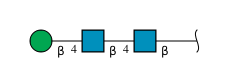
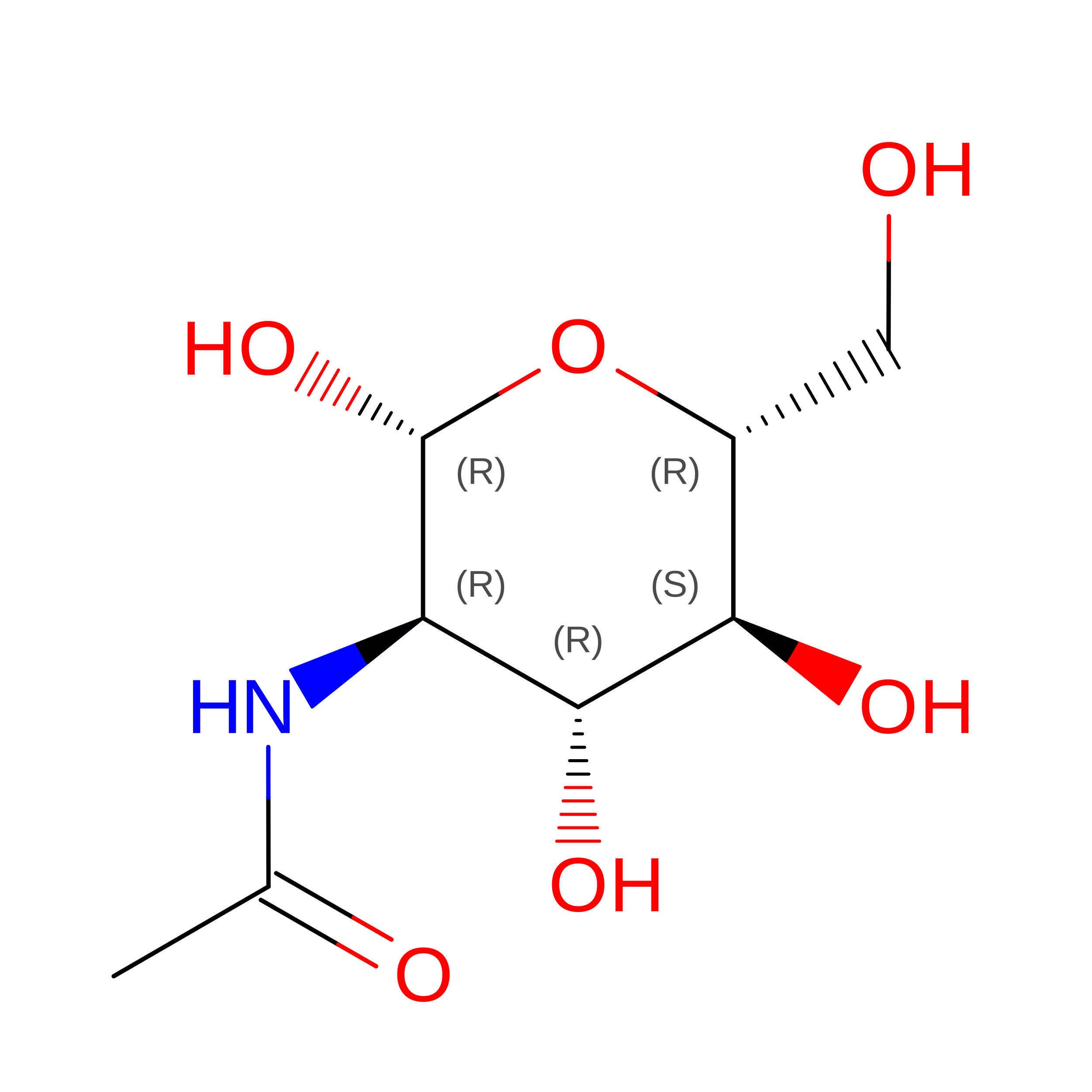
beta-D-mannopyranose-(1-4)-2-acetamido-2-deoxy-beta-D-glucopyranose-(1-4)-2-acetamido-2-deoxy-beta-D-glucopyranose
B
3N-Glycosylation
Glycosylation Resources
GlyTouCan: G15407YE
GlyCosmos: G15407YE
GlyGen: G15407YE

Experimental Data & Validation

Experimental Data

  • Method: X-RAY DIFFRACTION
  • Resolution: 2.44 Å
  • R-Value Free:  0.263 (Depositor), 0.260 (DCC) 
  • R-Value Work:  0.214 (Depositor), 0.210 (DCC) 
  • R-Value Observed: 0.217 (Depositor) 
Space Group: P 21 21 21
Unit Cell:
Length ( Å )Angle ( ˚ )
a = 56.143α = 90
b = 84.533β = 90
c = 132.27γ = 90
Software Package:
Software NamePurpose
REFMACrefinement
XDSdata reduction
SCALAdata scaling
PHASERphasing

Structure Validation

View Full Validation Report


Ligand Structure Quality Assessment 


Entry History 

Deposition Data

Revision History  (Full details and data files)

  • Version 1.0: 2011-09-14
    Type: Initial release
  • Version 1.1: 2011-10-19
    Changes: Database references
  • Version 1.2: 2012-11-21
    Changes: Database references
  • Version 2.0: 2020-07-29
    Type: Remediation
    Reason: Carbohydrate remediation
    Changes: Advisory, Atomic model, Data collection, Derived calculations, Other, Structure summary
  • Version 2.1: 2023-12-20
    Changes: Data collection, Database references, Refinement description, Structure summary
  • Version 3.0: 2025-10-01
    Changes: Advisory, Atomic model, Data collection, Derived calculations, Structure summary