2Y0M | pdb_00002y0m

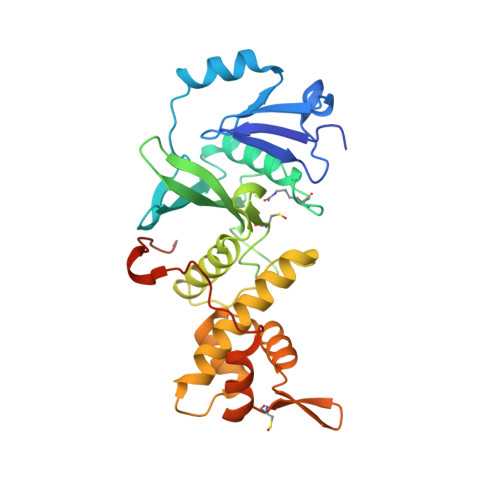
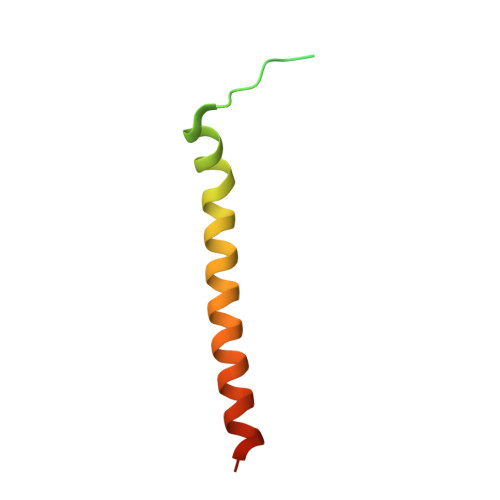
CRYSTAL STRUCTURE OF THE COMPLEX BETWEEN DOSAGE COMPENSATION FACTORS MSL1 AND MOF


Experimental Data Snapshot

  • Method: X-RAY DIFFRACTION
  • Resolution: 2.70 Å
  • R-Value Free: 
    0.256 (Depositor), 0.240 (DCC) 
  • R-Value Work: 
    0.223 (Depositor), 0.207 (DCC) 
  • R-Value Observed: 
    0.225 (Depositor) 

Starting Model: experimental
View more details

wwPDB Validation 3D Report Full Report

Validation slider image for 2Y0M

Ligand Structure Quality Assessment 


This is version 1.4 of the entry. See complete history

Literature

Structural Basis for Mof and Msl3 Recruitment Into the Dosage Compensation Complex by Msl1.

Kadlec, J.Hallacli, E.Lipp, M.Holz, H.Sanchez-Weatherby, J.Cusack, S.Akhtar, A.

(2011) Nat Struct Mol Biol 18: 142

  • DOI: https://doi.org/10.1038/nsmb.1960
  • Primary Citation Related Structures: 
    2Y0M, 2Y0N

  • PubMed Abstract: 

    The male-specific lethal (MSL) complex is required for dosage compensation in Drosophila melanogaster, and analogous complexes exist in mammals. We report structures of binary complexes of mammalian MSL3 and the histone acetyltransferase (HAT) MOF with consecutive segments of MSL1. MSL1 interacts with MSL3 as an extended chain forming an extensive hydrophobic interface, whereas the MSL1-MOF interface involves electrostatic interactions between the HAT domain and a long helix of MSL1. This structure provides insights into the catalytic mechanism of MOF and enables us to show analogous interactions of MOF with NSL1. In Drosophila, selective disruption of Msl1 interactions with Msl3 or Mof severely affects Msl1 targeting to the body of dosage-compensated genes and several high-affinity sites, without affecting promoter binding. We propose that Msl1 acts as a scaffold for MSL complex assembly to achieve specific targeting to the X chromosome.


  • Organizational Affiliation
    • European Molecular Biology Laboratory, Grenoble, France.

Macromolecule Content 

  • Total Structure Weight: 43.48 kDa 
  • Atom Count: 2,704 
  • Modeled Residue Count: 315 
  • Deposited Residue Count: 361 
  • Unique protein chains: 2

Macromolecules

Find similar proteins by:|  3D Structure
Entity ID: 1
MoleculeChains  Sequence LengthOrganismDetailsImage
PROBABLE HISTONE ACETYLTRANSFERASE MYST1287Homo sapiensMutation(s): 0 
EC: 2.3.1 (UniProt), 2.3.1.48 (UniProt)
UniProt & NIH Common Fund Data Resources
Find proteins for Q9H7Z6 (Homo sapiens)
Explore Q9H7Z6 
Go to UniProtKB:  Q9H7Z6
PHAROS:  Q9H7Z6
GTEx:  ENSG00000103510 
Entity Groups
Sequence Clusters30% Identity50% Identity70% Identity90% Identity95% Identity100% Identity
UniProt GroupQ9H7Z6
Sequence Annotations
Expand
Reference Sequence
Find similar proteins by:|  3D Structure
Entity ID: 2
MoleculeChains  Sequence LengthOrganismDetailsImage
MALE-SPECIFIC LETHAL 1 HOMOLOG74Mus musculusMutation(s): 0 
UniProt & NIH Common Fund Data Resources
Find proteins for Q6PDM1 (Mus musculus)
Explore Q6PDM1 
Go to UniProtKB:  Q6PDM1
IMPC:  MGI:1921276
Entity Groups
Sequence Clusters30% Identity50% Identity70% Identity90% Identity95% Identity100% Identity
UniProt GroupQ6PDM1
Sequence Annotations
Expand
Reference Sequence

Small Molecules

Modified Residues  2 Unique
IDChains TypeFormula2D DiagramParent
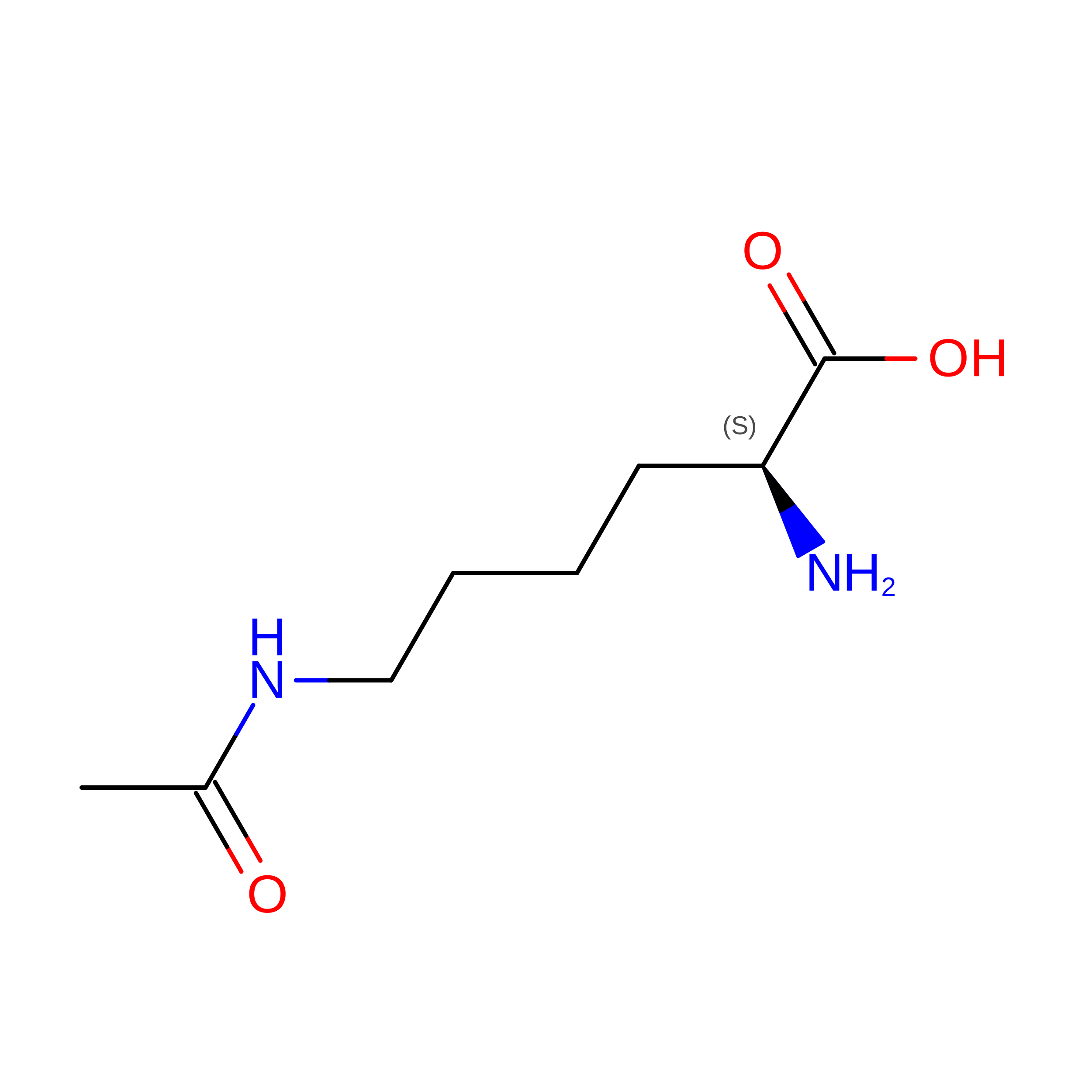
ALY
Query on ALY
A
L-PEPTIDE LINKINGC8 H16 N2 O3LYS
CSO
Query on CSO
A
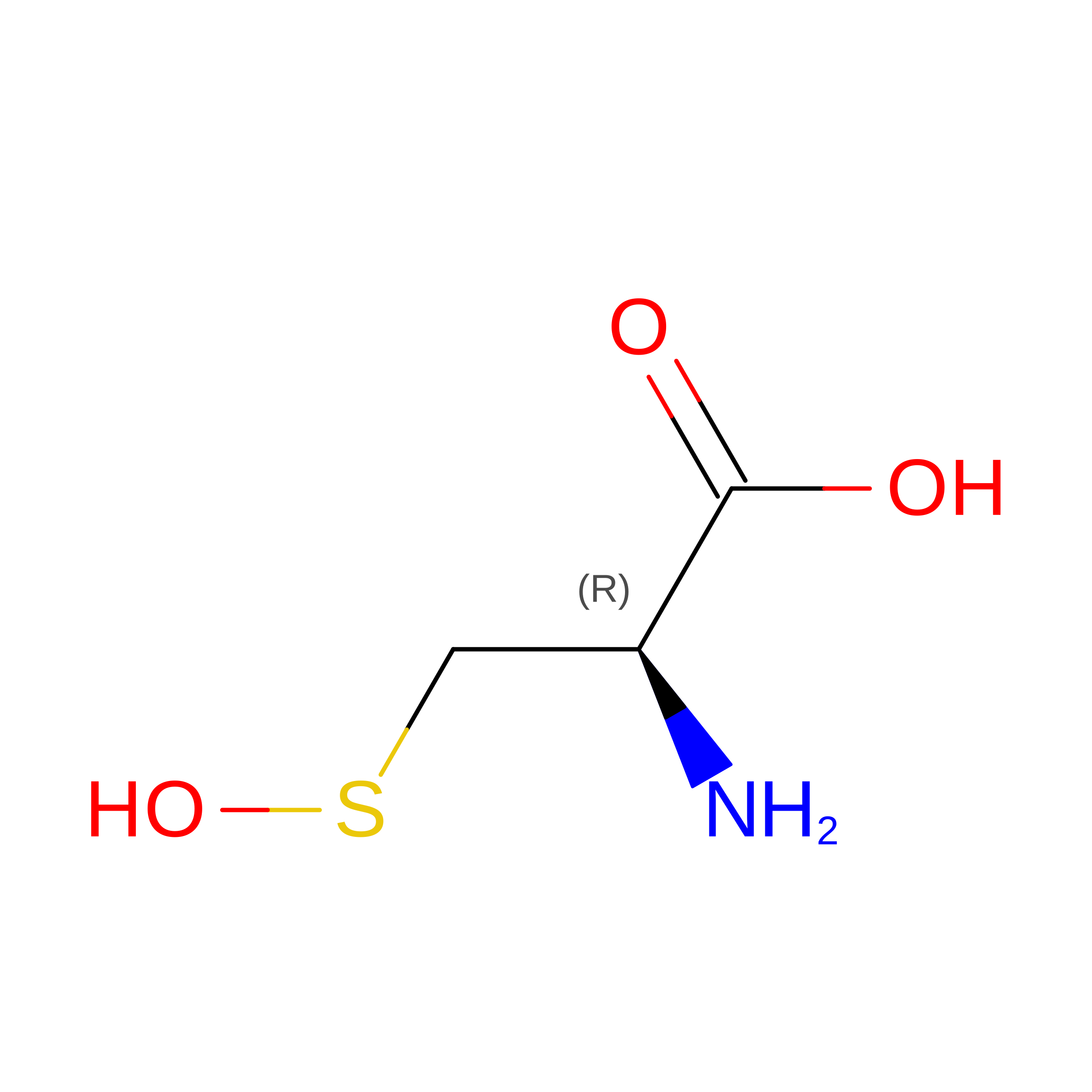
L-PEPTIDE LINKINGC3 H7 N O3 SCYS

Experimental Data & Validation

Experimental Data

  • Method: X-RAY DIFFRACTION
  • Resolution: 2.70 Å
  • R-Value Free:  0.256 (Depositor), 0.240 (DCC) 
  • R-Value Work:  0.223 (Depositor), 0.207 (DCC) 
  • R-Value Observed: 0.225 (Depositor) 
Space Group: I 41 2 2
Unit Cell:
Length ( Å )Angle ( ˚ )
a = 180.94α = 90
b = 180.94β = 90
c = 80.75γ = 90
Software Package:
Software NamePurpose
REFMACrefinement
XDSdata reduction
XSCALEdata scaling
PHASERphasing

Structure Validation

View Full Validation Report


Ligand Structure Quality Assessment 


Entry History 

Deposition Data

Revision History  (Full details and data files)

  • Version 1.0: 2011-01-12
    Type: Initial release
  • Version 1.1: 2011-05-08
    Changes: Version format compliance
  • Version 1.2: 2011-07-13
    Changes: Version format compliance
  • Version 1.3: 2023-12-20
    Changes: Data collection, Database references, Derived calculations, Other, Refinement description
  • Version 1.4: 2024-11-06
    Changes: Structure summary