2XOM | pdb_00002xom

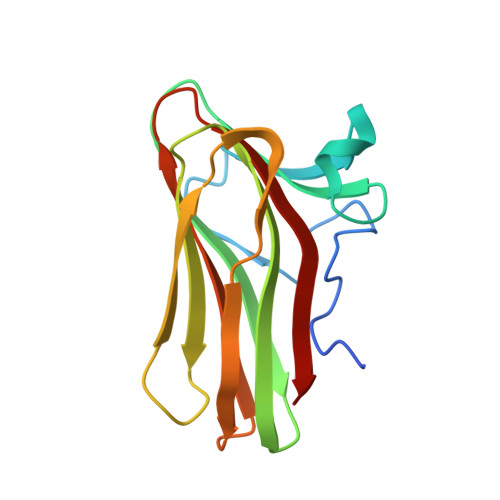
Atomic resolution structure of TmCBM61 in complex with beta-1,4- galactotriose


Experimental Data Snapshot

  • Method: X-RAY DIFFRACTION
  • Resolution: 0.95 Å
  • R-Value Free: 
    0.120 (Depositor), 0.130 (DCC) 
  • R-Value Work: 
    0.104 (Depositor), 0.116 (DCC) 
  • R-Value Observed: 
    0.105 (Depositor) 

wwPDB Validation 3D Report Full Report

Validation slider image for 2XOM

This is version 2.1 of the entry. See complete history

Literature

Recognition of the Helical Structure of Beta-1,4-Galactan by a New Family of Carbohydrate-Binding Modules.

Cid, M.Pedersen, H.L.Kaneko, S.Coutinho, P.M.Henrissat, B.Willats, W.G.T.Boraston, A.B.

(2010) J Biological Chem 285: 35999

  • DOI: https://doi.org/10.1074/jbc.M110.166330
  • Primary Citation Related Structures: 
    2XOM, 2XON

  • PubMed Abstract: 

    The microbial enzymes that depolymerize plant cell wall polysaccharides, ultimately promoting energy liberation and carbon recycling, are typically complex in their modularity and often contain carbohydrate-binding modules (CBMs). Here, through analysis of an unknown module from a Thermotoga maritima endo-β-1,4-galactanase, we identify a new family of CBMs that are most frequently found appended to proteins with β-1,4-galactanase activity. Polysaccharide microarray screening, immunofluorescence microscopy, and biochemical analysis of the isolated module demonstrate the specificity of the module, here called TmCBM61, for β-1,4-linked galactose-containing ligands, making it the founding member of family CBM61. The ultra-high resolution X-ray crystal structures of TmCBM61 (0.95 and 1.4 Å resolution) in complex with β-1,4-galactotriose reveal the molecular basis of the specificity of the CBM for β-1,4-galactan. Analysis of these structures provides insight into the recognition of an unexpected helical galactan conformation through a mode of binding that resembles the recognition of starch.


  • Organizational Affiliation
    • Department Biochemistry and Microbiology, University of Victoria, Victoria, British Columbia V8W 3P6, Canada.

Macromolecule Content 

  • Total Structure Weight: 17.76 kDa 
  • Atom Count: 1,614 
  • Modeled Residue Count: 145 
  • Deposited Residue Count: 152 
  • Unique protein chains: 1

Macromolecules

Find similar proteins by:|  3D Structure
Entity ID: 1
MoleculeChains  Sequence LengthOrganismDetailsImage
ARABINOGALACTAN ENDO-1,4-BETA-GALACTOSIDASE152Thermotoga maritimaMutation(s): 0 
EC: 3.2.1.89
UniProt
Find proteins for Q9X0S8 (Thermotoga maritima (strain ATCC 43589 / DSM 3109 / JCM 10099 / NBRC 100826 / MSB8))
Explore Q9X0S8 
Go to UniProtKB:  Q9X0S8
Entity Groups
Sequence Clusters30% Identity50% Identity70% Identity90% Identity95% Identity100% Identity
UniProt GroupQ9X0S8
Sequence Annotations
Expand
Reference Sequence

Oligosaccharides

Help  
Entity ID: 2
MoleculeChains Length2D Diagram GlycosylationD Interactions
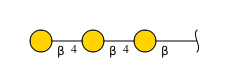
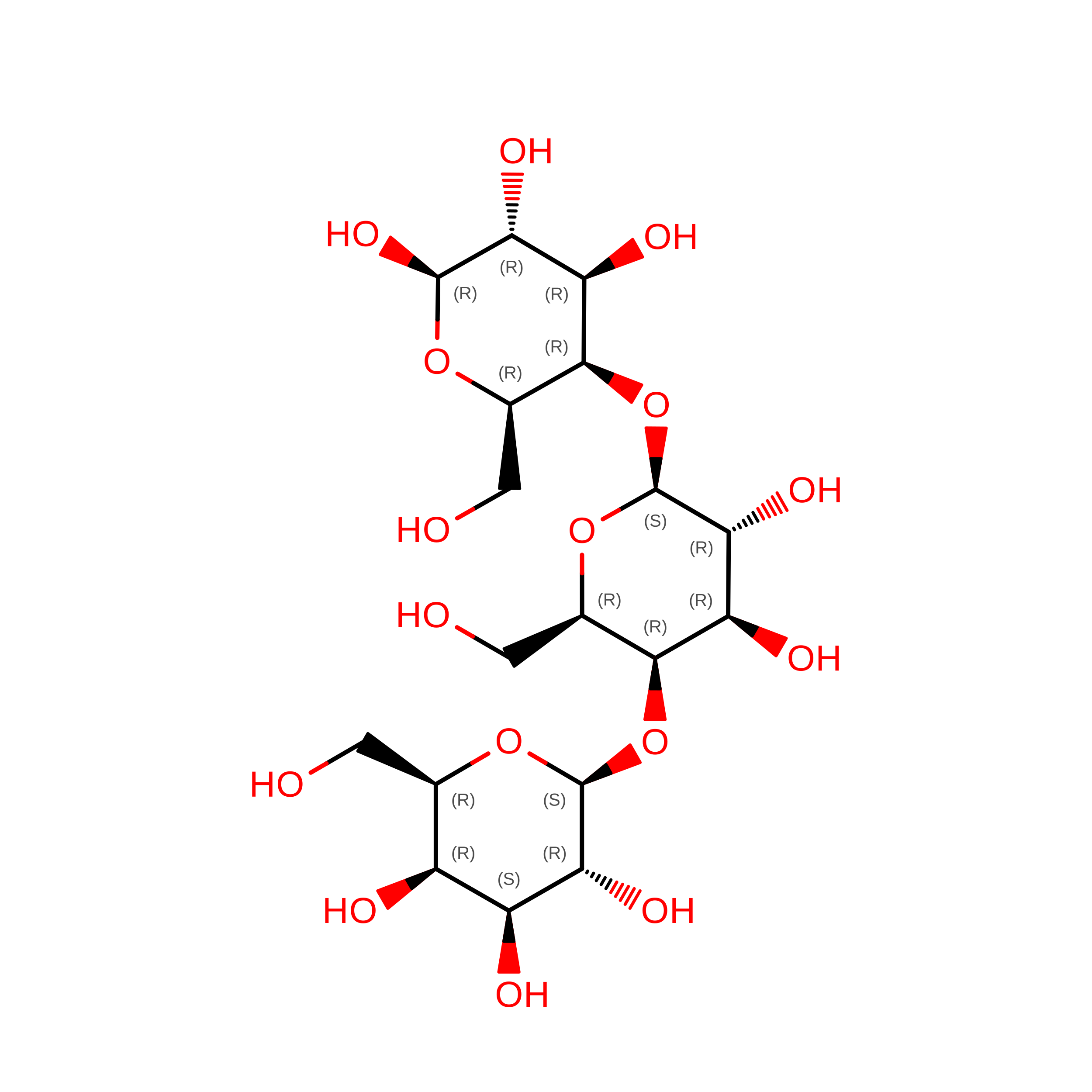
beta-D-galactopyranose-(1-4)-beta-D-galactopyranose-(1-4)-beta-D-galactopyranose
B
3N/A
Glycosylation Resources
GlyTouCan: G06996VN
GlyCosmos: G06996VN
GlyGen: G06996VN

Small Molecules

Ligands 1 Unique
IDChains Name / Formula / InChI Key2D Diagram3D Interactions
CA

Query on CA


Download:Ideal Coordinates CCD File
C [auth A]CALCIUM ION
Ca
BHPQYMZQTOCNFJ-UHFFFAOYSA-N

Biologically Interesting Molecules (External Reference) 

1 Unique

Experimental Data & Validation

Experimental Data

  • Method: X-RAY DIFFRACTION
  • Resolution: 0.95 Å
  • R-Value Free:  0.120 (Depositor), 0.130 (DCC) 
  • R-Value Work:  0.104 (Depositor), 0.116 (DCC) 
  • R-Value Observed: 0.105 (Depositor) 
Space Group: C 1 2 1
Unit Cell:
Length ( Å )Angle ( ˚ )
a = 82.915α = 90
b = 31.92β = 128.28
c = 67.79γ = 90
Software Package:
Software NamePurpose
REFMACrefinement
MOSFLMdata reduction
SCALAdata scaling
ACORNphasing

Structure Validation

View Full Validation Report


Entry History 

Deposition Data

Revision History  (Full details and data files)

  • Version 1.0: 2010-09-08
    Type: Initial release
  • Version 1.1: 2011-05-12
    Changes: Version format compliance
  • Version 1.2: 2011-07-13
    Changes: Version format compliance
  • Version 2.0: 2020-07-29
    Type: Remediation
    Reason: Carbohydrate remediation
    Changes: Atomic model, Data collection, Derived calculations, Other, Structure summary
  • Version 2.1: 2024-05-08
    Changes: Data collection, Database references, Structure summary