2XB9 | pdb_00002xb9

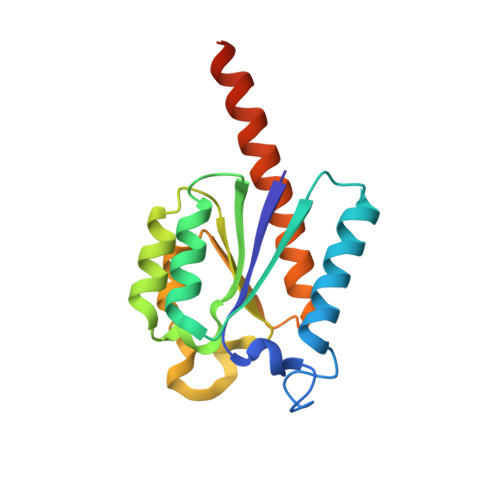
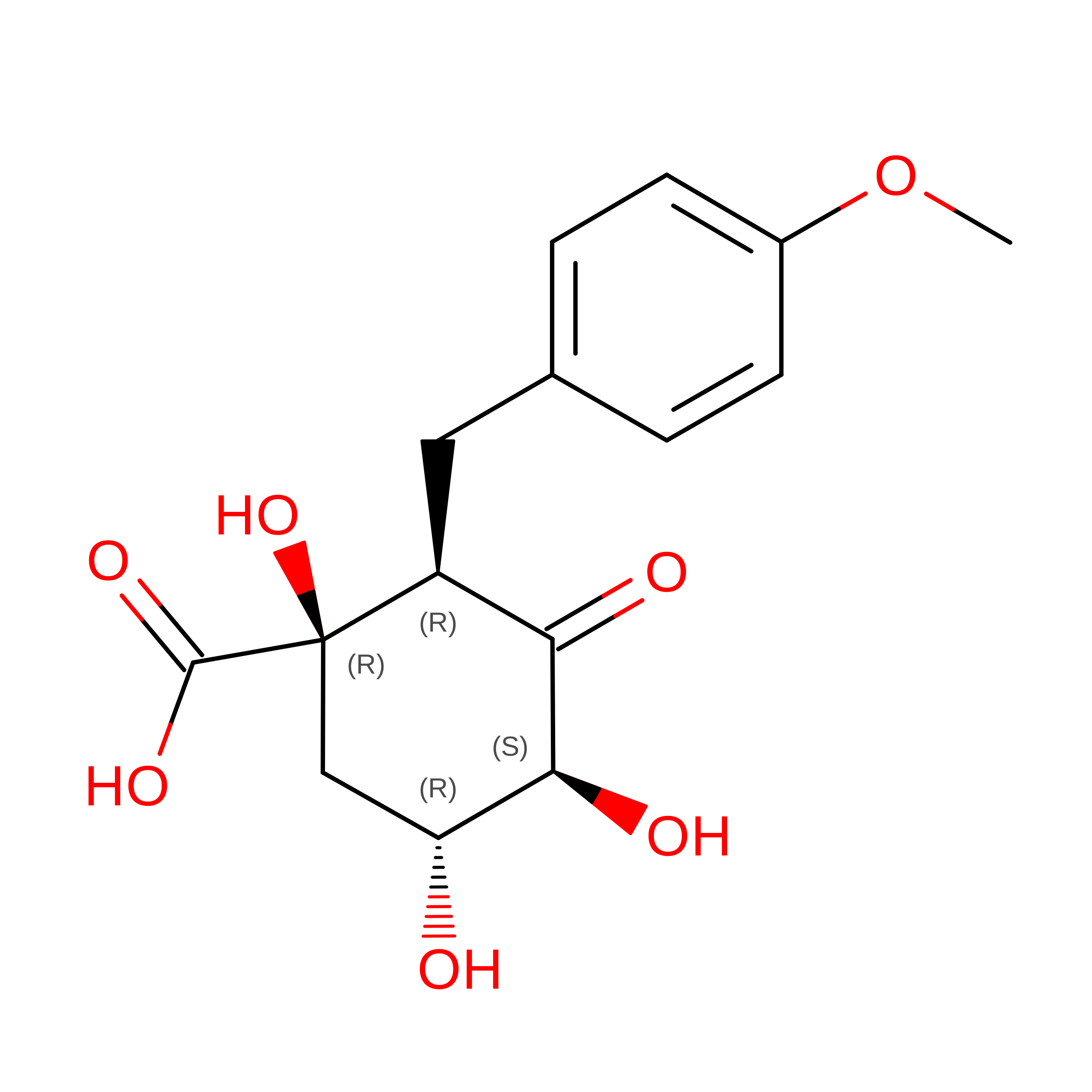
Structure of Helicobacter pylori type II dehydroquinase in complex with inhibitor compound (2R)-2-(4-methoxybenzyl)-3-dehydroquinic acid


Experimental Data Snapshot

  • Method: X-RAY DIFFRACTION
  • Resolution: 2.75 Å
  • R-Value Free: 
    0.250 (Depositor), 0.255 (DCC) 
  • R-Value Work: 
    0.185 (Depositor), 0.188 (DCC) 
  • R-Value Observed: 
    0.189 (Depositor) 

Starting Model: experimental
View more details

wwPDB Validation 3D Report Full Report

Validation slider image for 2XB9

Ligand Structure Quality Assessment 


This is version 1.5 of the entry. See complete history

Literature

Understanding the Key Factors that Control the Inhibition of Type II Dehydroquinase by (2R)-2- Benzyl-3-Dehydroquinic Acids.

Peon, A.Otero, J.M.Tizon, L.Prazeres, V.F.V.Llamas-Saiz, A.L.Fox, G.C.van Raaij, M.J.Lamb, H.Hawkins, A.R.Gago, F.Castedo, L.Gonzalez-Bello, C.

(2010) ChemMedChem 5: 1726

  • DOI: https://doi.org/10.1002/cmdc.201000281
  • Primary Citation Related Structures: 
    2XB8, 2XB9

  • PubMed Abstract: 

    The binding mode of several substrate analogues, (2R)-2-benzyl-3-dehydroquinic acids 4, which are potent reversible competitive inhibitors of type II dehydroquinase (DHQ2), the third enzyme of the shikimic acid pathway, has been investigated by structural and computational studies. The crystal structures of Mycobacterium tuberculosis and Helicobacter pylori DHQ2 in complex with one of the most potent inhibitor, p-methoxybenzyl derivative 4 a, have been solved at 2.40 Å and 2.75 Å, respectively. This has allowed the resolution of the M. tuberculosis DHQ2 loop containing residues 20-25 for the first time. These structures show the key interactions of the aromatic ring in the active site of both enzymes and additionally reveal an important change in the conformation and flexibility of the loop that closes over substrate binding. The loop conformation and the binding mode of compounds 4 b-d has been also studied by molecular dynamics simulations, which suggest that the benzyl group of inhibitors 4 prevent appropriate orientation of the catalytic tyrosine of the loop for proton abstraction and disrupts its basicity.


  • Organizational Affiliation
    • Departamento de Química Orgánica, Universidad de Santiago de Compostela, Santiago de Compostela, Spain.

Macromolecule Content 

  • Total Structure Weight: 56.31 kDa 
  • Atom Count: 3,741 
  • Modeled Residue Count: 474 
  • Deposited Residue Count: 501 
  • Unique protein chains: 1

Macromolecules

Find similar proteins by:|  3D Structure
Entity ID: 1
MoleculeChains  Sequence LengthOrganismDetailsImage
3-DEHYDROQUINATE DEHYDRATASE
A, B, C
167Helicobacter pyloriMutation(s): 0 
EC: 4.2.1.10
UniProt
Find proteins for Q48255 (Helicobacter pylori (strain ATCC 700392 / 26695))
Explore Q48255 
Go to UniProtKB:  Q48255
Entity Groups
Sequence Clusters30% Identity50% Identity70% Identity90% Identity95% Identity100% Identity
UniProt GroupQ48255
Sequence Annotations
Expand
Reference Sequence

Small Molecules

Binding Affinity Annotations 
IDSourceBinding Affinity
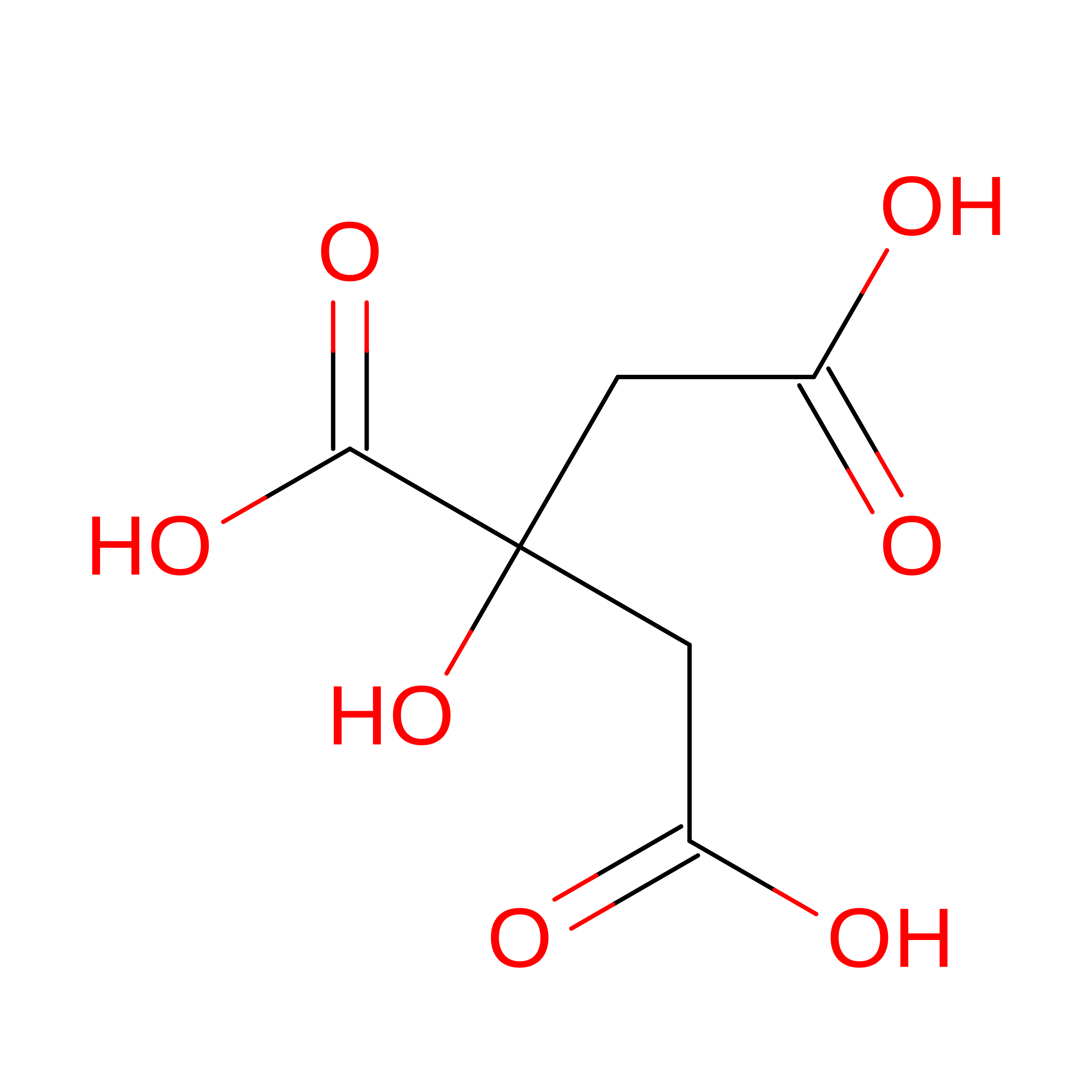
CIT BindingDB:  2XB9 Kd: 2500 (nM) from 1 assay(s)

Experimental Data & Validation

Experimental Data

  • Method: X-RAY DIFFRACTION
  • Resolution: 2.75 Å
  • R-Value Free:  0.250 (Depositor), 0.255 (DCC) 
  • R-Value Work:  0.185 (Depositor), 0.188 (DCC) 
  • R-Value Observed: 0.189 (Depositor) 
Space Group: P 42 2 2
Unit Cell:
Length ( Å )Angle ( ˚ )
a = 100.56α = 90
b = 100.56β = 90
c = 105.449γ = 90
Software Package:
Software NamePurpose
REFMACrefinement
HKL-2000data reduction
HKL-2000data scaling
PHASERphasing

Structure Validation

View Full Validation Report


Ligand Structure Quality Assessment 


Entry History 

Deposition Data

Revision History  (Full details and data files)

  • Version 1.0: 2010-09-15
    Type: Initial release
  • Version 1.1: 2011-07-07
    Changes: Version format compliance
  • Version 1.2: 2011-07-13
    Changes: Version format compliance
  • Version 1.3: 2017-07-05
    Changes: Data collection
  • Version 1.4: 2018-02-07
    Changes: Database references
  • Version 1.5: 2023-12-20
    Changes: Data collection, Database references, Derived calculations, Other, Refinement description