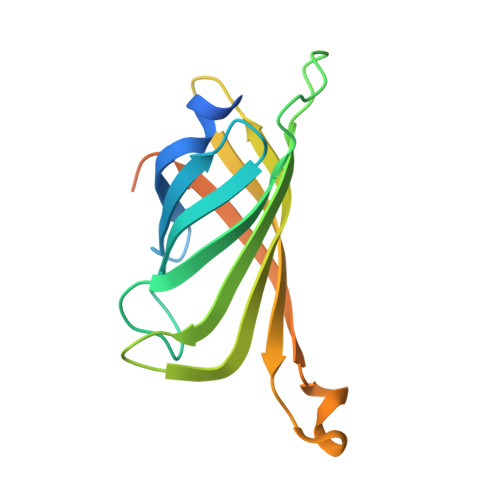
2WPU | pdb_00002wpu

Chaperoned ruthenium metallodrugs that recognize telomeric DNA


Experimental Data Snapshot

  • Method: X-RAY DIFFRACTION
  • Resolution: 1.92 Å
  • R-Value Free: 
    0.198 (Depositor), 0.204 (DCC) 
  • R-Value Work: 
    0.172 (Depositor), 0.179 (DCC) 
  • R-Value Observed: 
    0.173 (Depositor) 

Starting Model: experimental
View more details

wwPDB Validation 3D Report Full Report

Validation slider image for 2WPU

Ligand Structure Quality Assessment 


This is version 1.5 of the entry. See complete history

Literature

Chemo-Genetic Optimization of DNA Recognition by Metallodrugs Using a Presenter-Protein Strategy.

Zimbron, J.M.Sardo, A.Heinisch, T.Wohlschlager, T.Gradinaru, J.Massa, C.Schirmer, T.Creus, M.Ward, T.R.

(2010) Chemistry 16: 12883

  • DOI: https://doi.org/10.1002/chem.201001573
  • Primary Citation Related Structures: 
    2WPU

  • PubMed Abstract: 

    The mode of action of precious metal anticancer metallodrugs is generally believed to involve DNA as a target. However, the poor specificity of such drugs often requires high doses and leads to undesirable side-effects. With the aim of improving the specificity of a ruthenium piano-stool complex towards DNA, we employed a presenter protein strategy based on the biotin-avidin technology. Guided by the X-ray structure of the assembly of streptavidin and a biotinylated piano-stool, we explored the formation of metallodrug-mediated ternary complexes with the presenter protein and DNA. The assemblies bound more strongly to telomere G-quadruplexes than to double-stranded DNA; chemo-genetic modifications (varying the complex or mutating the protein) modulated binding to these targets. We suggest that rational targeting of small molecules by presenter proteins could be exploited to bind metallodrugs to preferred macromolecular targets.


  • Organizational Affiliation
    • University of Basel, Department of Chemistry, Spitalstrasse 51, 4056 Basel, Switzerland.

Macromolecule Content 

  • Total Structure Weight: 17.36 kDa 
  • Atom Count: 1,080 
  • Modeled Residue Count: 122 
  • Deposited Residue Count: 159 
  • Unique protein chains: 1

Macromolecules

Find similar proteins by:|  3D Structure
Entity ID: 1
MoleculeChains  Sequence LengthOrganismDetailsImage
STREPTAVIDIN159Streptomyces avidiniiMutation(s): 0 
UniProt
Find proteins for P22629 (Streptomyces avidinii)
Explore P22629 
Go to UniProtKB:  P22629
Entity Groups
Sequence Clusters30% Identity50% Identity70% Identity90% Identity95% Identity100% Identity
UniProt GroupP22629
Sequence Annotations
Expand
Reference Sequence

Small Molecules

Ligands 3 Unique
IDChains Name / Formula / InChI Key2D Diagram3D Interactions
KYT

Query on KYT


Download:Ideal Coordinates CCD File
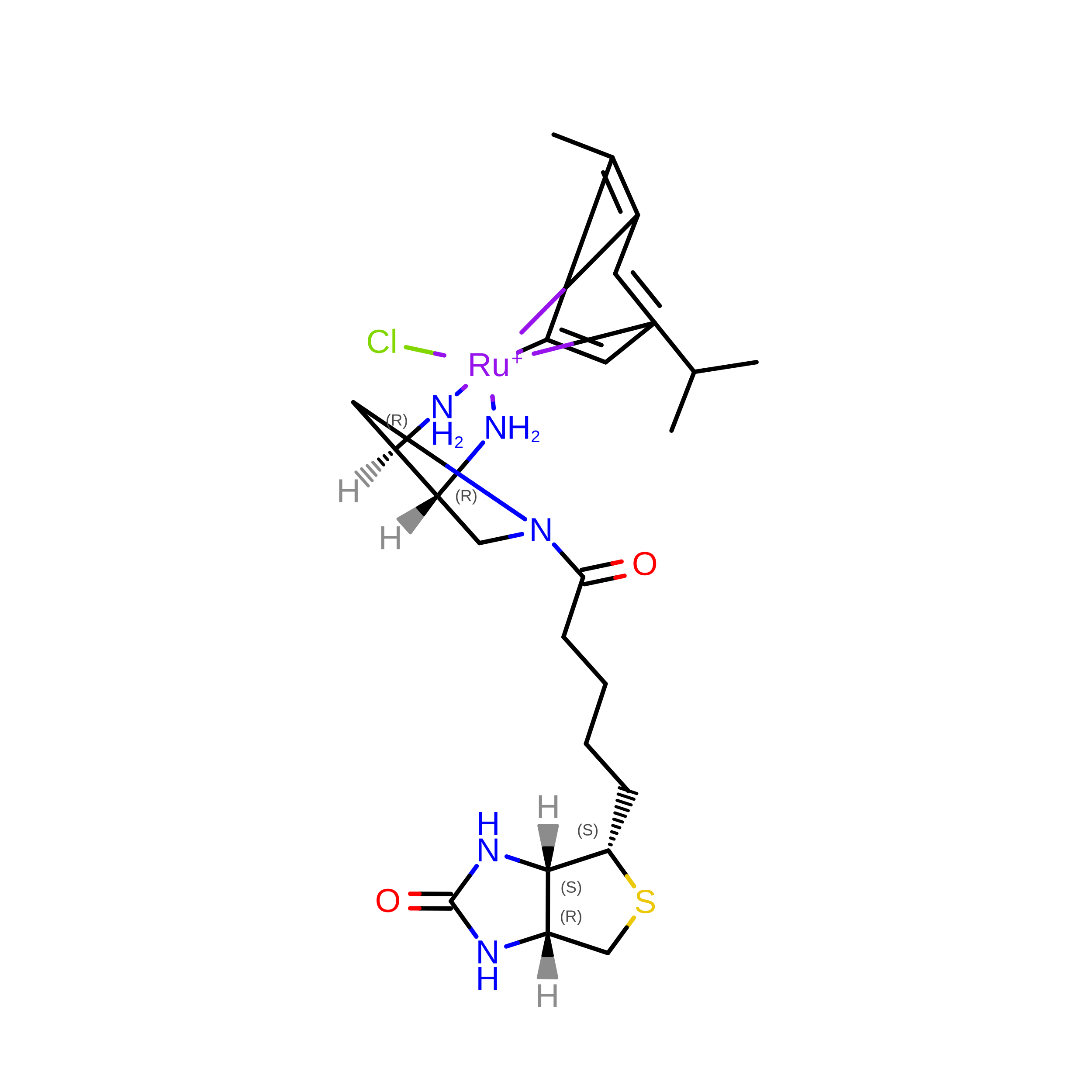
B [auth A](3AS,4S,6AR)-4-(5-((3R,4R)-3,4-DIAMINOPYRROLIDIN-1-YL)-5-OXOPENTYL)TETRAHYDRO-1H-THIENO[3,4-D]IMIDAZOL-2(3H)-ONE-P-CYMENE-CHLORO-RUTHENIUM(III)
C24 H39 Cl N5 O2 Ru S
OJIBJWGHGYGDGX-SNKMZJELSA-M
SO4

Query on SO4


Download:Ideal Coordinates CCD File
C [auth A]SULFATE ION
O4 S
QAOWNCQODCNURD-UHFFFAOYSA-L
GOL

Query on GOL


Download:Ideal Coordinates CCD File
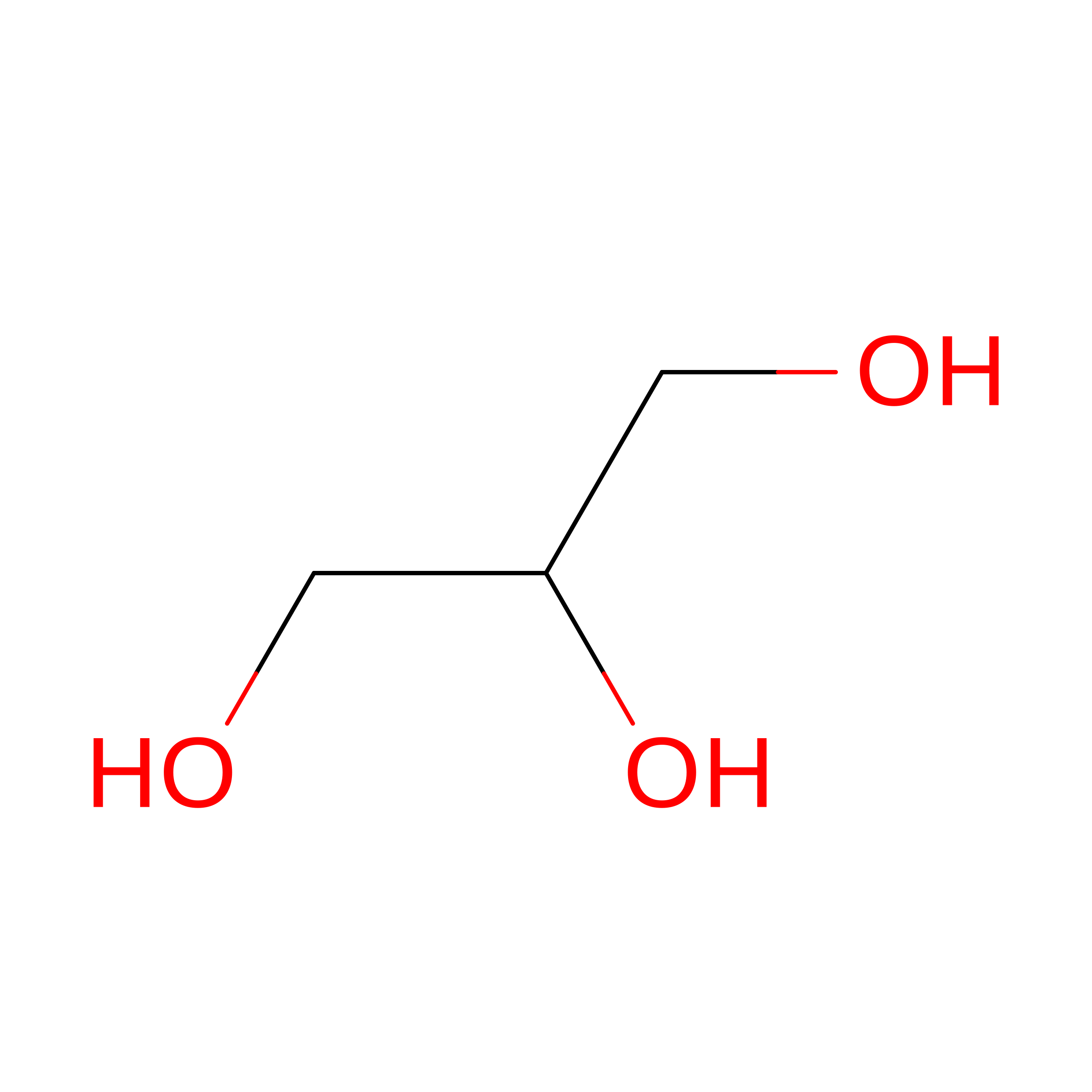
D [auth A]GLYCEROL
C3 H8 O3
PEDCQBHIVMGVHV-UHFFFAOYSA-N

Experimental Data & Validation

Experimental Data

  • Method: X-RAY DIFFRACTION
  • Resolution: 1.92 Å
  • R-Value Free:  0.198 (Depositor), 0.204 (DCC) 
  • R-Value Work:  0.172 (Depositor), 0.179 (DCC) 
  • R-Value Observed: 0.173 (Depositor) 
Space Group: I 41 2 2
Unit Cell:
Length ( Å )Angle ( ˚ )
a = 57.68α = 90
b = 57.68β = 90
c = 183.694γ = 90
Software Package:
Software NamePurpose
REFMACrefinement
MOSFLMdata reduction
SCALAdata scaling
MOLREPphasing

Structure Validation

View Full Validation Report


Ligand Structure Quality Assessment 


Entry History 

Deposition Data

Revision History  (Full details and data files)

  • Version 1.0: 2010-10-13
    Type: Initial release
  • Version 1.1: 2011-05-08
    Changes: Version format compliance
  • Version 1.2: 2011-07-13
    Changes: Version format compliance
  • Version 1.3: 2019-01-30
    Changes: Data collection, Experimental preparation, Other
  • Version 1.4: 2019-02-06
    Changes: Data collection, Experimental preparation
  • Version 1.5: 2023-12-20
    Changes: Data collection, Database references, Derived calculations, Other, Refinement description