2QIM | pdb_00002qim

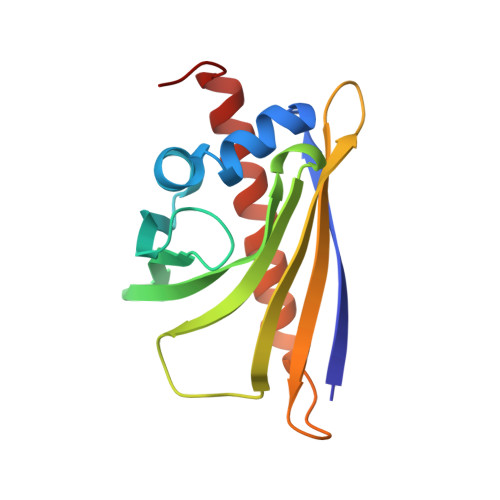
Crystal Structure of Pathogenesis-related Protein LlPR-10.2B from yellow lupine in complex with Cytokinin


Experimental Data Snapshot

  • Method: X-RAY DIFFRACTION
  • Resolution: 1.35 Å
  • R-Value Free: 
    0.194 (Depositor), 0.201 (DCC) 
  • R-Value Work: 
    0.147 (Depositor), 0.152 (DCC) 
  • R-Value Observed: 
    0.148 (Depositor) 

Starting Model: experimental
View more details

wwPDB Validation 3D Report Full Report

Validation slider image for 2QIM

Ligand Structure Quality Assessment 


This is version 1.3 of the entry. See complete history

Literature

Lupinus luteus pathogenesis-related protein as a reservoir for cytokinin.

Fernandes, H.Pasternak, O.Bujacz, G.Bujacz, A.Sikorski, M.M.Jaskolski, M.

(2008) J Mol Biology 378: 1040-1051

  • DOI: https://doi.org/10.1016/j.jmb.2008.03.027
  • Primary Citation Related Structures: 
    2QIM

  • PubMed Abstract: 

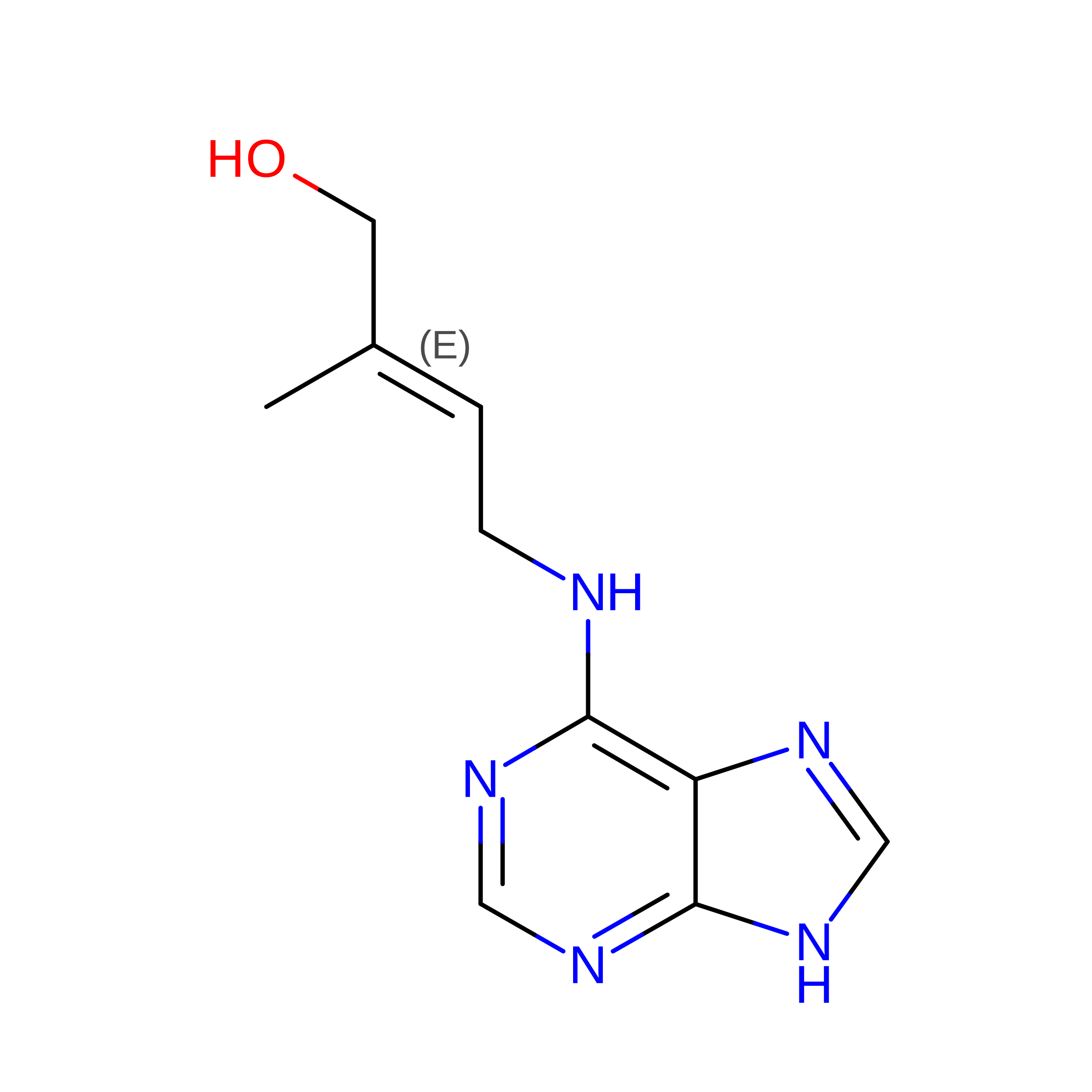
    Plant pathogenesis-related (PR) proteins of class 10 (PR-10) are small and cytosolic. The main feature of their three-dimensional structure is a large cavity between a seven-stranded antiparallel beta-sheet and a long C-terminal alpha-helix. Although PR-10 proteins are abundant in plants, their physiological role remains unknown. Recent data have indicated ligand binding as their possible biological function. The article describes the structure of a complex between a classic PR-10 protein (yellow lupine LlPR-10.2B) and the plant hormone, trans-zeatin. Previously, trans-zeatin binding has been reported in a structurally related cytokinin-specific binding protein, which has a distant sequence relation with classic PR-10 proteins. In the present 1.35 A resolution crystallographic model, three perfectly ordered zeatin molecules are found in the binding cavity of the protein. The fact that three zeatin molecules are bound by the protein when only a fourfold molar excess of the ligand was used indicates an unusual type of affinity for this ligand and suggests that LlPR-10.2B, and perhaps other PR-10 proteins as well, acts as a reservoir of cytokinin molecules in the aqueous environment of the cell.


  • Organizational Affiliation
    • Center for Biocrystallographic Research, Institute of Bioorganic Chemistry, Polish Academy of Sciences, 61-704 Poznan, Poland.

Macromolecule Content 

  • Total Structure Weight: 17.92 kDa 
  • Atom Count: 1,515 
  • Modeled Residue Count: 157 
  • Deposited Residue Count: 158 
  • Unique protein chains: 1

Macromolecules

Find similar proteins by:|  3D Structure
Entity ID: 1
MoleculeChains  Sequence LengthOrganismDetailsImage
PR10.2B158Lupinus luteusMutation(s): 0 
Gene Names: pr10.2bYpr10.2b
EC: 3.1.27
UniProt
Find proteins for Q9LLQ2 (Lupinus luteus)
Explore Q9LLQ2 
Go to UniProtKB:  Q9LLQ2
Entity Groups
Sequence Clusters30% Identity50% Identity70% Identity90% Identity95% Identity100% Identity
UniProt GroupQ9LLQ2
Sequence Annotations
Expand
Reference Sequence

Experimental Data & Validation

Experimental Data

  • Method: X-RAY DIFFRACTION
  • Resolution: 1.35 Å
  • R-Value Free:  0.194 (Depositor), 0.201 (DCC) 
  • R-Value Work:  0.147 (Depositor), 0.152 (DCC) 
  • R-Value Observed: 0.148 (Depositor) 
Space Group: P 65
Unit Cell:
Length ( Å )Angle ( ˚ )
a = 73.822α = 90
b = 73.822β = 90
c = 67.212γ = 120
Software Package:
Software NamePurpose
REFMACrefinement
MAR345dtbdata collection
DENZOdata reduction
SCALEPACKdata scaling
AMoREphasing

Structure Validation

View Full Validation Report


Ligand Structure Quality Assessment 


Entry History 

Deposition Data

Revision History  (Full details and data files)

  • Version 1.0: 2008-04-29
    Type: Initial release
  • Version 1.1: 2011-07-13
    Changes: Non-polymer description, Version format compliance
  • Version 1.2: 2024-02-21
    Changes: Data collection, Database references, Derived calculations
  • Version 1.3: 2024-04-03
    Changes: Refinement description