2J3K | pdb_00002j3k

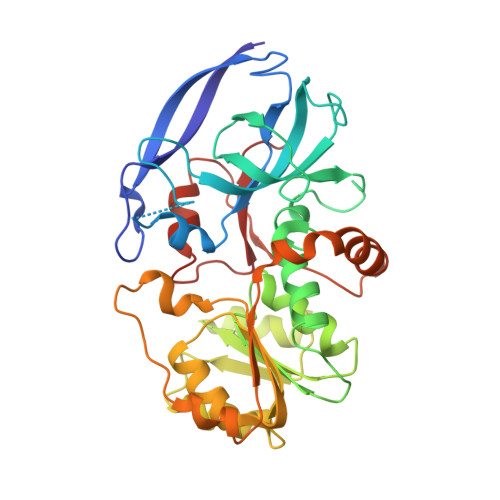
Crystal structure of Arabidopsis thaliana Double Bond Reductase (AT5G16970)-Ternary Complex II


Experimental Data Snapshot

  • Method: X-RAY DIFFRACTION
  • Resolution: 2.80 Å
  • R-Value Work: 
    0.199 (Depositor) 
  • R-Value Observed: 
    0.199 (Depositor) 

wwPDB Validation 3D Report Full Report

Validation slider image for 2J3K

This is version 1.6 of the entry. See complete history

Literature

Mechanistic and structural studies of apoform, binary, and ternary complexes of the Arabidopsis alkenal double bond reductase At5g16970.

Youn, B.Kim, S.J.Moinuddin, S.G.Lee, C.Bedgar, D.L.Harper, A.R.Davin, L.B.Lewis, N.G.Kang, C.

(2006) J Biological Chem 281: 40076-40088

  • DOI: https://doi.org/10.1074/jbc.M605900200
  • Primary Citation Related Structures: 
    2J3H, 2J3I, 2J3J, 2J3K

  • PubMed Abstract: 

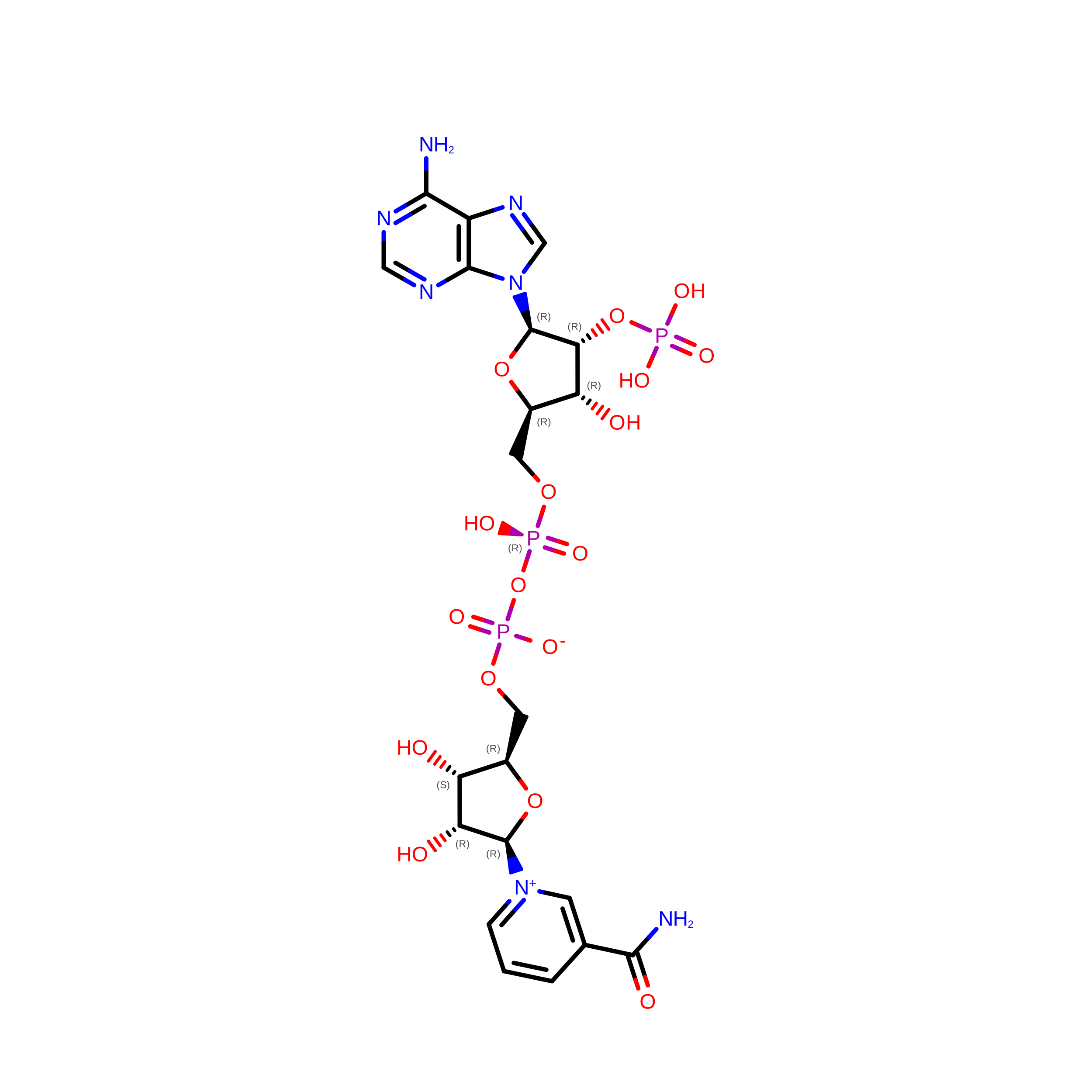
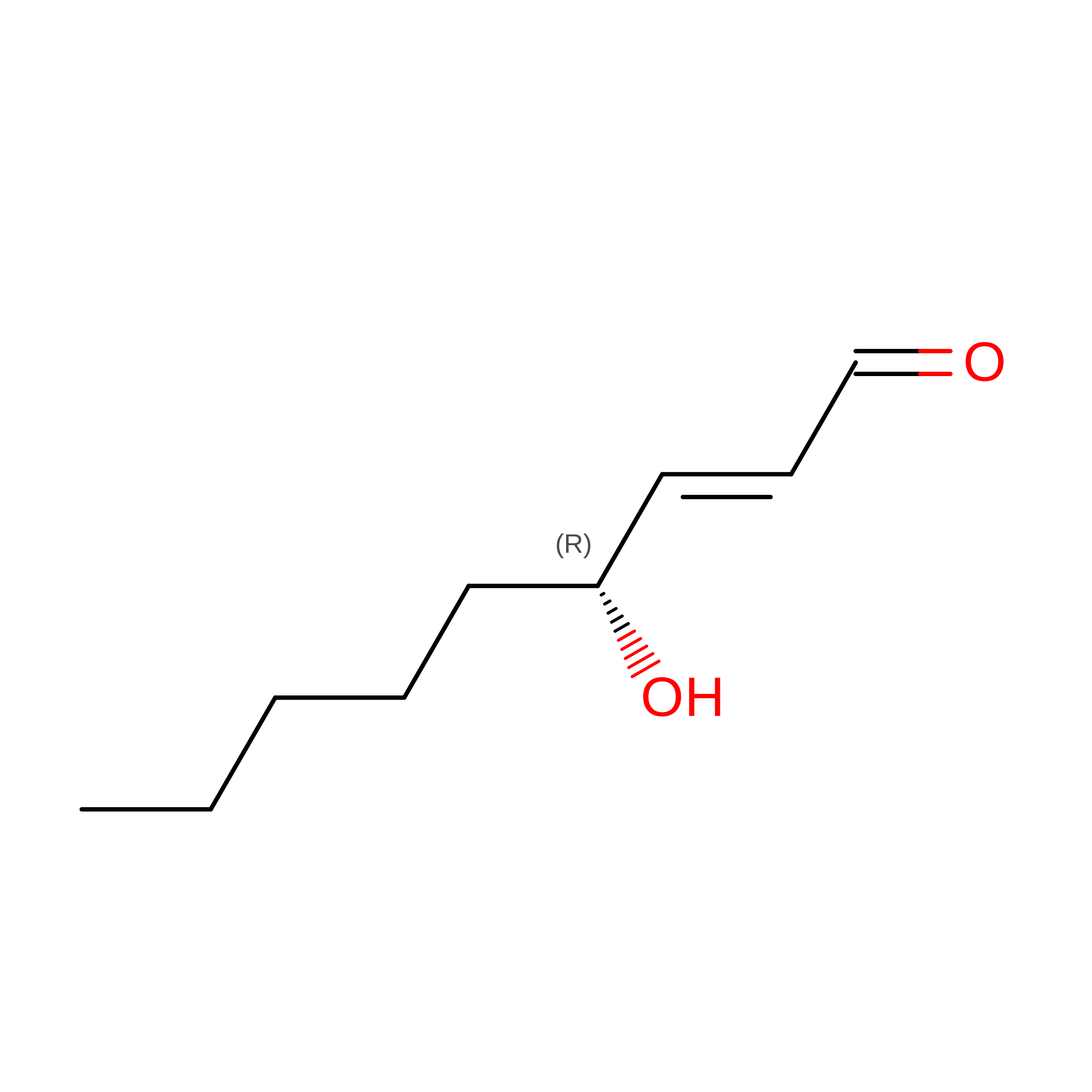
    In this study, we determined the crystal structures of the apoform, binary, and ternary complexes of the Arabidopsis alkenal double bond reductase encoded by At5g16970. This protein, one of 11 homologues in Arabidopsis thaliana, is most closely related to the Pinus taeda phenylpropenal double bond reductase, involved in, for example, heartwood formation. Both enzymes also have essential roles in plant defense, and can function by catalyzing the reduction of the 7-8-double bond of phenylpropanal substrates, such as p-coumaryl and coniferyl aldehydes in vitro. At5g16970 is also capable of reducing toxic substrates with the same alkenal functionality, such as 4-hydroxy-(2E)-nonenal. The overall fold of At5g16970 is similar to that of the zinc-independent medium chain dehydrogenase/reductase superfamily, the members of which have two domains and are dimeric in nature, i.e. in contrast to their original classification as being zinc-containing oxidoreductases. As provisionally anticipated from the kinetic data, the shape of the binding pocket can readily accommodate p-coumaryl aldehyde, coniferyl aldehyde, 4-hydroxy-(2E)-nonenal, and 2-alkenals. However, the enzyme kinetic data among these potential substrates differ, favoring p-coumaryl aldehyde. Tyr-260 is provisionally proposed to function as a general acid/base for hydride transfer. A catalytic mechanism for this reduction, and its applicability to related important detoxification mammalian proteins, is also proposed.


  • Organizational Affiliation
    • School of Molecular Biosciences, Washington State University, Pullman, Washington 99164-4660, USA.

Macromolecule Content 

  • Total Structure Weight: 78.15 kDa 
  • Atom Count: 5,556 
  • Modeled Residue Count: 681 
  • Deposited Residue Count: 690 
  • Unique protein chains: 1

Macromolecules

Find similar proteins by:|  3D Structure
Entity ID: 1
MoleculeChains  Sequence LengthOrganismDetailsImage
NADPH-dependent oxidoreductase 2-alkenal reductase
A, B
345Arabidopsis thalianaMutation(s): 0 
EC: 1.3.1 (PDB Primary Data), 1.3.1.74 (PDB Primary Data)
UniProt
Find proteins for Q39172 (Arabidopsis thaliana)
Explore Q39172 
Go to UniProtKB:  Q39172
Entity Groups
Sequence Clusters30% Identity50% Identity70% Identity90% Identity95% Identity100% Identity
UniProt GroupQ39172
Sequence Annotations
Expand
Reference Sequence

Experimental Data & Validation

Experimental Data

  • Method: X-RAY DIFFRACTION
  • Resolution: 2.80 Å
  • R-Value Work:  0.199 (Depositor) 
  • R-Value Observed: 0.199 (Depositor) 
Space Group: P 21 21 21
Unit Cell:
Length ( Å )Angle ( ˚ )
a = 49.08α = 90
b = 122.45β = 90
c = 147.84γ = 90
Software Package:
Software NamePurpose
X-PLORrefinement

Structure Validation

View Full Validation Report


Entry History 

Deposition Data

Revision History  (Full details and data files)

  • Version 1.0: 2006-10-05
    Type: Initial release
  • Version 1.1: 2011-05-08
    Changes: Version format compliance
  • Version 1.2: 2011-07-13
    Changes: Version format compliance
  • Version 1.3: 2018-12-05
    Changes: Data collection, Database references, Source and taxonomy, Structure summary
  • Version 1.4: 2019-10-16
    Changes: Data collection, Experimental preparation, Source and taxonomy
  • Version 1.5: 2020-07-29
    Changes: Structure summary
  • Version 1.6: 2024-05-08
    Changes: Data collection, Database references