2IV7 | pdb_00002iv7

Crystal Structure of WaaG, a glycosyltransferase involved in lipopolysaccharide biosynthesis


Experimental Data Snapshot

  • Method: X-RAY DIFFRACTION
  • Resolution: 1.60 Å
  • R-Value Free: 
    0.201 (Depositor), 0.216 (DCC) 
  • R-Value Work: 
    0.171 (Depositor) 
  • R-Value Observed: 
    0.173 (Depositor) 

wwPDB Validation 3D Report Full Report

Validation slider image for 2IV7

Ligand Structure Quality Assessment 


This is version 1.4 of the entry. See complete history

Literature

Insights Into the Synthesis of Lipopolysaccharide and Antibiotics Through the Structures of Two Retaining Glycosyltransferases from Family Gt4

Martinez-Fleites, C.Proctor, M.Roberts, S.Bolam, D.N.Gilbert, H.J.Davies, G.J.

(2006) Chem Biol 13: 1143

  • DOI: https://doi.org/10.1016/j.chembiol.2006.09.005
  • Primary Citation Related Structures: 
    2IUY, 2IV3, 2IV7, 2IW1

  • PubMed Abstract: 

    Glycosyltransferases (GTs) catalyze the synthesis of the myriad glycoconjugates that are central to life. One of the largest families is GT4, which contains several enzymes of therapeutic significance, exemplified by WaaG and AviGT4. WaaG catalyses a key step in lipopolysaccharide synthesis, while AviGT4, produced by Streptomyces viridochromogenes, contributes to the synthesis of the antibiotic avilamycin A. Here we present the crystal structure of both WaaG and AviGT4. The two enzymes contain two "Rossmann-like" (beta/alpha/beta) domains characteristic of the GT-B fold. Both recognition of the donor substrate and the catalytic machinery is similar to other retaining GTs that display the GT-B fold. Structural information is discussed with respect to the evolution of GTs and the therapeutic significance of the two enzymes.


  • Organizational Affiliation
    • York Structural Biology Laboratory, Department of Chemistry, University of York, York, YO10 5YW, United Kingdom.

Macromolecule Content 

  • Total Structure Weight: 43.07 kDa 
  • Atom Count: 3,502 
  • Modeled Residue Count: 370 
  • Deposited Residue Count: 374 
  • Unique protein chains: 1

Macromolecules

Find similar proteins by:|  3D Structure
Entity ID: 1
MoleculeChains  Sequence LengthOrganismDetailsImage
LIPOPOLYSACCHARIDE CORE BIOSYNTHESIS PROTEIN RFAG374Escherichia coli str. K-12 substr. W3110Mutation(s): 0 
EC: 2.4.1
UniProt
Find proteins for P25740 (Escherichia coli (strain K12))
Explore P25740 
Go to UniProtKB:  P25740
Entity Groups
Sequence Clusters30% Identity50% Identity70% Identity90% Identity95% Identity100% Identity
UniProt GroupP25740
Sequence Annotations
Expand
Reference Sequence

Small Molecules

Ligands 1 Unique
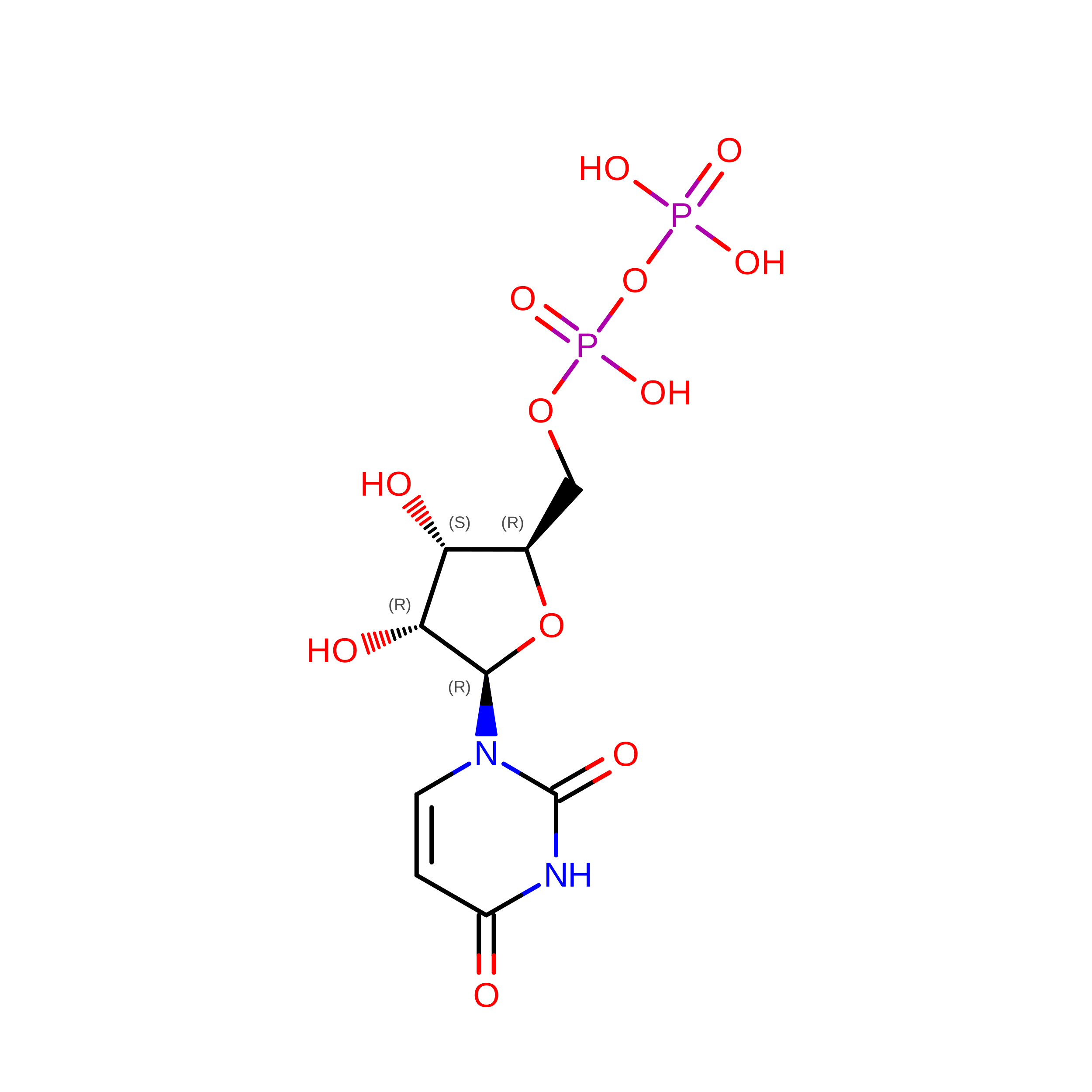
IDChains Name / Formula / InChI Key2D Diagram3D Interactions
UDP

Query on UDP


Download:Ideal Coordinates CCD File
B [auth A]URIDINE-5'-DIPHOSPHATE
C9 H14 N2 O12 P2
XCCTYIAWTASOJW-XVFCMESISA-N
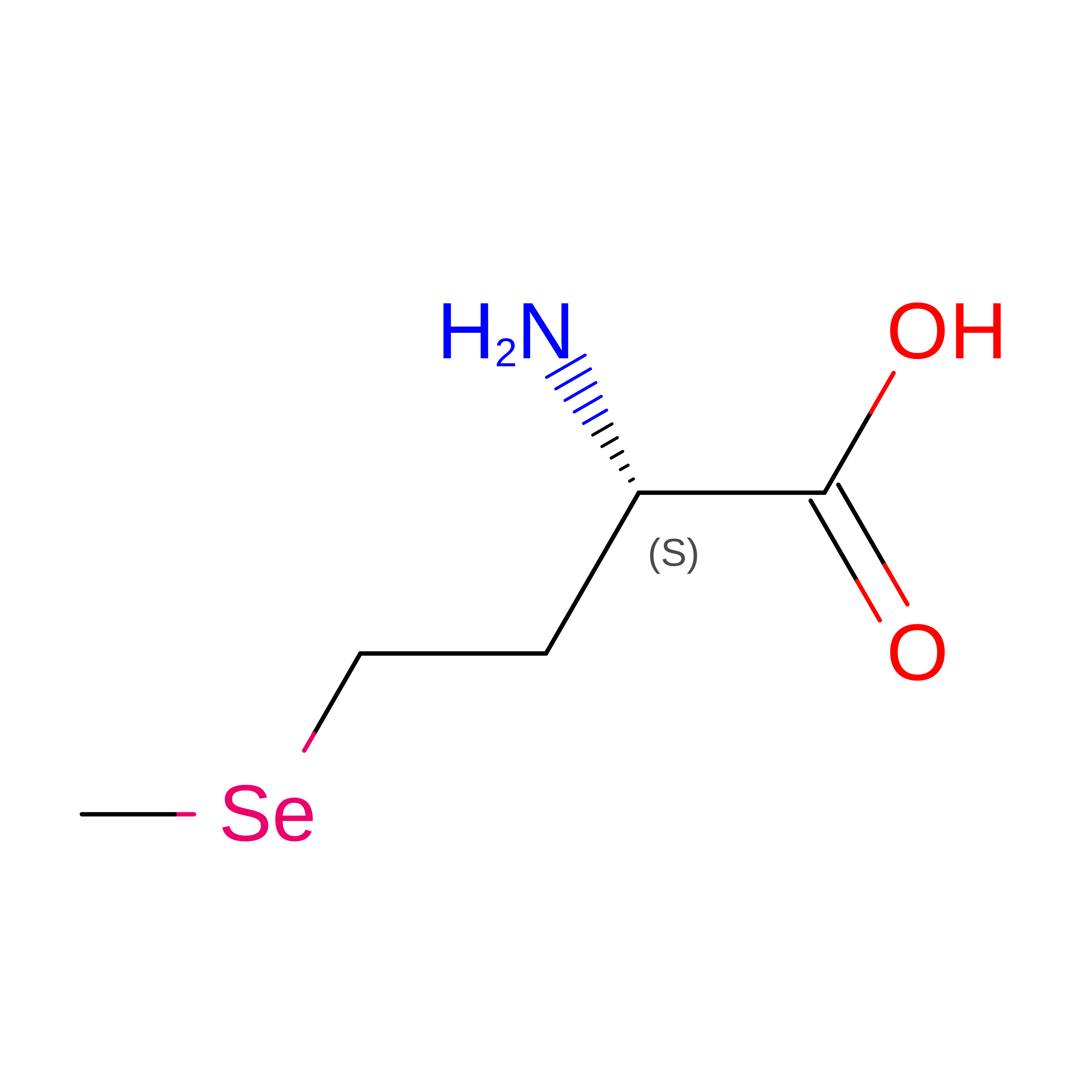
Modified Residues  1 Unique
IDChains TypeFormula2D DiagramParent
MSE
Query on MSE
A
L-PEPTIDE LINKINGC5 H11 N O2 SeMET

Experimental Data & Validation

Experimental Data

  • Method: X-RAY DIFFRACTION
  • Resolution: 1.60 Å
  • R-Value Free:  0.201 (Depositor), 0.216 (DCC) 
  • R-Value Work:  0.171 (Depositor) 
  • R-Value Observed: 0.173 (Depositor) 
Space Group: P 21 21 21
Unit Cell:
Length ( Å )Angle ( ˚ )
a = 50.69α = 90
b = 88.664β = 90
c = 89.594γ = 90
Software Package:
Software NamePurpose
REFMACrefinement
MOSFLMdata reduction
SCALAdata scaling
SOLVEphasing

Structure Validation

View Full Validation Report


Ligand Structure Quality Assessment 


Entry History 

Deposition Data

Revision History  (Full details and data files)

  • Version 1.0: 2006-10-11
    Type: Initial release
  • Version 1.1: 2011-05-08
    Changes: Version format compliance
  • Version 1.2: 2011-07-13
    Changes: Version format compliance
  • Version 1.3: 2018-01-24
    Changes: Source and taxonomy
  • Version 1.4: 2024-10-16
    Changes: Data collection, Database references, Derived calculations, Other, Structure summary