2DIE | pdb_00002die

Alkaline alpha-amylase AmyK from Bacillus sp. KSM-1378


Experimental Data Snapshot

  • Method: X-RAY DIFFRACTION
  • Resolution: 2.10 Å
  • R-Value Free: 
    0.231 (Depositor), 0.230 (DCC) 
  • R-Value Work: 
    0.177 (Depositor), 0.177 (DCC) 
  • R-Value Observed: 
    0.182 (Depositor) 

Starting Model: experimental
View more details

wwPDB Validation 3D Report Full Report

Validation slider image for 2DIE

This is version 1.3 of the entry. See complete history

Literature

Ancestral sequence evolutionary trace and crystal structure analyses of alkaline alpha-amylase from Bacillus sp. KSM-1378 to clarify the alkaline adaptation process of proteins

Shirai, T.Igarashi, K.Ozawa, T.Hagihara, H.Kobayashi, T.Ozaki, K.Ito, S.

(2007) Proteins 66: 600-610

  • DOI: https://doi.org/10.1002/prot.21255
  • Primary Citation Related Structures: 
    2DIE

  • PubMed Abstract: 

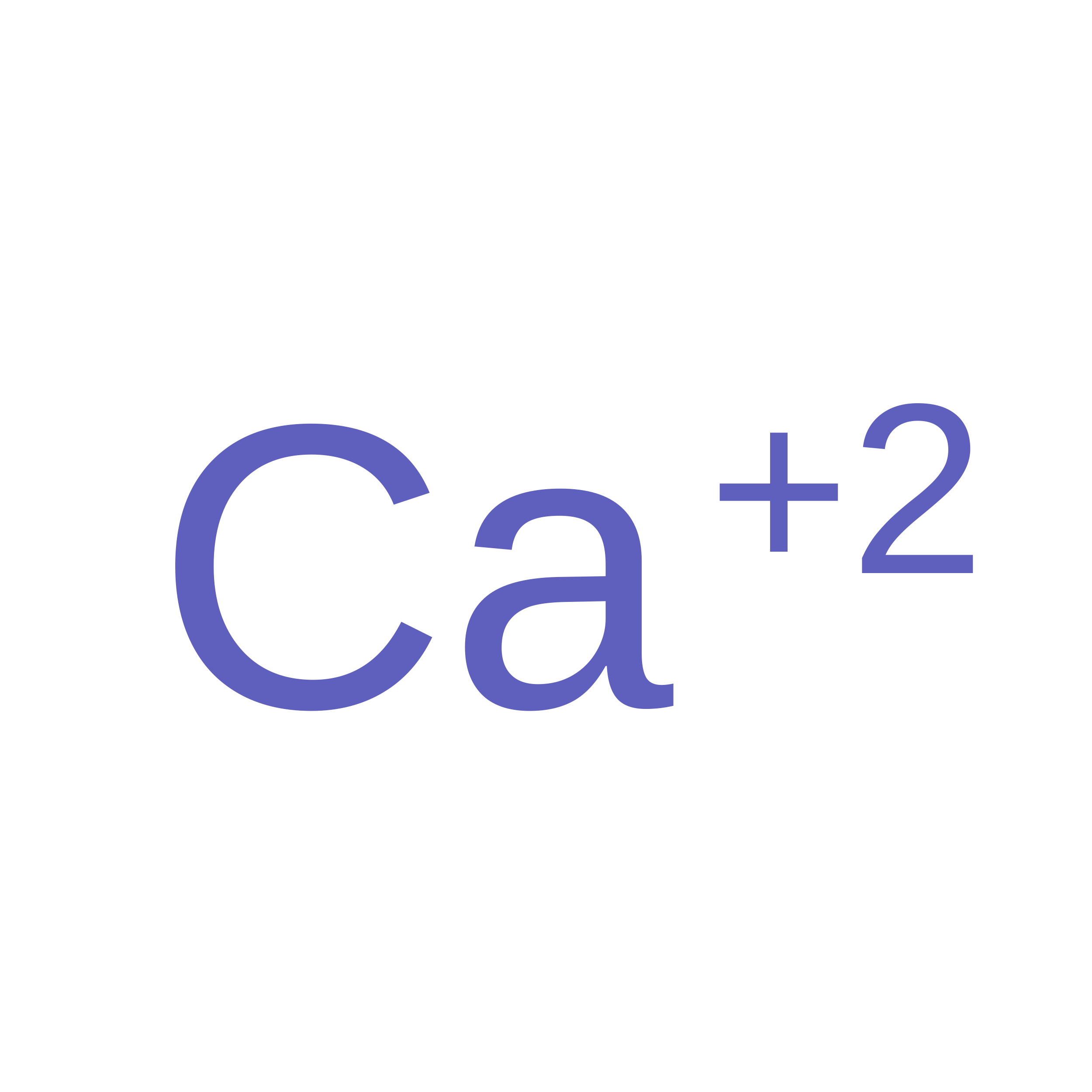
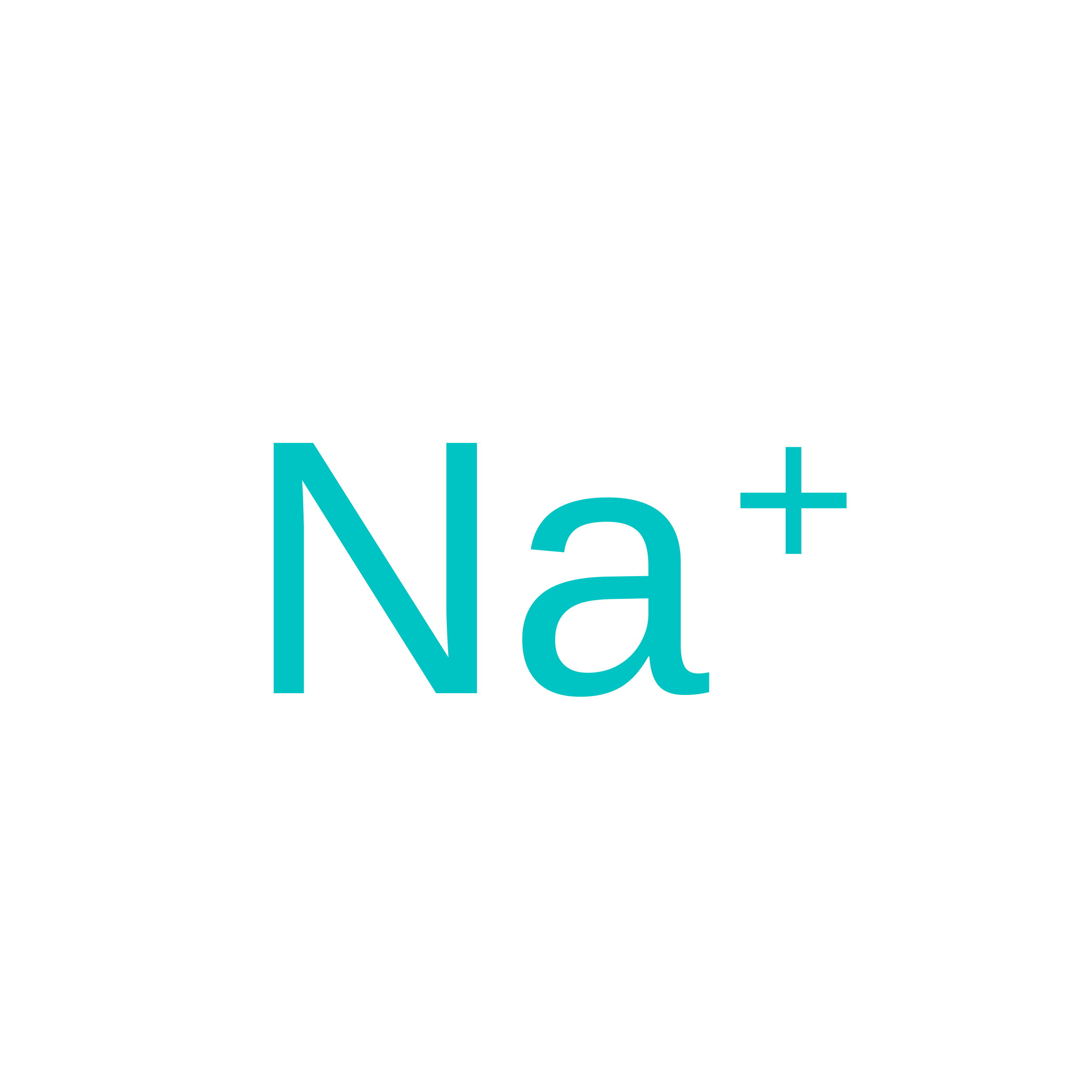
    The crystal structure of alkaline liquefying alpha-amylase (AmyK) from the alkaliphilic Bacillus sp. KSM-1378 was determined at 2.1 A resolution. The AmyK structure belongs to the GH13 glycoside hydrolase family, which consists of three domains, and bound three calcium and one sodium ions. The alkaline adaptation mechanism of AmyK was investigated by the ancestral sequence evolutionary trace method and by extensive comparisons between alkaline and nonalkaline enzyme structures, including three other protein families: protease, cellulase, and phosphoserine aminotransferase. The consensus change for the alkaline adaptation process was a decrease in the Lys content. The loss of a Lys residue is associated with ion pair remodeling, which mainly consists of the loss of Lys-Asp/Glu ion pairs and the acquisition of Arg ion pairs, preferably Arg-Glu. The predicted replacements of the positively charged amino acids were often, although not always, used for ion pair remodeling.


  • Organizational Affiliation
    • Department of Bioscience, Nagahama Institute of Bio-science and Technology, Nagahama 526-0829, Japan. t_shirai@nagahama-i-bio.ac.jp

Macromolecule Content 

  • Total Structure Weight: 55.6 kDa 
  • Atom Count: 4,179 
  • Modeled Residue Count: 481 
  • Deposited Residue Count: 485 
  • Unique protein chains: 1

Macromolecules

Find similar proteins by:|  3D Structure
Entity ID: 1
MoleculeChains  Sequence LengthOrganismDetailsImage
amylase485Bacillus sp. (in: firmicutes)Mutation(s): 0 
EC: 3.2.1.1
UniProt
Find proteins for A0ACD6B935 (Bacillus sp)
Explore A0ACD6B935 
Go to UniProtKB:  A0ACD6B935
Entity Groups
Sequence Clusters30% Identity50% Identity70% Identity90% Identity95% Identity100% Identity
UniProt GroupA0ACD6B935
Sequence Annotations
Expand
Reference Sequence

Experimental Data & Validation

Experimental Data

  • Method: X-RAY DIFFRACTION
  • Resolution: 2.10 Å
  • R-Value Free:  0.231 (Depositor), 0.230 (DCC) 
  • R-Value Work:  0.177 (Depositor), 0.177 (DCC) 
  • R-Value Observed: 0.182 (Depositor) 
Space Group: C 1 2 1
Unit Cell:
Length ( Å )Angle ( ˚ )
a = 174.577α = 90
b = 41.467β = 92.24
c = 74.855γ = 90
Software Package:
Software NamePurpose
XPRESSdata collection
DENZOdata reduction
AMoREphasing
CNSrefinement
XPRESSdata reduction
SCALEPACKdata scaling

Structure Validation

View Full Validation Report


Entry History 

Deposition Data

Revision History  (Full details and data files)

  • Version 1.0: 2007-02-13
    Type: Initial release
  • Version 1.1: 2008-04-25
    Changes: Version format compliance
  • Version 1.2: 2011-07-13
    Changes: Version format compliance
  • Version 1.3: 2023-10-25
    Changes: Data collection, Database references, Derived calculations, Refinement description