Download Mendeley
Bridging inner membrane and periplasm in Geobacter sulfurreducens: structural and biochemical insights into CbcA and its redox partners.
Antunes, J.M.A., Silva, M.A., Correia, M.A.S., Salgueiro, C.A., Santos-Silva, T., Morgado, L.(2026) Int J Biol Macromol 369: 152597-152597
- PubMed: 42155738 Search on PubMed
- DOI: https://doi.org/10.1016/j.ijbiomac.2026.152597
- Primary Citation Related Structures:
28PB - PubMed Abstract:
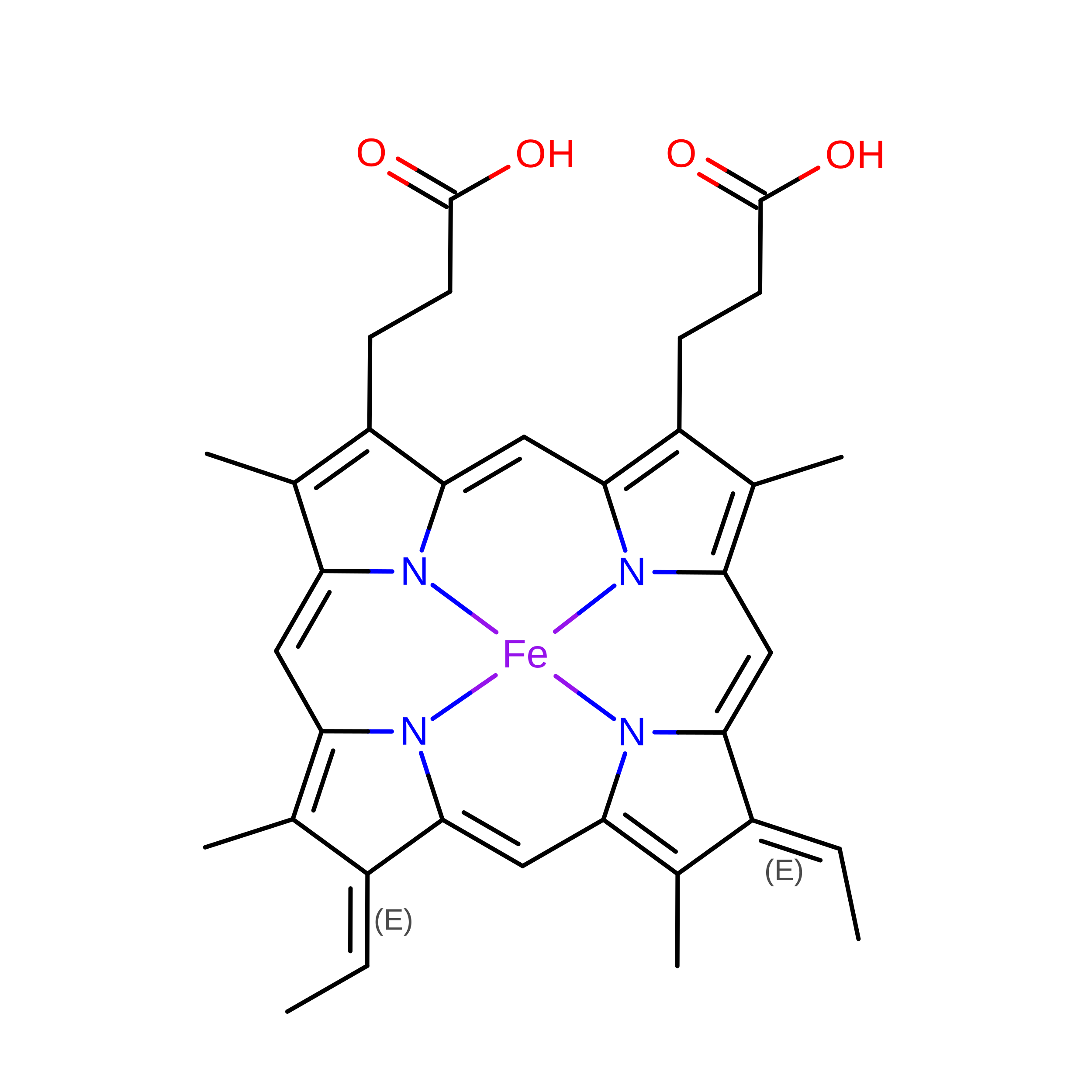
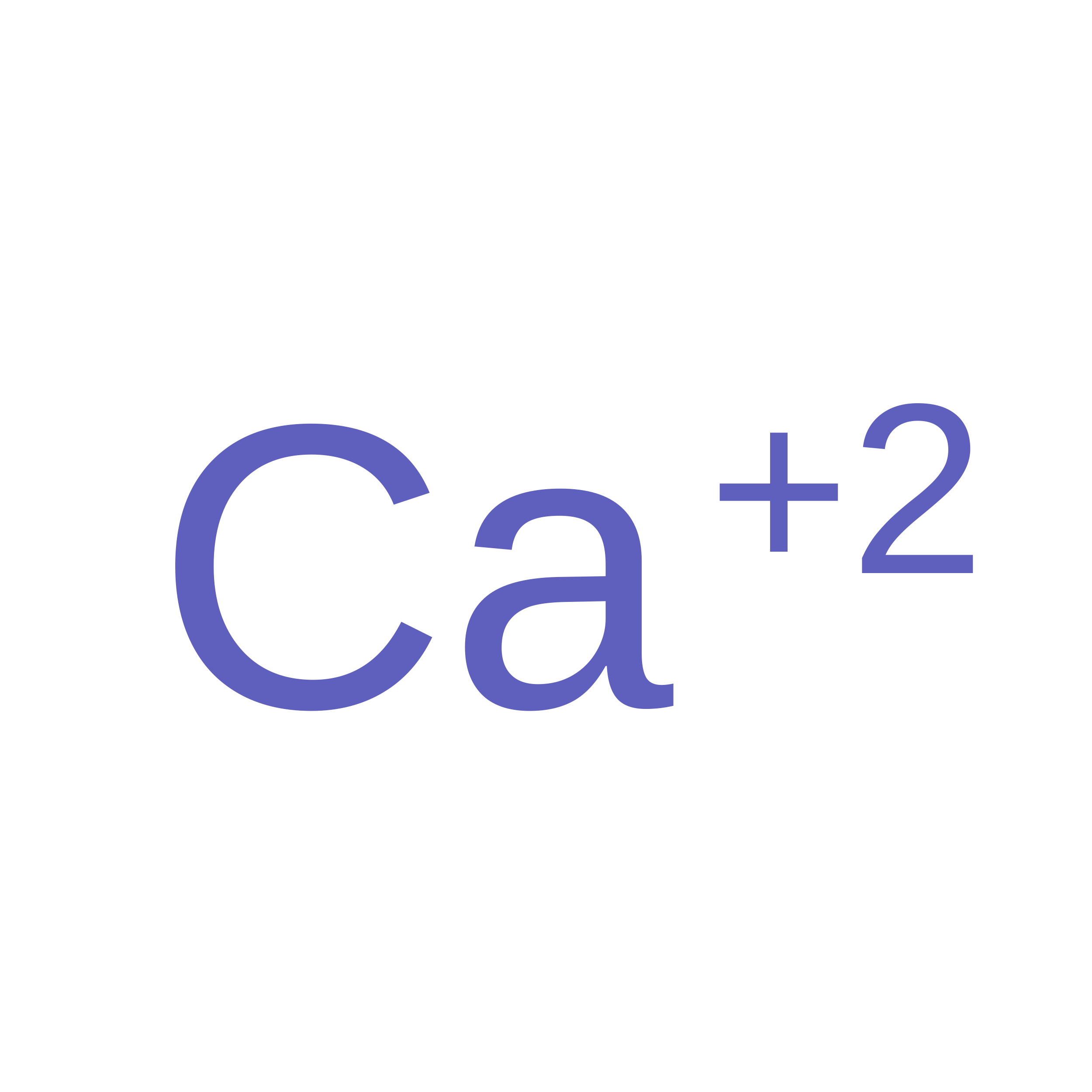
Biotechnological applications such as bioremediation, bioenergy production, and microbial electrosynthesis are emerging as sustainable alternatives to conventional and environmentally harmful industrial practices. Advancing these technologies requires a deeper understanding of extracellular electron transfer, a process mediated by a network of redox partners bridging the inner membrane and the extracellular environment in electroactive bacteria. The CbcBA complex, a quinol:cytochrome c oxidoreductase from Geobacter sulfurreducens, is essential for the reduction of extracellular metal oxides and electrodes with redox potential values below -210 mV. The complex comprises CbcA, a heptaheme c-type cytochrome anchored to the inner membrane and CbcB, an integral membrane di-heme b-type cytochrome. Additionally, CbcC, a periplasmic dodecaheme cytochrome, and the five periplasmic triheme cytochromes PpcA-E, are proposed to function as redox partners of CbcBA. To investigate their structural and functional properties, the periplasmic domain of CbcA (CbcA sol ) and CbcC were heterologously expressed and analyzed using complementary spectroscopic techniques. The crystal structure of CbcA sol was solved at 1.9 Å resolution, revealing a calcium-binding EF-hand motif that may function as a regulatory switch. Circular dichroism and differential scanning calorimetry indicated that CbcA sol and CbcC exhibit high stability, while potentiometric redox titrations demonstrated distinct electrochemical behaviors: CbcA sol has the most negative reduction potential among G. sulfurreducens oxidoreductases, whereas CbcC operates within the redox range of the PpcA-E cytochromes. NMR experiments showed that CbcA sol transfers electrons to CbcC and PpcA-E cytochromes. This result, in agreement with the structural electrostatic complementarity between the different cytochromes, suggests that CbcA may interact with multiple periplasmic cytochromes through distinct surface regions.
- Associate Laboratory i4HB - Institute for Health and Bioeconomy, NOVA School of Science and Technology, Universidade NOVA de Lisboa, 2819-516, Caparica, Portugal; UCIBIO - Applied Molecular Biosciences Unit, Chemistry Department, NOVA School of Science and Technology, Universidade NOVA de Lisboa, 2829-516, Caparica, Portugal.
Organizational Affiliation: