Download Mendeley
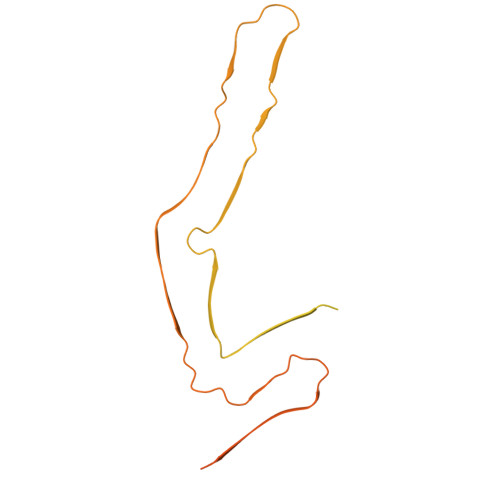
The Pick fold in tau filaments from human MAPT mutants.
Qi, C., Lovestam, S., Shi, J., Murzin, A.G., Peak-Chew, S., Warner, T.T., Seelaar, H., Cullinane, P.W., Jaunmuktane, Z., van Swieten, J.C., Scheres, S.H.W., Goedert, M.(2026) Acta Neuropathol 152
- PubMed: 42420562 Search on PubMedSearch on PubMed Central
- DOI: https://doi.org/10.1007/s00401-026-03049-8
- Primary Citation Related Structures:
28LJ, 28LO, 28LP, 28LQ - PubMed Abstract:
Mutations in MAPT, the tau gene, give rise to forms of frontotemporal dementia and parkinsonism linked to chromosome 17 (FTDP-17 T), with abundant filamentous tau inclusions in brain cells. Some mutations that encode missense and deletion variants can give rise to a clinical picture of Pick's disease and filaments made of three-repeat tau in nerve cells. Here we report the electron cryo-microscopy (cryo-EM) structures of tau filaments from the brains of individuals with MAPT mutations D252V, G272V, S320F and ΔG389-I392. The two-layered Pick fold was present in the brains of individuals with mutations D252V and ΔG389-I392 who had also abundant tau inclusions in glial cells. By contrast, mutations G272V and S320F gave rise to a more open variant of the Pick fold, with residues 272-341 rotated by 20-25° with respect to the rest of the structure. These findings show that missense mutations within the filament core can modify the Pick fold, generating closely related structural variants. In addition, we were able to reconstitute the Pick fold and some of its variants using seeded assembly with recombinant 0N3R tau carrying 12 serine or threonine to aspartate substitutions (PAD12) and missense mutations D252V, G272V and S320F. This work provides a foundation for the development of structure-based diagnostic and therapeutic approaches.
- Department of Biophysics, School of Basic Medical Sciences and Key Laboratory for Neuroscience, Ministry of Education/National Health Commission of the People's Republic of China, Peking University, Beijing, China.
Organizational Affiliation: