Download Mendeley
Structural snapshots of plant-specific KCS6-CER2 complex reveal the elongation mechanism of very-long-chain fatty acids.
Wang, Y., Wang, H., Yang, X., Qin, Y., Xu, R., Liu, T., Shi, C., Zhang, H., Zhong, L., Qu, X., Zhu, F., Deng, X., Xu, Y., Wang, Q., Cheng, Y.(2026) Mol Plant
- PubMed: 42427034 Search on PubMed
- DOI: https://doi.org/10.1016/j.molp.2026.07.007
- Primary Citation Related Structures:
27VE, 27VF, 27VG, 27VH, 27VI - PubMed Abstract:
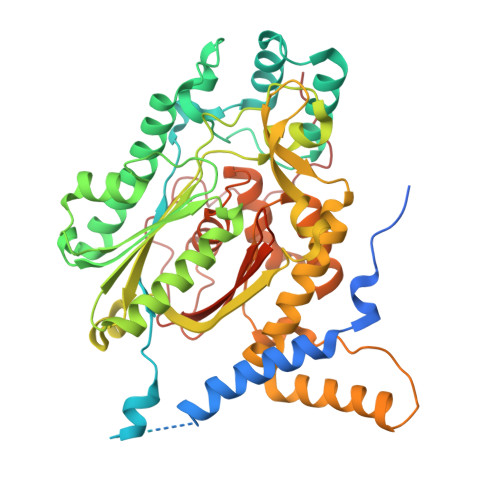
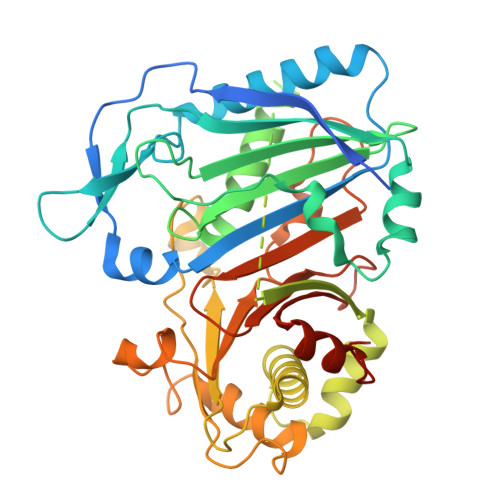
Very-long-chain fatty acids (VLCFAs) are essential building blocks for sphingolipids, phospholipids, triacylglycerols, suberin, and cuticular waxes, all of which play crucial roles in plant development and environmental adaptation. The elongation of VLCFAs is governed by plant-specific β-ketoacyl-CoA synthases (KCSs) and ECERIFERUM2 (CER2) family proteins. However, the structural catalytic mechanisms underlying VLCFA elongation remain poorly understood. Here, we present structural snapshots of the KCS6-CER2 complex from the evolutionarily representative vascular plant Selaginella moellendorffii in multiple elongation reaction states. These structures delineate how the acyl chain of the substrate C22:0 acyl-CoA (behenoyl-CoA), the two-carbon donor malonyl-CoA, and the product C24:0 β-ketoacyl-CoA (3-oxo-lignoceroyl-CoA) sequentially engage the substrate binding channel of the KCS6-CER2 complex on the cytosolic side of the endoplasmic reticulum membrane. We further identify a previously unrecognized side channel that accommodates an additional acyl-CoA molecule, indicating an unexpected structural feature for VLCFA biosynthesis. In addition, structural and biochemical analyses of the KCS6-CER2 complex reveal that CER2 acts as a structural cofactor, extending the hydrophobic substrate binding channel of KCS6. Together, these findings uncover the molecular mechanism by which KCS6 and CER2 collaborate to drive chain-length-specific VLCFA elongation and provide a structural framework for understanding and engineering VLCFA elongation across the plant kingdom.
- National Key Laboratory for Germplasm Innovation & Utilization of Horticultural Crops, Hubei Hongshan Laboratory, Huazhong Agricultural University, Wuhan 430070, China; Institute of Drug Discovery, China-New Zealand Joint Laboratory on Biomedicine and Health, Guangzhou Institutes of Biomedicine and Health, Chinese Academy of Sciences, Guangzhou 510530, China.
Organizational Affiliation: