Download Mendeley
Decoding plant vacuolar phosphate efflux: Structural and dynamic insights from rice VPE2.
Zuo, J., Cao, S., Tang, Y., He, H., Zhang, J., Li, P., Chen, Y., Yin, P., Wang, C., Xiong, L., Dong, F., Liu, Z.(2026) Proc Natl Acad Sci U S A 123: e2611598123-e2611598123
- PubMed: 42594278 Search on PubMedSearch on PubMed Central
- DOI: https://doi.org/10.1073/pnas.2611598123
- Primary Citation Related Structures:
23IC, 23IF, 23IG - PubMed Abstract:
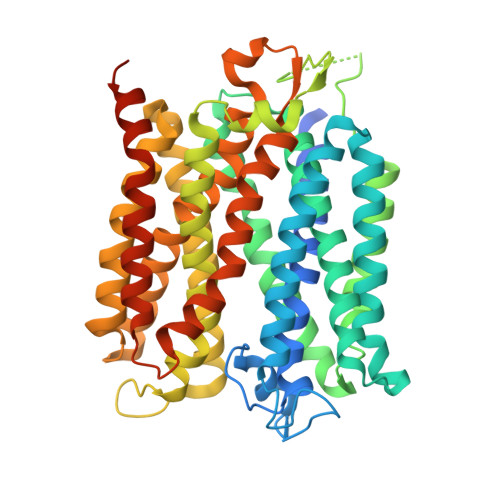
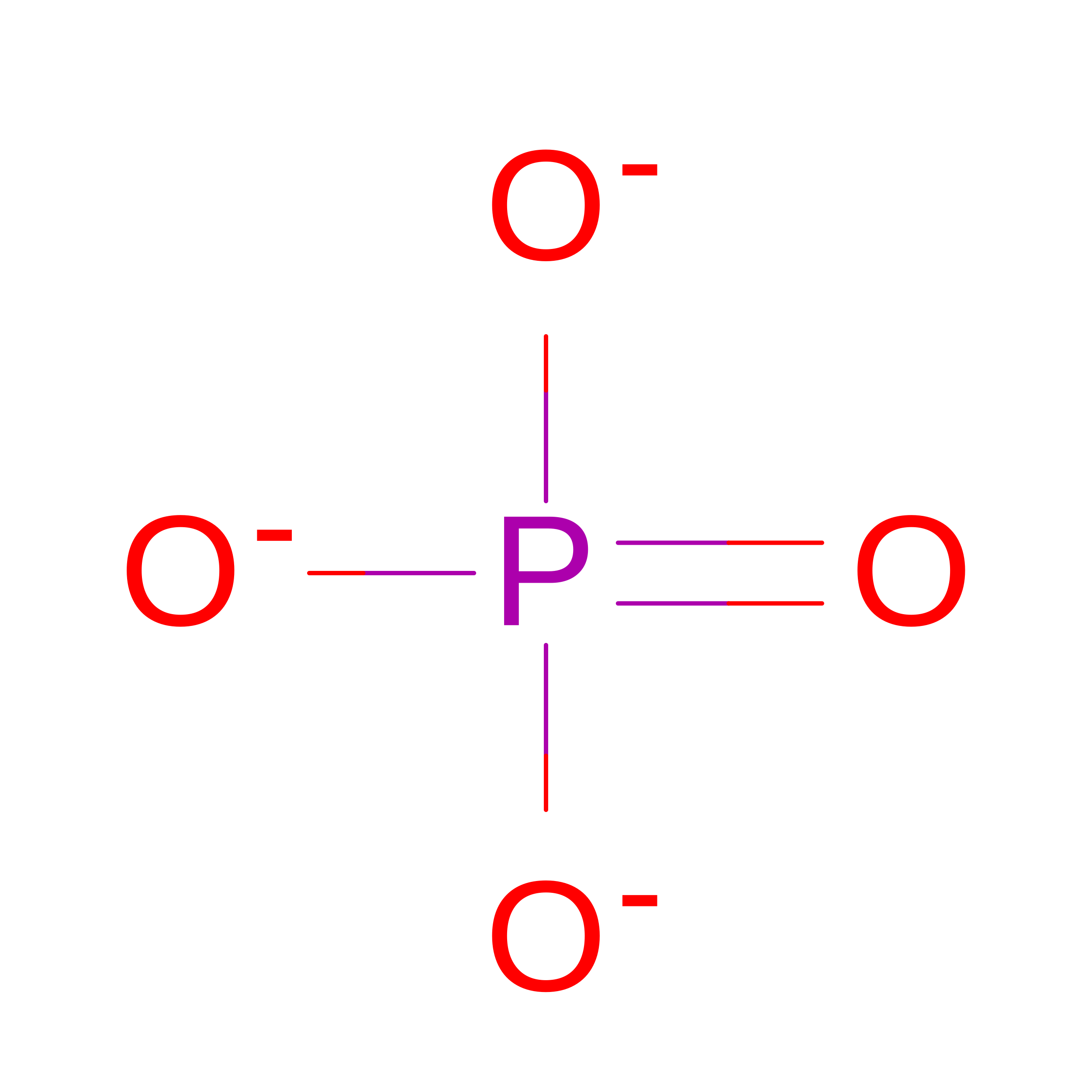
Vacuoles store up to 90% of cellular phosphorus in plants, serving as a critical buffer against cytosolic fluctuations during environmental nutrient stress. Despite this central role, the molecular mechanisms governing vacuolar inorganic phosphate (Pi) release through vacuolar Pi efflux transporters (VPEs) remain unclear. Through integrative structural biology, we elucidate how the rice transporter OsVPE2 transports Pi out of vacuoles. Cryoelectron microscopy structures capture distinct functional states, revealing a Pi-binding pocket and a unique vacuolar coupling helix (VCH) motif that undergoes pH-dependent conformational switching. Single-molecule fluorescence resonance energy transfer analyses reveal the intrinsic dynamics of the VCH, demonstrating that its movement is coupled with the transporter's conformational changes. This dynamic VCH functions as a conformational switch, regulating the transporter cycle: its embedding into the transmembrane vestibule stabilizes transporter's outward-occluded state, while its displacement enables the transition to the inward-open conformation. Functional studies demonstrate that VCH flexibility-not mere presence-is essential for transport, and its disruption impairs function. Our work establishes the molecular blueprint for vacuolar Pi efflux, identifying this evolutionarily conserved regulatory VCH among VPEs as a potential target for structure-guided engineering to optimize plant phosphorus recycling and use efficiency.
- National Key Laboratory of Crop Genetic Improvement, Hubei Provincial Research Center for Basic Biological Sciences, College of Bio-X, Hubei Hongshan Laboratory, Department of Biochemistry and Molecular Biology, Huazhong Agricultural University, Wuhan 430070, China.
Organizational Affiliation: