Download Mendeley
Albumin Orchestrates Type-I ROS Conversion for Efficient Intracellular Bacterial Clearance.
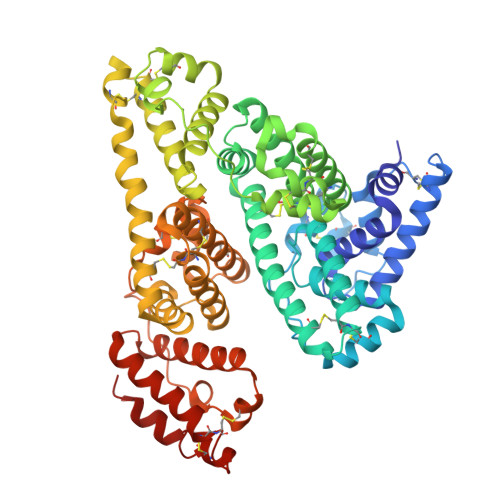
Fang, B., Wang, W., Bai, H., Li, P., Si, M., Peng, B., Chen, X., Yang, X., Li, L.(2026) Adv Mater : e75340-e75340
- PubMed: 42860758 Search on PubMed
- DOI: https://doi.org/10.1002/adma.75340
- Primary Citation Related Structures:
22CD - PubMed Abstract:
Type-I photosensitization addresses the dilemma of intracellular bacterial hypoxia-induced photodynamic therapeutic (PDT) inefficacy, yet precise targeting and eradicating sequestered pathogens remains a formidable challenge. Herein, we engineer an albumin-based photodynamic conversion nanoparticles integrating target-specific recognition with controlled antibacterial functions to precisely eliminate intracellular pathogens and restore infected cell activity. Mechanistic studies reveal a vertically-crossed conformation that promotes intramolecular electron transfer and charge separation, redirecting photosensitizer (PS) reactivity toward type-I reactive oxygen species (ROS) generation. Electron-rich albumin further enhances cationic PS +• recycling, photostability, and O 2 -• production, while its selective cytoplasmic delivery via receptor/charge interactions enables preferential accumulation in intracellular bacteria, with reduced off-target organelle engagement. We demonstrate application in S. aureus-infected sepsis showing high type-I ROS levels for antibacterial function from the nanoparticles to restore redox and immune homeostasis without noticeable toxicity. This work pioneers a conformationally-gated ROS conversion approach for eliminating intracellular bacterial infections, merging mechanistic precision with therapeutic potential for clinical sepsis management.
- State Key Laboratory of Flexible Electronics (LoFE) & Institute of Flexible Electronics (IFE), School of Advanced Interdisciplinary Biomedical Sciences, Xiamen University, Xiamen, China.
Organizational Affiliation: