22AK | pdb_000022ak

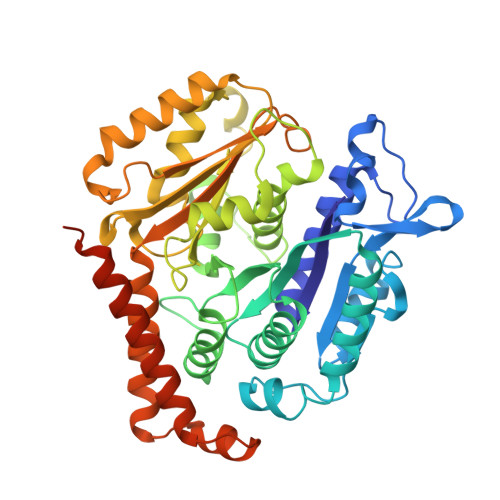
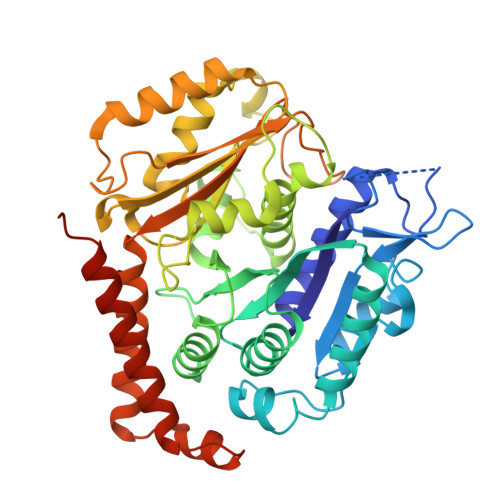
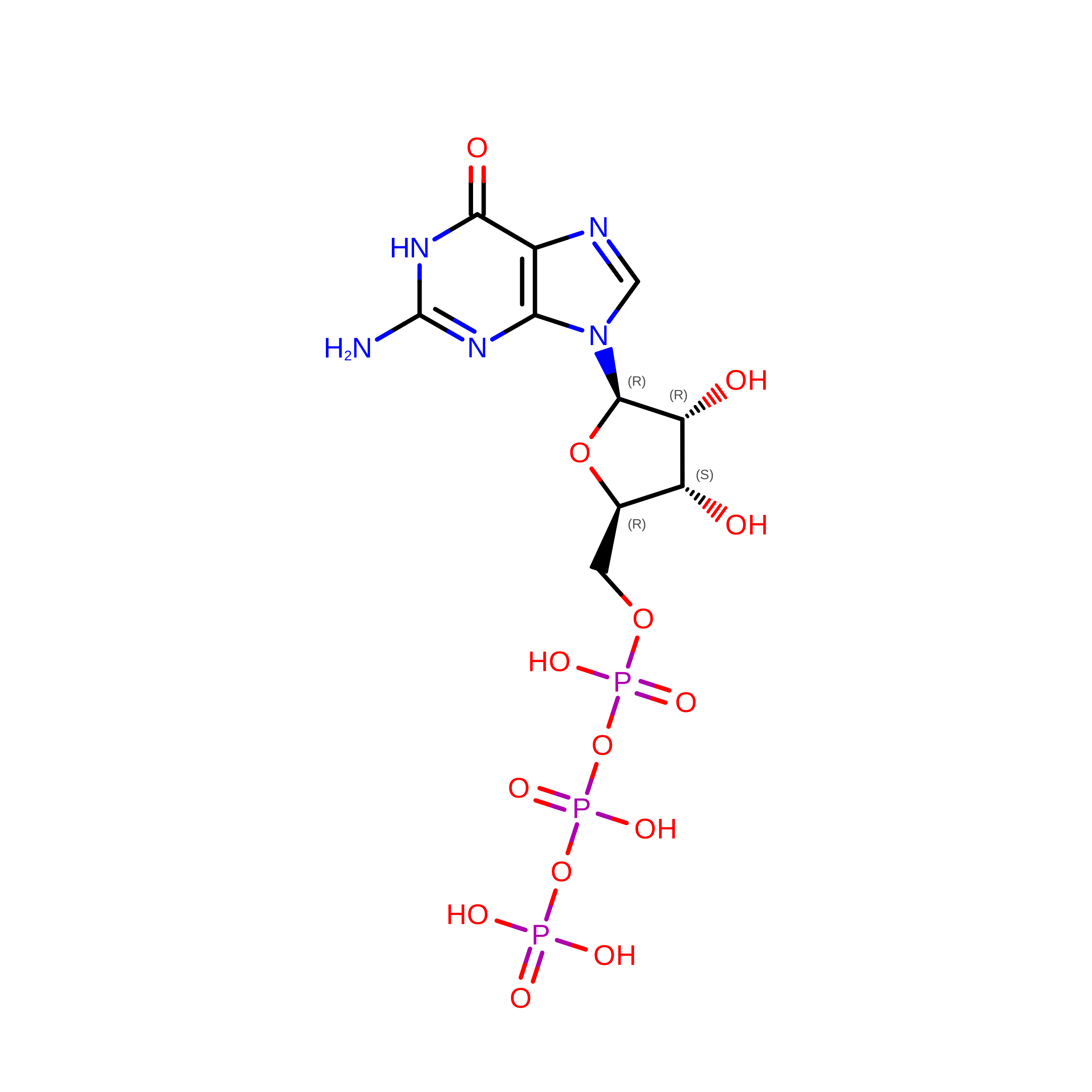
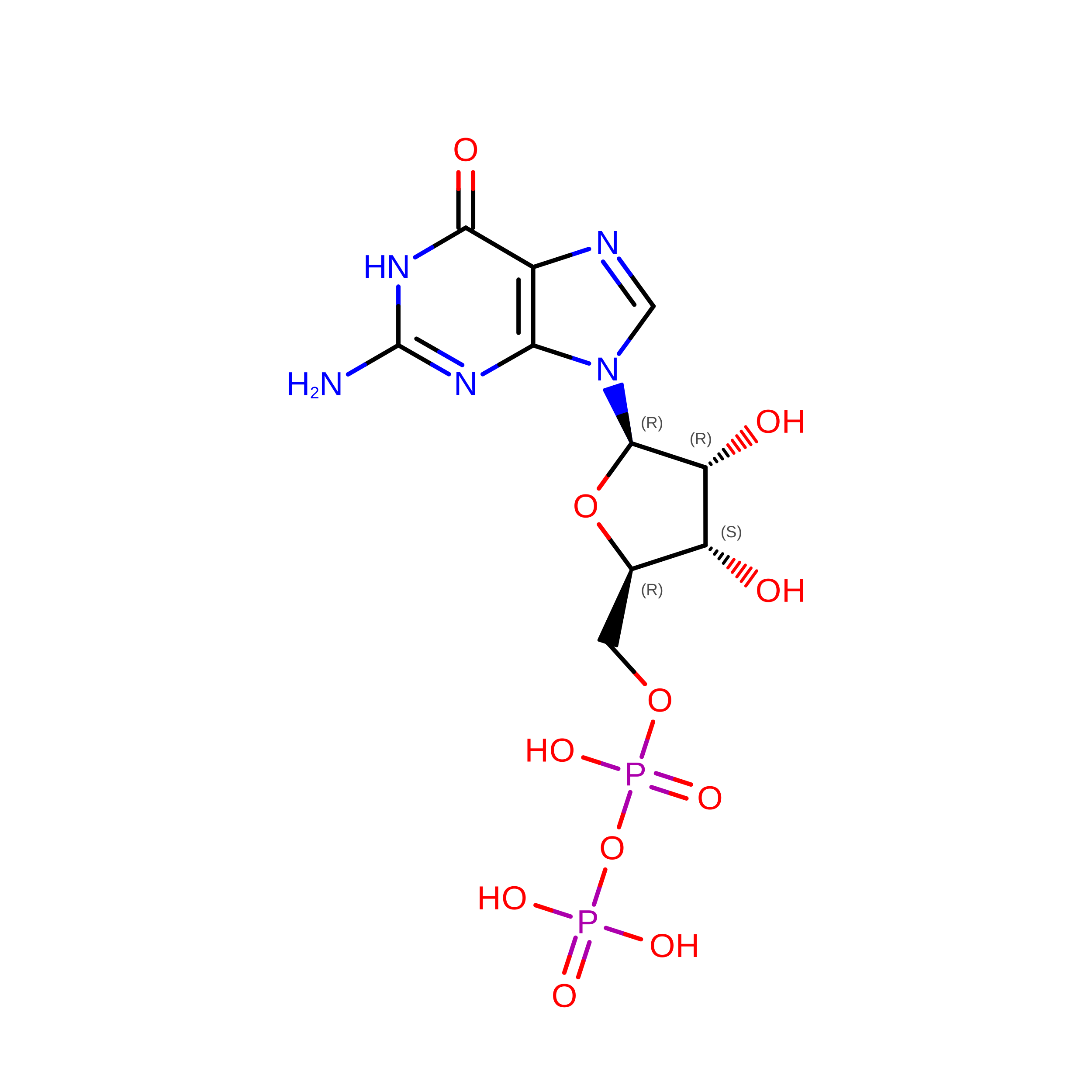
GDP human alpha1A/beta3 microtubule


Experimental Data Snapshot

  • Method: ELECTRON MICROSCOPY
  • Resolution: 2.41 Å
  • Aggregation State: HELICAL ARRAY 
  • Reconstruction Method: SINGLE PARTICLE 

wwPDB Validation 3D Report Full Report

Validation slider image for 22AK

This is version 1.1 of the entry. See complete history

Literature

An evolution-conserved allosteric network in human tubulin governs paclitaxel efficacy.

Luo, J.Khoo, C.J.Chen, W.Liu, Z.Li, B.Lau, W.S.Li, X.D.Ti, S.C.

(2026) Nat Chem Biol 

  • DOI: https://doi.org/10.1038/s41589-026-02204-2
  • Primary Citation Related Structures: 
    22AJ, 22AK, 9WD7, 9WD9, 9WDA, 9WDB

  • PubMed Abstract: 

    Tubulin-targeting agents such as paclitaxel have been a cornerstone of cancer treatment. However, the molecular basis by which prognosis-associated tubulin isotypes and mutations (that is, variants) affect drug efficacy remains unclear. Here we reveal that evolutionarily conserved tubulin residues modulate the allosteric network to determine paclitaxel efficacy. The paclitaxel resistance of human β3-tubulin depends on a residue distant from the taxane-binding pocket. The ~2.3 Å-resolution cryo-EM microtubule reconstructions demonstrate that the paclitaxel-sensitizing tubulin mutation induces allostery at the paclitaxel-binding site, intertubulin interactions and nucleotide-binding pockets. In particular, the reoriented guanine triphosphate (GTP)-hydrolyzing catalytic α-tubulin E254 residue enhances the GTP cap, reducing the catastrophe frequency of dynamic microtubules. Examining genome-edited cancer cells with the paclitaxel-sensitized mutant β3-tubulin indicates that the affinities of tubulin variants for paclitaxel determine drug efficacy. Our findings provide mechanistic insights into the development of new tubulin-targeting therapeutics not only for cancer but also for tubulinopathies associated with mutations in specific tubulin isotypes.


  • Organizational Affiliation
    • School of Biomedical Sciences, LKS Faculty of Medicine, The University of Hong Kong, Hong Kong, China.

Macromolecule Content 

  • Total Structure Weight: 101.68 kDa 
  • Atom Count: 6,811 
  • Modeled Residue Count: 860 
  • Deposited Residue Count: 901 
  • Unique protein chains: 2

Macromolecules

Find similar proteins by:|  3D Structure
Entity ID: 1
MoleculeChains  Sequence LengthOrganismDetailsImage
Tubulin beta-3 chainA [auth B]450Homo sapiensMutation(s): 0 
Gene Names: TUBB3TUBB4
UniProt & NIH Common Fund Data Resources
Find proteins for Q13509 (Homo sapiens)
Explore Q13509 
Go to UniProtKB:  Q13509
PHAROS:  Q13509
GTEx:  ENSG00000258947 
Entity Groups
Sequence Clusters30% Identity50% Identity70% Identity90% Identity95% Identity100% Identity
UniProt GroupQ13509
Sequence Annotations
Expand
Reference Sequence
Find similar proteins by:|  3D Structure
Entity ID: 2
MoleculeChains  Sequence LengthOrganismDetailsImage
Tubulin alpha-1A chainB [auth A]451Homo sapiensMutation(s): 0 
Gene Names: TUBA1ATUBA3
EC: 3.6.5
UniProt & NIH Common Fund Data Resources
Find proteins for Q71U36 (Homo sapiens)
Explore Q71U36 
Go to UniProtKB:  Q71U36
PHAROS:  Q71U36
GTEx:  ENSG00000167552 
Entity Groups
Sequence Clusters30% Identity50% Identity70% Identity90% Identity95% Identity100% Identity
UniProt GroupQ71U36
Sequence Annotations
Expand
Reference Sequence

Experimental Data & Validation

Experimental Data

  • Method: ELECTRON MICROSCOPY
  • Resolution: 2.41 Å
  • Aggregation State: HELICAL ARRAY 
  • Reconstruction Method: SINGLE PARTICLE 
EM Software:
TaskSoftware PackageVersion
MODEL REFINEMENTPHENIX1.21.2_5419
RECONSTRUCTIONcryoSPARC4.4.0

Structure Validation

View Full Validation Report


Entry History 

& Funding Information

Deposition Data


Funding OrganizationLocationGrant Number
National Natural Science Foundation of China (NSFC)China224B2707
The University Grants Committee, Research Grants Council (RGC)Hong Kong17115924
The University Grants Committee, Research Grants Council (RGC)Hong KongC7064-22GF

Revision History  (Full details and data files)

  • Version 1.0: 2026-04-01
    Type: Initial release
  • Version 1.1: 2026-04-29
    Changes: Data collection, Database references