Download Mendeley
Structure of chloramphenicol-bound MexB reveals residues in the distal binding pocket that are critical for substrate recognition.
Ueda, Y., Yonehara, R., Ishizaka-Ikeda, E., Nakagawa, A., Yamashita, E.(2026) J Biochem 179: 403-411
- PubMed: 41662826 Search on PubMedSearch on PubMed Central
- DOI: https://doi.org/10.1093/jb/mvag012
- Primary Citation Related Structures:
21FO, 21FP - PubMed Abstract:
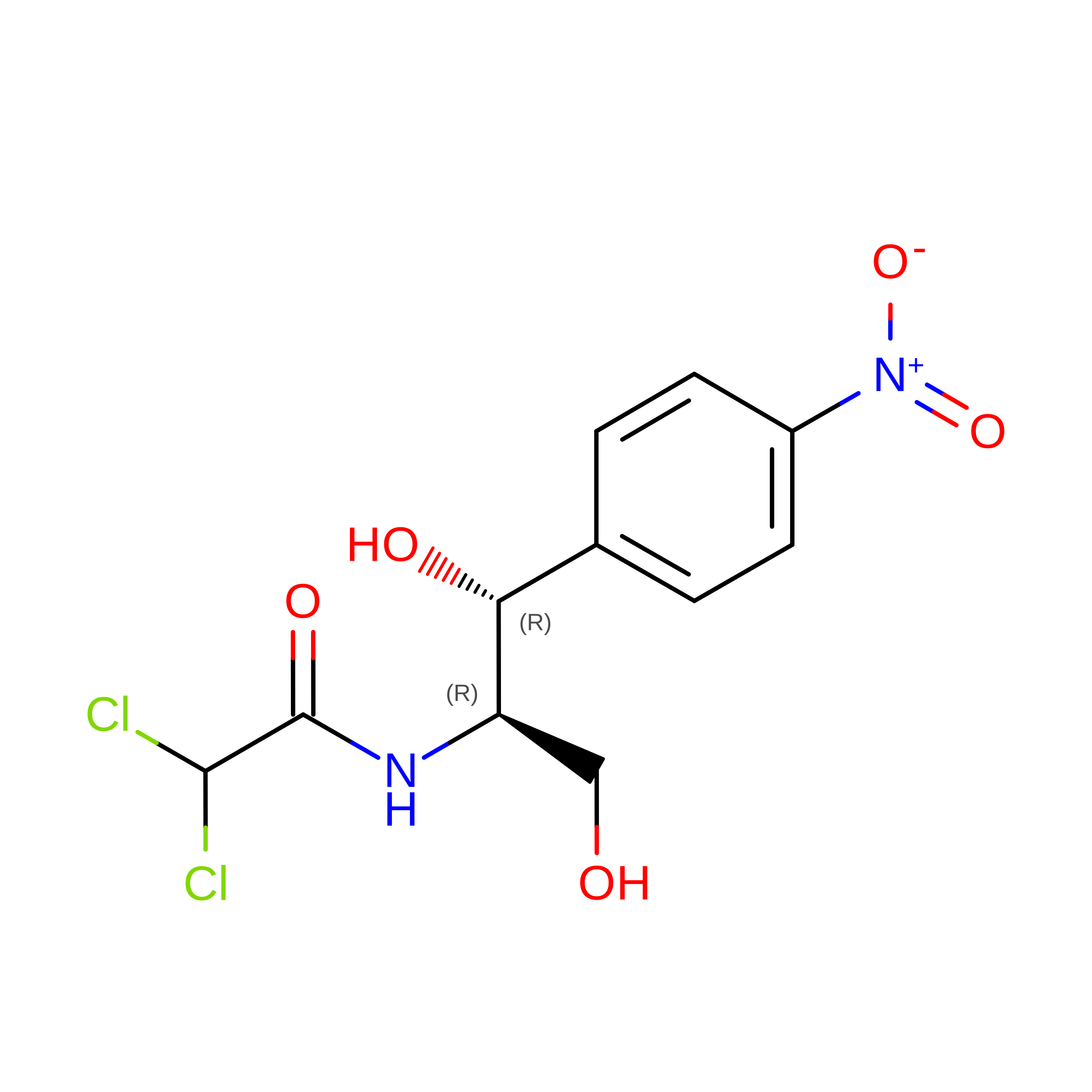
Multidrug resistance in Pseudomonas aeruginosa is strongly promoted by the resistance-nodulation-division family tripartite efflux pump MexAB-OprM, whose inner-membrane transporter MexB plays a central role in recognizing and extruding a broad spectrum of antibiotics and detergents. Although crystal structures of MexB have been determined, no structure of MexB bound to an antibiotic has previously been reported. Here, we report crystal structures of drug-free MexB and chloramphenicol-bound MexB crystallized under mildly basic conditions. In the chloramphenicol-bound structure, chloramphenicol binds at the deep end of the distal binding pocket (DBP) groove in the Binding protomer. Based on this structure, we identified DBP residues (Q125, R128, F178, G179, S180 and Q273) that contact chloramphenicol and evaluated their contributions using in vitro chloramphenicol resistance assays of single-substitution MexB variants. Substitutions at these positions reduced cell growth in the presence of chloramphenicol, minocycline, levofloxacin and the detergent CYMAL-7. These findings identify a MexB-specific recognition subsite within the DBP groove and provide a structural basis for understanding how MexB recognizes chloramphenicol and other chemically diverse substrates.
- Institute for Protein Research, The University of Osaka, 3-2 Yamadaoka, Suita, Osaka 565-0871, Japan.
Organizational Affiliation: