1XE8 | pdb_00001xe8

Crystal structure of the YML079w protein from Saccharomyces cerevisiae reveals a new sequence family of the jelly roll fold.


Experimental Data Snapshot

  • Method: X-RAY DIFFRACTION
  • Resolution: 2.80 Å
  • R-Value Free: 
    0.284 (Depositor) 
  • R-Value Work: 
    0.223 (Depositor) 

wwPDB Validation 3D Report Full Report

Validation slider image for 1XE8

This is version 1.4 of the entry. See complete history

Literature

Crystal structure of the YML079w protein from Saccharomyces cerevisiae reveals a new sequence family of the jelly-roll fold

Zhou, C.-Z.Meyer, P.Quevillon-Cheruel, S.Li de La Sierra-Gallay, I.Collinet, B.Graille, M.Blondeau, K.Leulliot, N.Sorel, I.Poupon, A.Janin, J.Van Tilbeurgh, H.

(2005) Protein Sci 14: 209-215

  • DOI: https://doi.org/10.1110/ps.041121305
  • Primary Citation Related Structures: 
    1XE7, 1XE8

  • PubMed Abstract: 

    We determined the three-dimensional crystal structure of the protein YML079wp, encoded by a hypothetical open reading frame from Saccharomyces cerevisiae to a resolution of 1.75 A. The protein has no close homologs and its molecular and cellular functions are unknown. The structure of the protein is a jelly-roll fold consisting of ten beta-strands organized in two parallel packed beta-sheets. The protein has strong structural resemblance to the plant storage and ligand binding proteins (canavalin, glycinin, auxin binding protein) but also to some plant and bacterial enzymes (epimerase, germin). The protein forms homodimers in the crystal, confirming measurements of its molecular mass in solution. Two monomers have their beta-sheet packed together to form the dimer. The presence of a hydrophobic ligand in a well conserved pocket inside the barrel and local sequence similarity with bacterial epimerases may suggest a biochemical function for this protein.


  • Organizational Affiliation
    • Institut de Biochimie et de Biophysique Moléculaire et Cellulaire, Centre National de la Recherche Scientifique-Unité Mixte de Recherche 8619, Université Paris-Sud, 91405 Orsay, France.

Macromolecule Content 

  • Total Structure Weight: 69.13 kDa 
  • Atom Count: 4,771 
  • Modeled Residue Count: 570 
  • Deposited Residue Count: 609 
  • Unique protein chains: 1

Macromolecules

Find similar proteins by:|  3D Structure
Entity ID: 1
MoleculeChains  Sequence LengthOrganismDetailsImage
Hypothetical 22.5 kDa protein in TUB1-CPR3 intergenic region
A, B, C
203Saccharomyces cerevisiaeMutation(s): 3 
Gene Names: YML079w
UniProt
Find proteins for Q03629 (Saccharomyces cerevisiae (strain ATCC 204508 / S288c))
Explore Q03629 
Go to UniProtKB:  Q03629
Entity Groups
Sequence Clusters30% Identity50% Identity70% Identity90% Identity95% Identity100% Identity
UniProt GroupQ03629
Sequence Annotations
Expand
Reference Sequence

Small Molecules

Ligands 3 Unique
IDChains Name / Formula / InChI Key2D Diagram3D Interactions
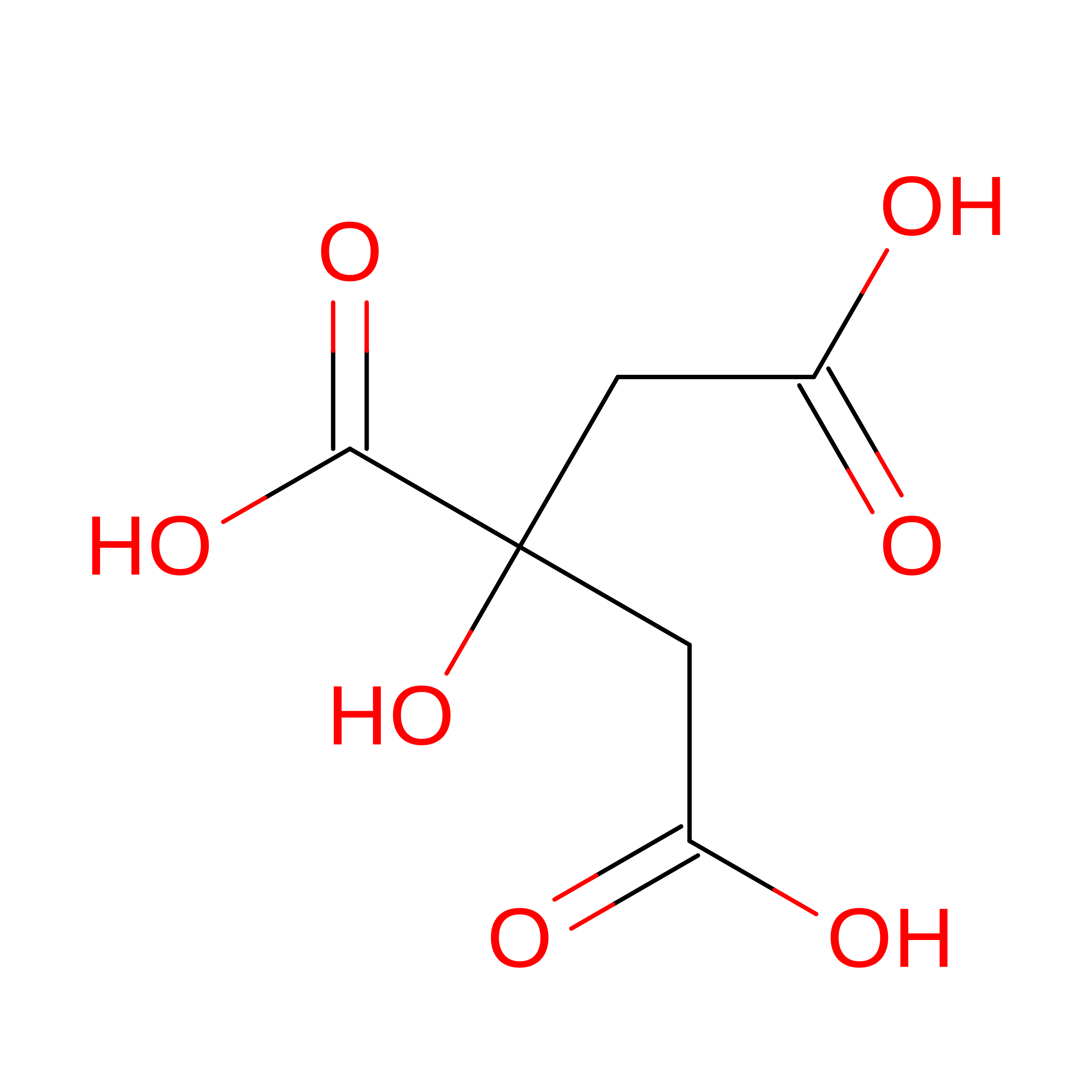
CIT

Query on CIT


Download:Ideal Coordinates CCD File
E [auth A]CITRIC ACID
C6 H8 O7
KRKNYBCHXYNGOX-UHFFFAOYSA-N
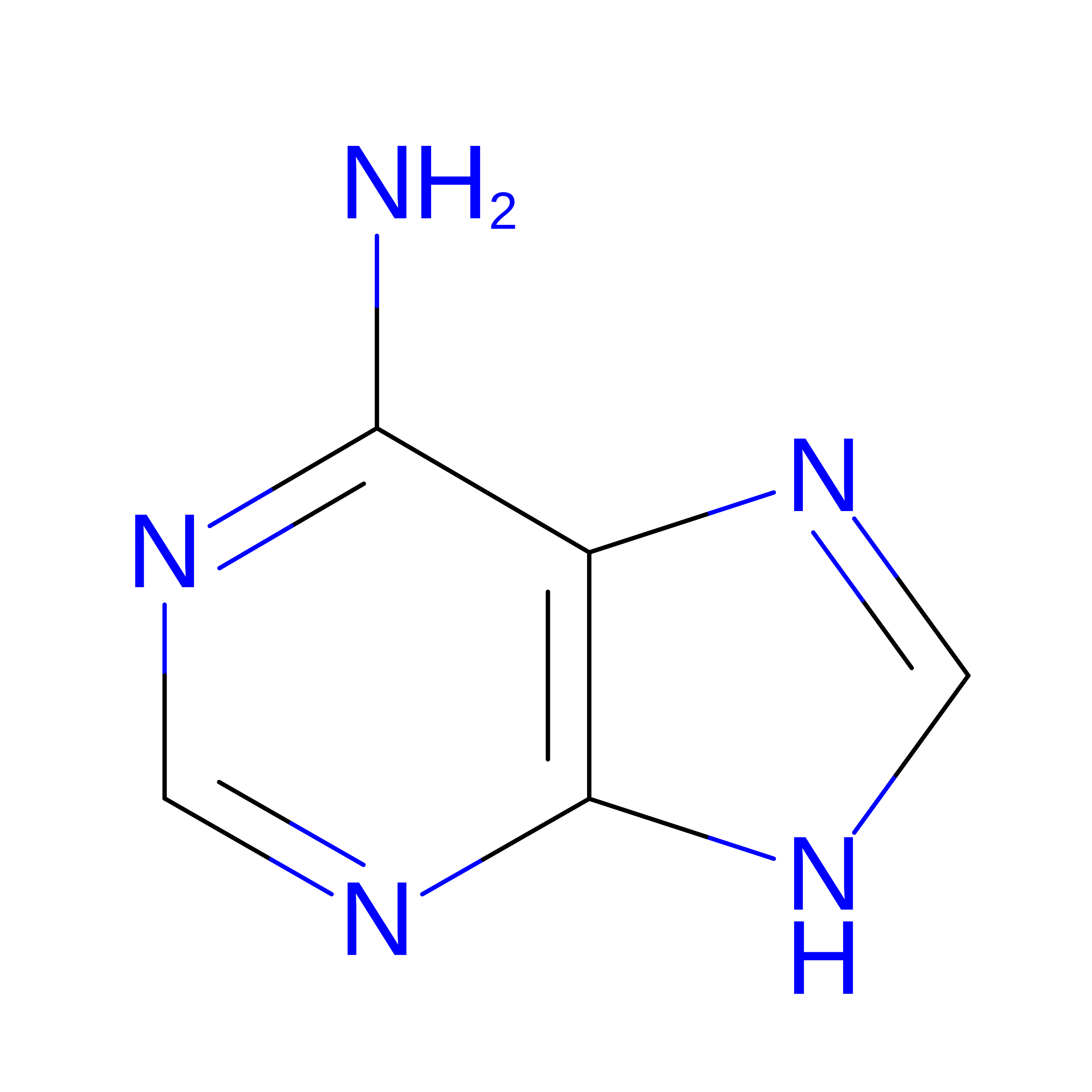
ADE

Query on ADE


Download:Ideal Coordinates CCD File
D [auth A]ADENINE
C5 H5 N5
GFFGJBXGBJISGV-UHFFFAOYSA-N
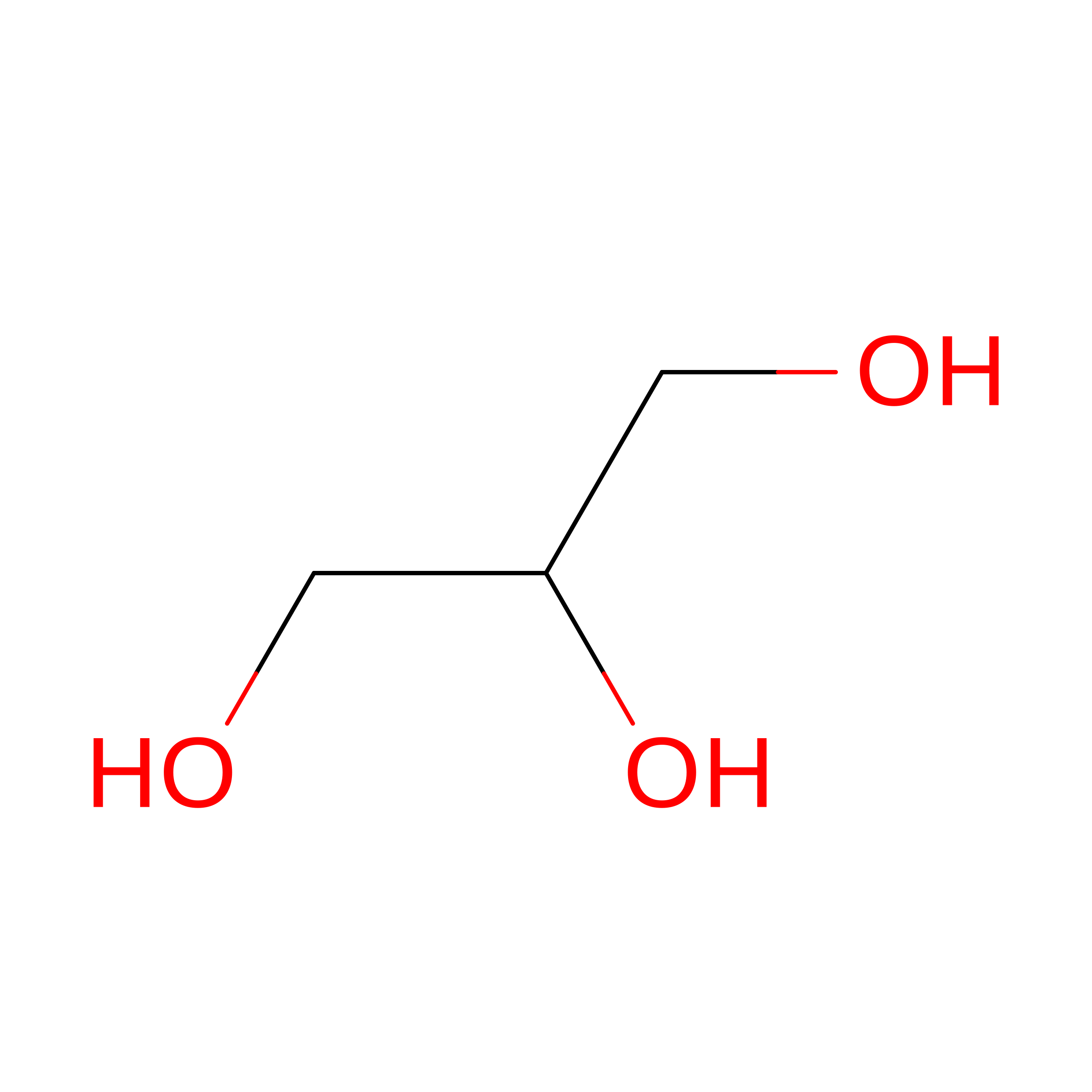
GOL

Query on GOL


Download:Ideal Coordinates CCD File
F [auth C]GLYCEROL
C3 H8 O3
PEDCQBHIVMGVHV-UHFFFAOYSA-N
Modified Residues  1 Unique
IDChains TypeFormula2D DiagramParent
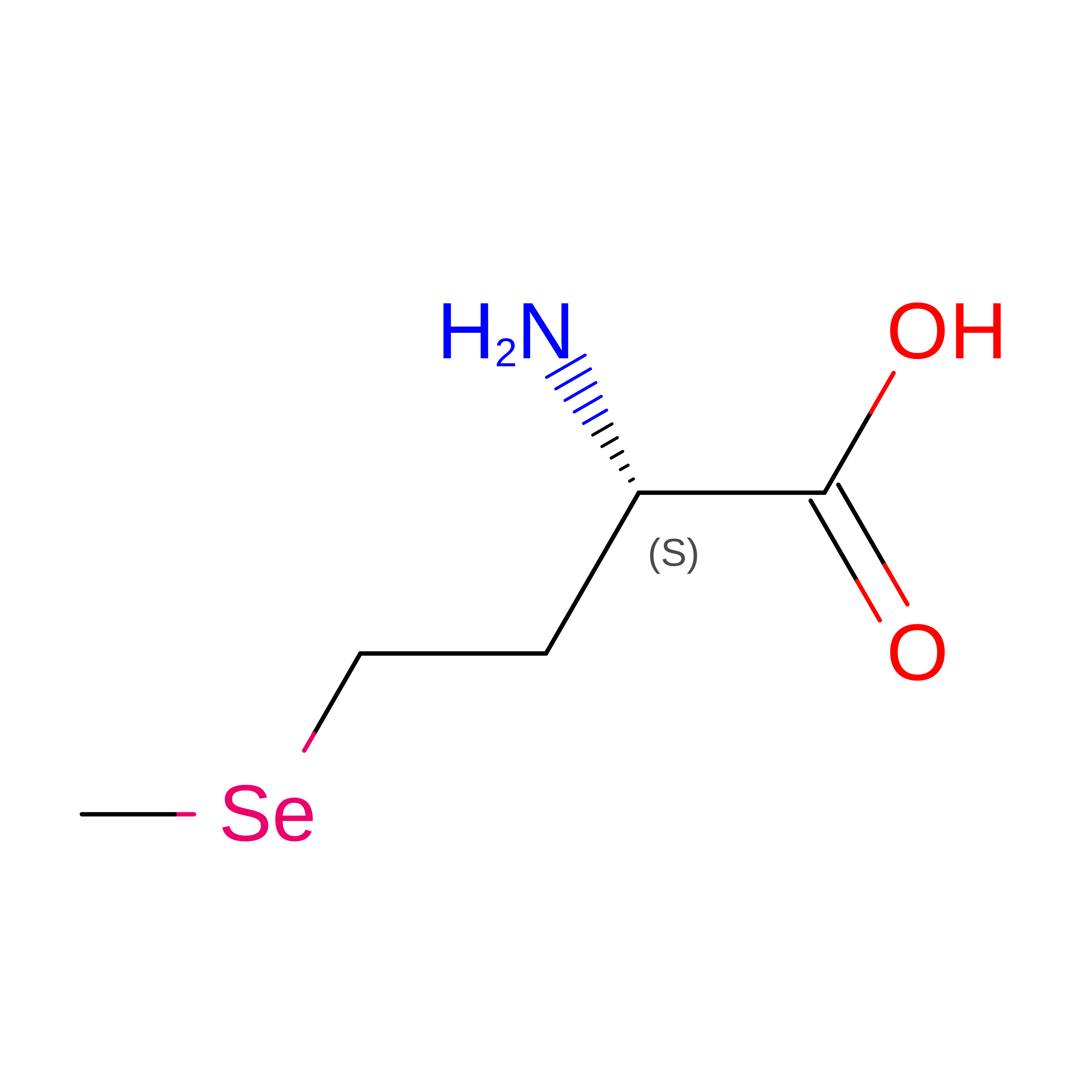
MSE
Query on MSE
A, B, C
L-PEPTIDE LINKINGC5 H11 N O2 SeMET

Experimental Data & Validation

Experimental Data

  • Method: X-RAY DIFFRACTION
  • Resolution: 2.80 Å
  • R-Value Free:  0.284 (Depositor) 
  • R-Value Work:  0.223 (Depositor) 
Space Group: I 4 3 2
Unit Cell:
Length ( Å )Angle ( ˚ )
a = 207.97α = 90
b = 207.97β = 90
c = 207.97γ = 90
Software Package:
Software NamePurpose
MAR345data collection
SCALAdata scaling
SOLVEphasing
CNSrefinement
CCP4data scaling

Structure Validation

View Full Validation Report


Entry History 

Revision History  (Full details and data files)

  • Version 1.0: 2005-01-11
    Type: Initial release
  • Version 1.1: 2008-04-30
    Changes: Version format compliance
  • Version 1.2: 2011-07-13
    Changes: Non-polymer description, Version format compliance
  • Version 1.3: 2017-10-11
    Changes: Refinement description
  • Version 1.4: 2024-11-13
    Changes: Data collection, Database references, Derived calculations, Structure summary