1WCT | pdb_00001wct

A NOVEL CONOTOXIN FROM CONUS TEXTILE WITH UNUSUAL POST-TRANSLATIONAL MODIFICATIONS REDUCES PRESYNAPTIC CALCIUM INFLUX, NMR, 1 STRUCTURE, GLYCOSYLATED PROTEIN


Experimental Data Snapshot

  • Method: SOLUTION NMR
  • Conformers Calculated: 40 
  • Conformers Submitted: 
  • Selection Criteria: LOWEST ENERGY 

wwPDB Validation 3D Report Full Report

Validation slider image for 1WCT

This is version 2.1 of the entry. See complete history

Literature

A conotoxin from Conus textile with unusual posttranslational modifications reduces presynaptic Ca2+ influx.

Rigby, A.C.Lucas-Meunier, E.Kalume, D.E.Czerwiec, E.Hambe, B.Dahlqvist, I.Fossier, P.Baux, G.Roepstorff, P.Baleja, J.D.Furie, B.C.Furie, B.Stenflo, J.

(1999) Proc Natl Acad Sci U S A 96: 5758-5763

  • DOI: https://doi.org/10.1073/pnas.96.10.5758
  • Primary Citation Related Structures: 
    1WCT

  • PubMed Abstract: 

    Cone snails are gastropod mollusks of the genus Conus that live in tropical marine habitats. They are predators that paralyze their prey by injection of venom containing a plethora of small, conformationally constrained peptides (conotoxins). We report the identification, characterization, and structure of a gamma-carboxyglutamic acid-containing peptide, conotoxin epsilon-TxIX, isolated from the venom of the molluscivorous cone snail, Conus textile. The disulfide bonding pattern of the four cysteine residues, an unparalleled degree of posttranslational processing including bromination, hydroxylation, and glycosylation define a family of conotoxins that may target presynaptic Ca2+ channels or act on G protein-coupled presynaptic receptors via another mechanism. This conotoxin selectively reduces neurotransmitter release at an Aplysia cholinergic synapse by reducing the presynaptic influx of Ca2+ in a slow and reversible fashion. The three-dimensional structure, determined by two-dimensional 1H NMR spectroscopy, identifies an electronegative patch created by the side chains of two gamma-carboxyglutamic acid residues that extend outward from a cavernous cleft. The glycosylated threonine and hydroxylated proline enclose a localized hydrophobic region centered on the brominated tryptophan residue within the constrained intercysteine region.


  • Organizational Affiliation
    • Marine Biological Laboratory, Woods Hole, MA 02543, USA.

Macromolecule Content 

  • Total Structure Weight: 1.95 kDa 
  • Atom Count: 126 
  • Modeled Residue Count: 13 
  • Deposited Residue Count: 13 
  • Unique protein chains: 1

Macromolecules

Find similar proteins by:  Sequence   |   3D Structure  
Entity ID: 1
MoleculeChains  Sequence LengthOrganismDetailsImage
OMEGAC-TXIX13Conus textileMutation(s): 0 
UniProt
Find proteins for P81755 (Conus textile)
Explore P81755 
Go to UniProtKB:  P81755
Entity Groups
Sequence Clusters30% Identity50% Identity70% Identity90% Identity95% Identity100% Identity
UniProt GroupP81755
Glycosylation
Glycosylation Sites: 1
Sequence Annotations
Expand
Reference Sequence

Oligosaccharides

Help  
Entity ID: 2
MoleculeChains Length2D Diagram GlycosylationD Interactions
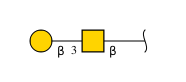
beta-D-galactopyranose-(1-3)-2-acetamido-2-deoxy-beta-D-galactopyranose
B
2O-Glycosylation
Glycosylation Resources
GlyTouCan: G01534TU
GlyCosmos: G01534TU
GlyGen: G01534TU

Small Molecules

Modified Residues  3 Unique
IDChains TypeFormula2D DiagramParent
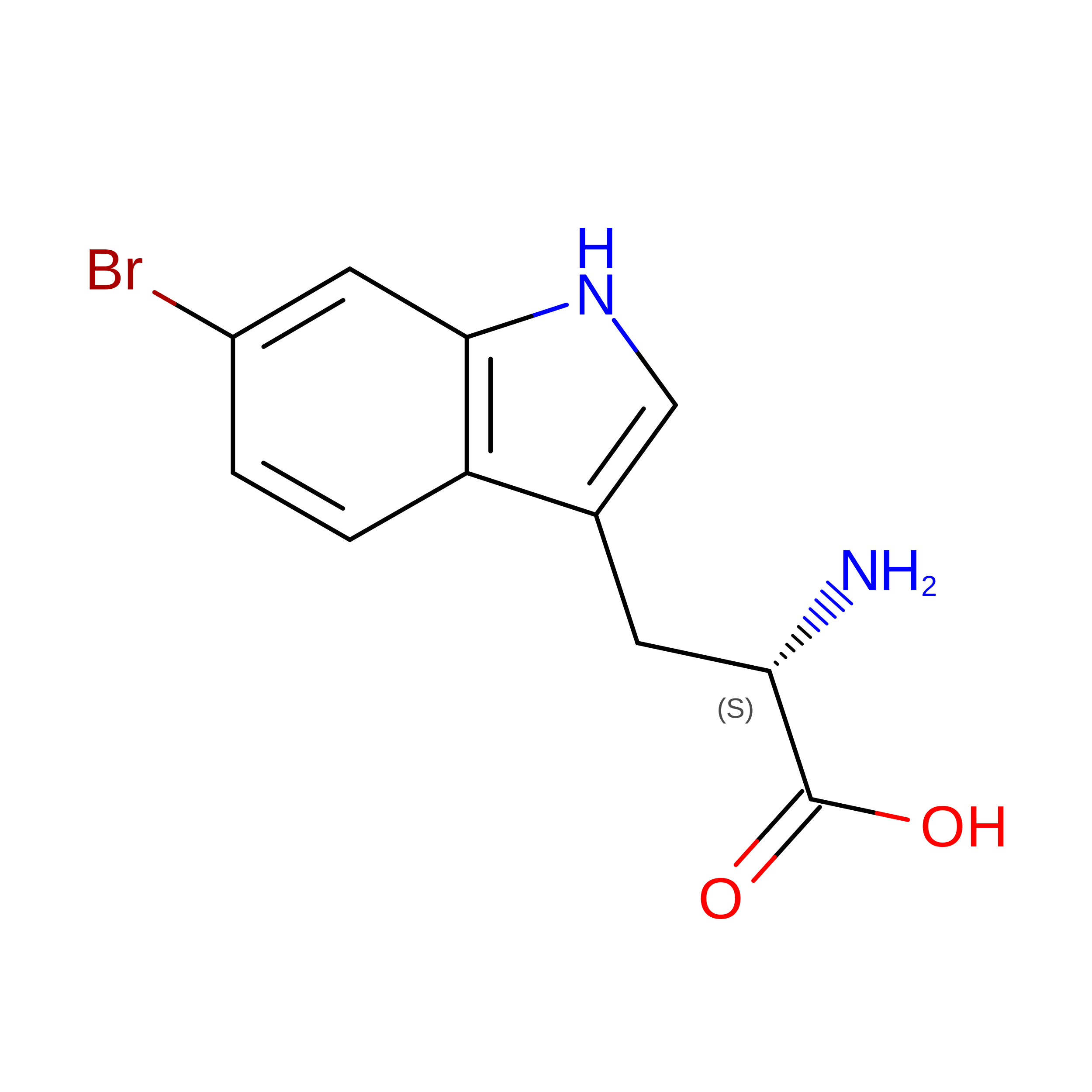
BTR
Query on BTR
A
L-PEPTIDE LINKINGC11 H11 Br N2 O2TRP
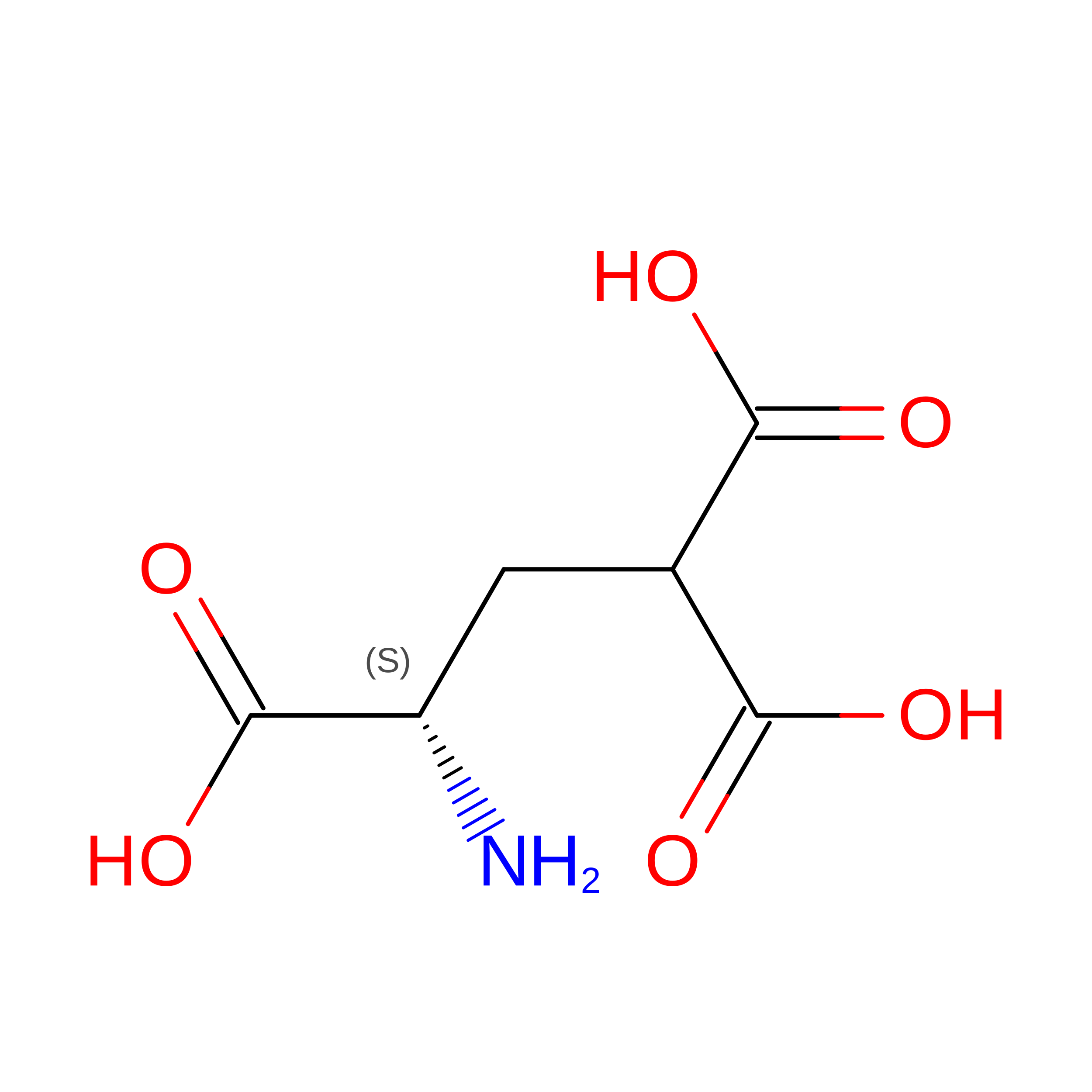
CGU
Query on CGU
A
L-PEPTIDE LINKINGC6 H9 N O6GLU
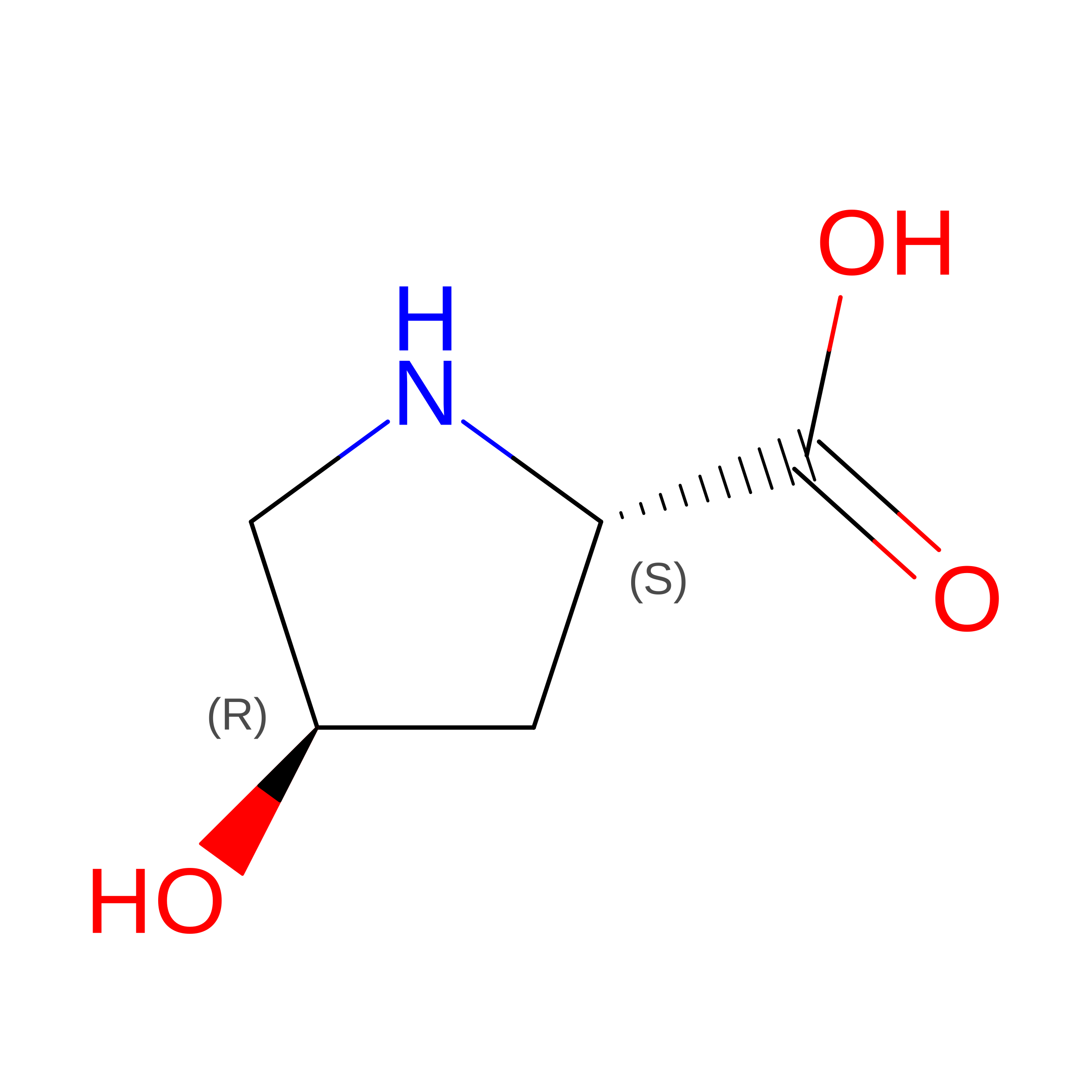
HYP
Query on HYP
A
L-PEPTIDE LINKINGC5 H9 N O3PRO

Experimental Data & Validation

Experimental Data

  • Method: SOLUTION NMR
  • Conformers Calculated: 40 
  • Conformers Submitted: 
  • Selection Criteria: LOWEST ENERGY 

Structure Validation

View Full Validation Report


Entry History 

Deposition Data

Revision History  (Full details and data files)

  • Version 1.0: 1999-06-08
    Type: Initial release
  • Version 1.1: 2008-03-24
    Changes: Version format compliance
  • Version 1.2: 2011-07-13
    Changes: Version format compliance
  • Version 1.3: 2017-11-29
    Changes: Advisory, Derived calculations, Other
  • Version 2.0: 2020-07-29
    Type: Remediation
    Reason: Carbohydrate remediation
    Changes: Atomic model, Data collection, Derived calculations, Non-polymer description, Polymer sequence, Structure summary
  • Version 2.1: 2025-03-26
    Changes: Data collection, Database references, Structure summary