1W2L | pdb_00001w2l

Cytochrome c domain of caa3 oxygen oxidoreductase


Experimental Data Snapshot

  • Method: X-RAY DIFFRACTION
  • Resolution: 1.30 Å
  • R-Value Free: 
    0.170 (Depositor) 
  • R-Value Observed: 
    0.142 (Depositor) 

wwPDB Validation 3D Report Full Report

Validation slider image for 1W2L

This is version 2.2 of the entry. See complete history

Literature

Structure at 1.3 A resolution of Rhodothermus marinus caa(3) cytochrome c domain.

Srinivasan, V.Rajendran, C.Sousa, F.L.Melo, A.M.Saraiva, L.M.Pereira, M.M.Santana, M.Teixeira, M.Michel, H.

(2005) J Mol Biology 345: 1047-1057

  • DOI: https://doi.org/10.1016/j.jmb.2004.10.069
  • Primary Citation Related Structures: 
    1W2L

  • PubMed Abstract: 

    The cytochrome c domain of subunit II from the Rhodothermus marinus caa(3) HiPIP:oxygen oxidoreductase, a member of the superfamily of heme-copper-containing terminal oxidases, was produced in Escherichia coli and characterised. The recombinant protein, which shows the same optical absorption and redox properties as the corresponding domain in the holo enzyme, was crystallized and its structure was determined to a resolution of 1.3 A by the multiwavelength anomalous dispersion (MAD) technique using the anomalous dispersion of the heme iron atom. The model was refined to final R(cryst) and R(free) values of 13.9% and 16.7%, respectively. The structure reveals the insertion of two short antiparallel beta-strands forming a small beta-sheet, an interesting variation of the classical all alpha-helical cytochrome c fold. This modification appears to be common to all known caa(3)-type terminal oxidases, as judged by comparative modelling and by analyses of the available amino acid sequences for these enzymes. This is the first high-resolution crystal structure reported for a cytochrome c domain of a caa(3)-type terminal oxidase. The R.marinus caa(3) uses HiPIP as the redox partner. The calculation of the electrostatic potential at the molecular surface of this extra C-terminal domain provides insights into the binding to its redox partner on one side and its interaction with the remaining subunit II on the other side.


  • Organizational Affiliation
    • Department of Molecular Membrane Biology, Max Planck Institute of Biophysics, Marie-Curie-Str. 15, D-60439 Frankfurt am Main, Germany.

Macromolecule Content 

  • Total Structure Weight: 11.63 kDa 
  • Atom Count: 932 
  • Modeled Residue Count: 97 
  • Deposited Residue Count: 99 
  • Unique protein chains: 1

Macromolecules

Find similar proteins by:|  3D Structure
Entity ID: 1
MoleculeChains  Sequence LengthOrganismDetailsImage
CYTOCHROME OXIDASE SUBUNIT II99Rhodothermus marinusMutation(s): 0 
EC: 1.9.3.1 (PDB Primary Data), 7.1.1.9 (UniProt)
UniProt
Find proteins for Q9F3S9 (Rhodothermus marinus)
Explore Q9F3S9 
Go to UniProtKB:  Q9F3S9
Entity Groups
Sequence Clusters30% Identity50% Identity70% Identity90% Identity95% Identity100% Identity
UniProt GroupQ9F3S9
Sequence Annotations
Expand
Reference Sequence

Small Molecules

Ligands 3 Unique
IDChains Name / Formula / InChI Key2D Diagram3D Interactions
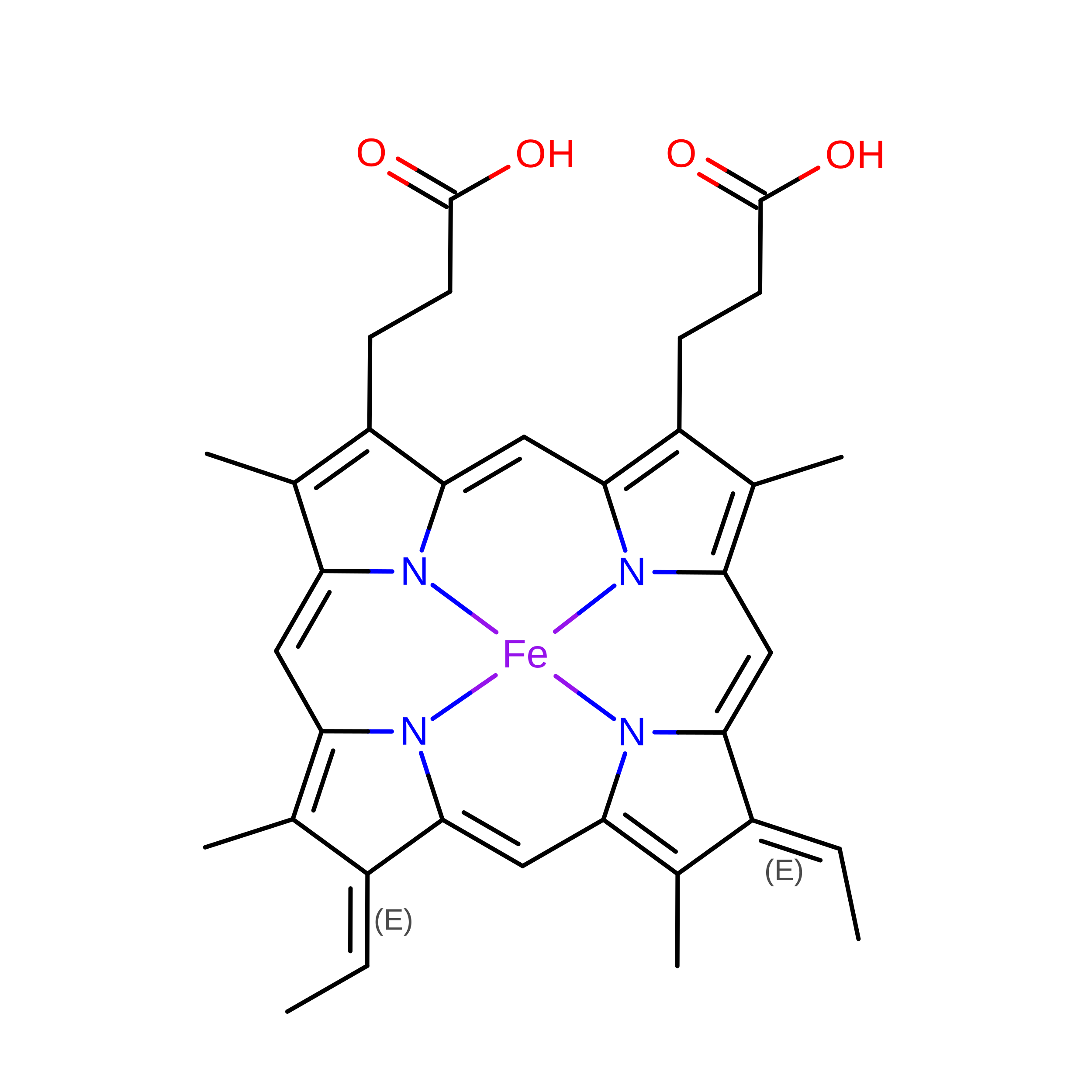
HEC

Query on HEC


Download:Ideal Coordinates CCD File
B [auth A]HEME C
C34 H34 Fe N4 O4
HXQIYSLZKNYNMH-LJNAALQVSA-N
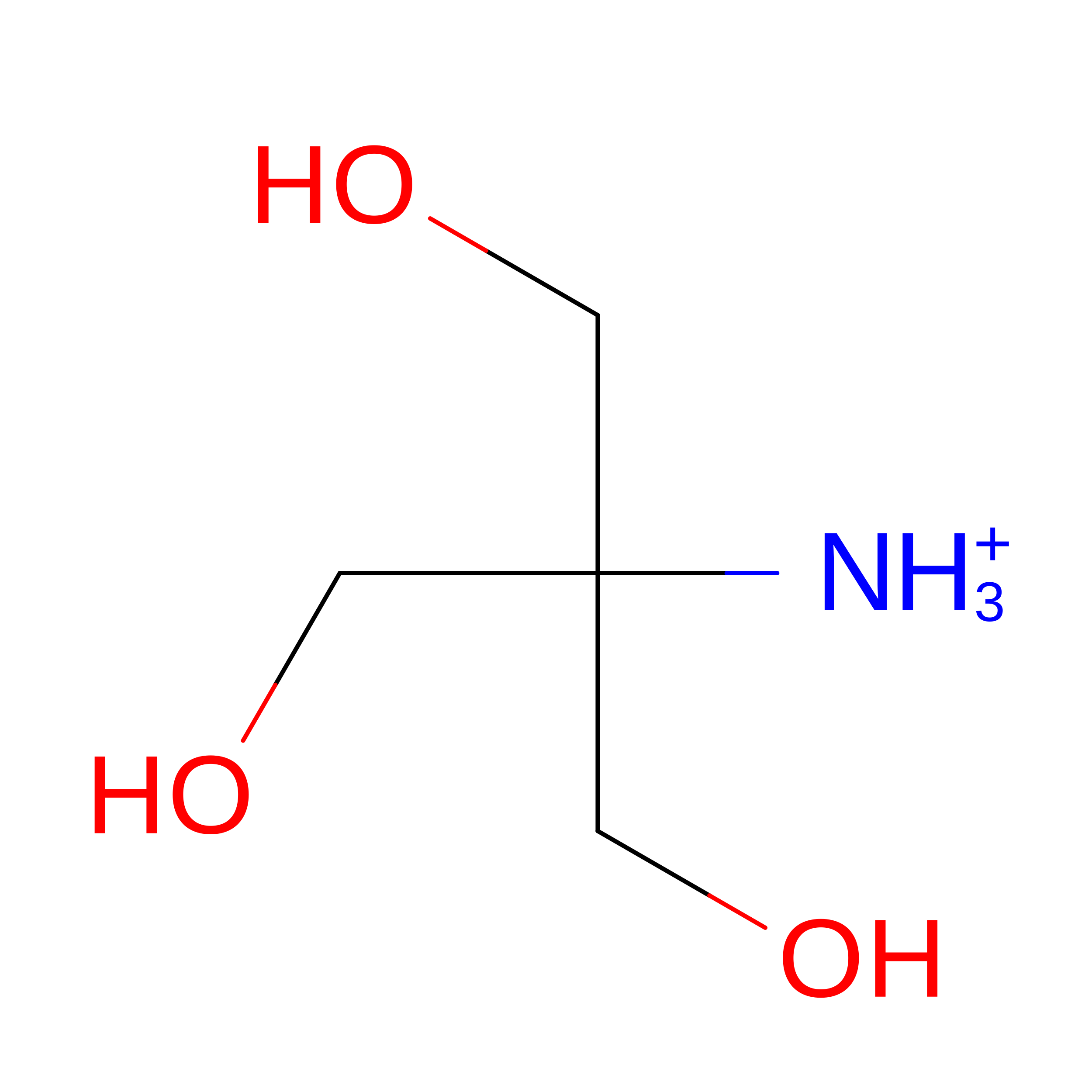
TRS

Query on TRS


Download:Ideal Coordinates CCD File
C [auth A]2-AMINO-2-HYDROXYMETHYL-PROPANE-1,3-DIOL
C4 H12 N O3
LENZDBCJOHFCAS-UHFFFAOYSA-O
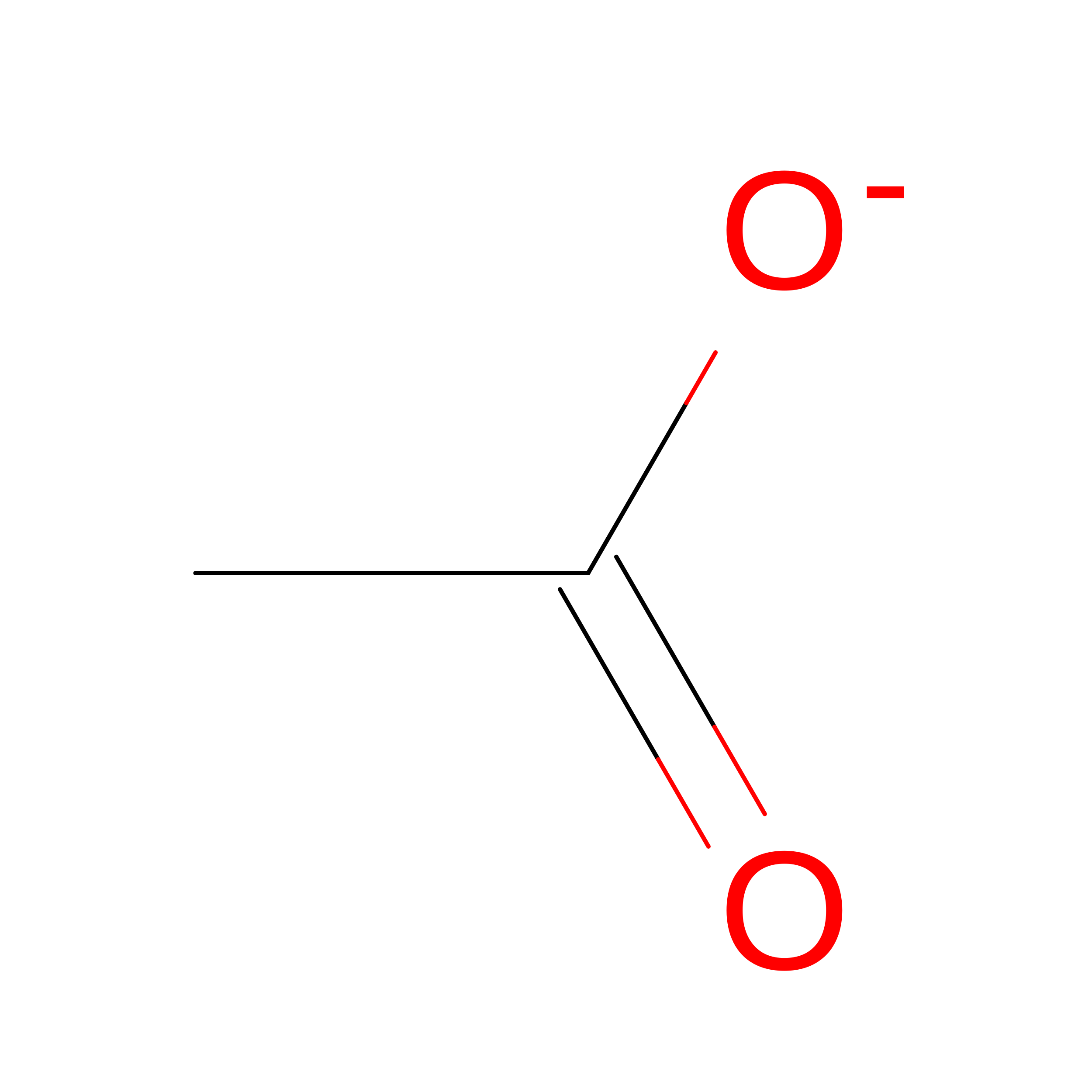
ACT

Query on ACT


Download:Ideal Coordinates CCD File
D [auth A]ACETATE ION
C2 H3 O2
QTBSBXVTEAMEQO-UHFFFAOYSA-M

Experimental Data & Validation

Experimental Data

  • Method: X-RAY DIFFRACTION
  • Resolution: 1.30 Å
  • R-Value Free:  0.170 (Depositor) 
  • R-Value Observed: 0.142 (Depositor) 
Space Group: P 41 21 2
Unit Cell:
Length ( Å )Angle ( ˚ )
a = 54.049α = 90
b = 54.049β = 90
c = 91.347γ = 90
Software Package:
Software NamePurpose
SHELXL-97refinement
DENZOdata reduction
SCALEPACKdata scaling
SHARPphasing

Structure Validation

View Full Validation Report


Entry History 

Deposition Data

Revision History  (Full details and data files)

  • Version 1.0: 2005-01-19
    Type: Initial release
  • Version 1.1: 2011-05-08
    Changes: Version format compliance
  • Version 1.2: 2011-07-13
    Changes: Version format compliance
  • Version 2.0: 2019-01-23
    Changes: Advisory, Atomic model, Data collection, Database references, Derived calculations, Non-polymer description, Structure summary
  • Version 2.1: 2019-05-22
    Changes: Data collection, Derived calculations, Refinement description
  • Version 2.2: 2024-11-13
    Changes: Data collection, Database references, Derived calculations, Structure summary