1TYS | pdb_00001tys

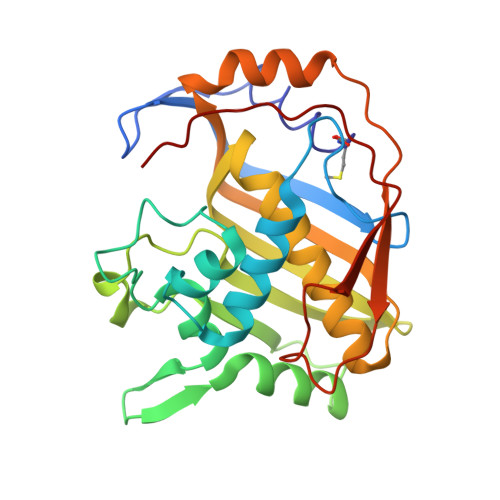
WATER-MEDIATED SUBSTRATE(SLASH)PRODUCT DISCRIMINATION: THE PRODUCT COMPLEX OF THYMIDYLATE SYNTHASE AT 1.83 ANGSTROMS


Experimental Data Snapshot

  • Method: X-RAY DIFFRACTION
  • Resolution: 1.80 Å
  • R-Value Work: 
    0.183 (Depositor) 
  • R-Value Observed: 
    0.183 (Depositor) 

wwPDB Validation 3D Report Full Report

Validation slider image for 1TYS

This is version 1.4 of the entry. See complete history

Literature

Water-mediated substrate/product discrimination: the product complex of thymidylate synthase at 1.83 A.

Fauman, E.B.Rutenber, E.E.Maley, G.F.Maley, F.Stroud, R.M.

(1994) Biochemistry 33: 1502-1511

  • DOI: https://doi.org/10.1021/bi00172a029
  • Primary Citation Related Structures: 
    1TYS

  • PubMed Abstract: 

    In an irreversible enzyme-catalyzed reaction, strong binding of the products would lead to substantial product inhibition. The X-ray crystal structure of the product complex of thymidylate synthase (1.83-A resolution, R factor = 0.183 for all data between 7.0 and 1.83 A) identifies a bound water molecule that serves to disfavor binding of the product nucleotide, dTMP. This water molecule is hydrogen bonded to absolutely conserved Tyr 146 (using the Lactobacillus casei numbering system) and is displaced by the C7 methyl group of the reaction product thymidylate. The relation between this observation and kinetic and thermodynamic values is discussed. The structure reveals a carbamate modified N-terminus that binds in a highly conserved site, replaced by side chains that can exploit the same site in other TS sequences. The enzyme-products complex is compared to the previously determined structure of enzyme-substrate-cofactor analog. This comparison reveals changes that occur between the first covalent complex formed between enzyme and substrate with an inhibitory cofactor analog and the completed reaction. The almost identical arrangement of ligands in these two structures contributes to our model for the TS reaction and verifies the physiological relevance of the mode in which potent inhibitors bind to this target for rational drug design.


  • Organizational Affiliation
    • Department of Biochemistry and Biophysics, University of California, San Francisco 94143-0448.

Macromolecule Content 

  • Total Structure Weight: 31.31 kDa 
  • Atom Count: 2,386 
  • Modeled Residue Count: 264 
  • Deposited Residue Count: 264 
  • Unique protein chains: 1

Macromolecules

Find similar proteins by:|  3D Structure
Entity ID: 1
MoleculeChains  Sequence LengthOrganismDetailsImage
THYMIDYLATE SYNTHASE264Escherichia coliMutation(s): 0 
EC: 2.1.1.45
UniProt
Find proteins for P0A884 (Escherichia coli (strain K12))
Explore P0A884 
Go to UniProtKB:  P0A884
Entity Groups
Sequence Clusters30% Identity50% Identity70% Identity90% Identity95% Identity100% Identity
UniProt GroupP0A884
Sequence Annotations
Expand
Reference Sequence

Small Molecules

Ligands 2 Unique
IDChains Name / Formula / InChI Key2D Diagram3D Interactions
DHF

Query on DHF


Download:Ideal Coordinates CCD File
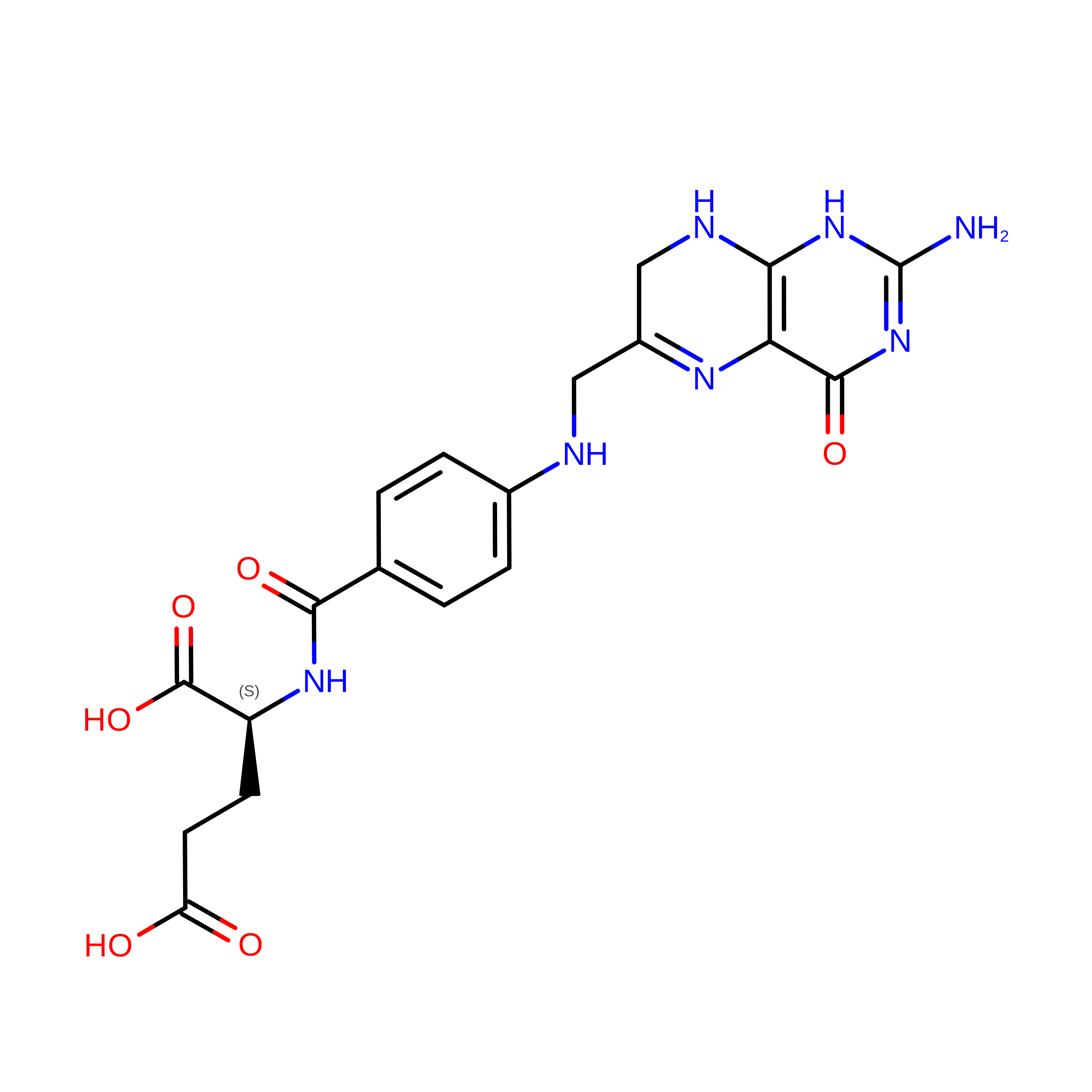
C [auth A]DIHYDROFOLIC ACID
C19 H21 N7 O6
OZRNSSUDZOLUSN-LBPRGKRZSA-N
TMP

Query on TMP


Download:Ideal Coordinates CCD File
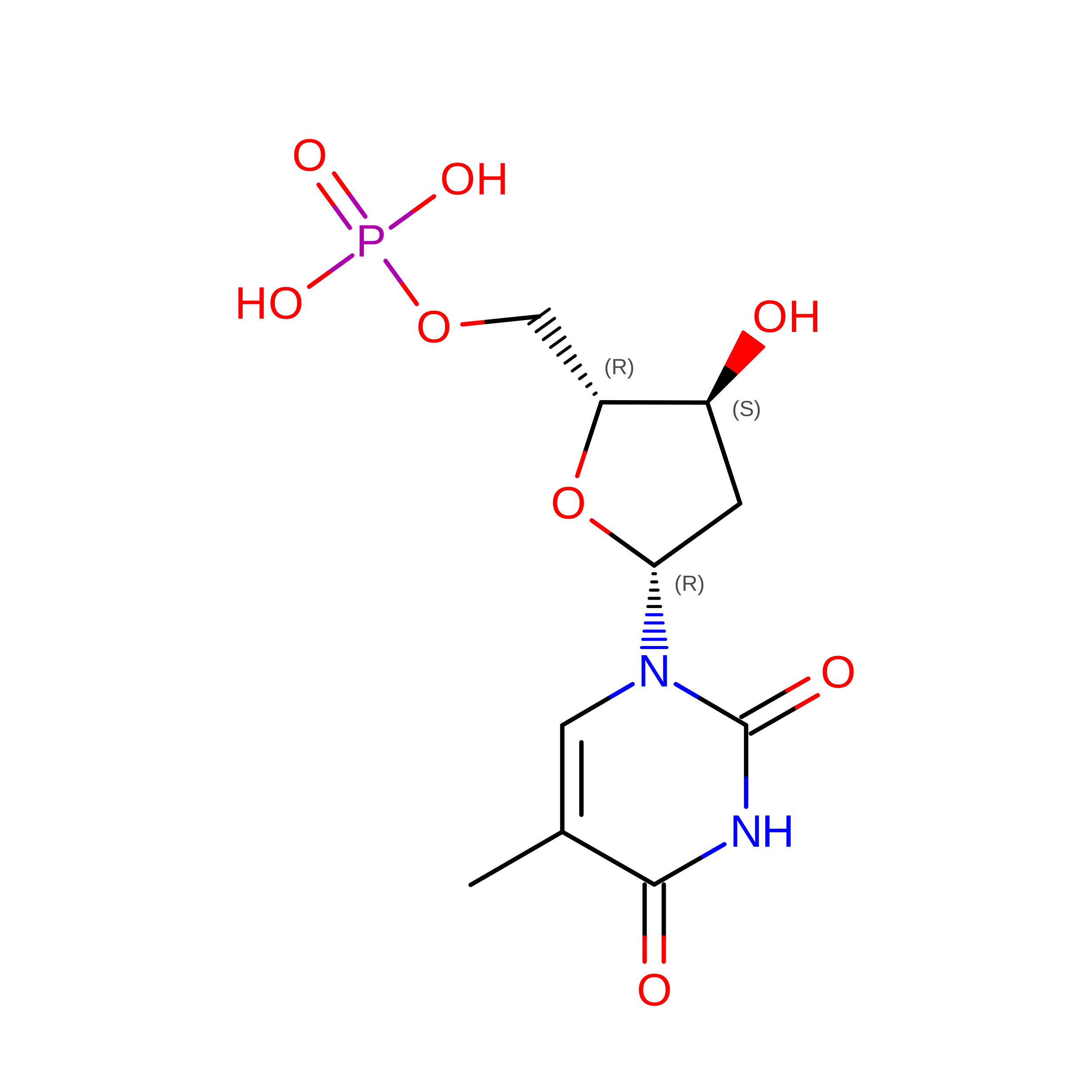
B [auth A]THYMIDINE-5'-PHOSPHATE
C10 H15 N2 O8 P
GYOZYWVXFNDGLU-XLPZGREQSA-N
Modified Residues  1 Unique
IDChains TypeFormula2D DiagramParent
CXM
Query on CXM
A
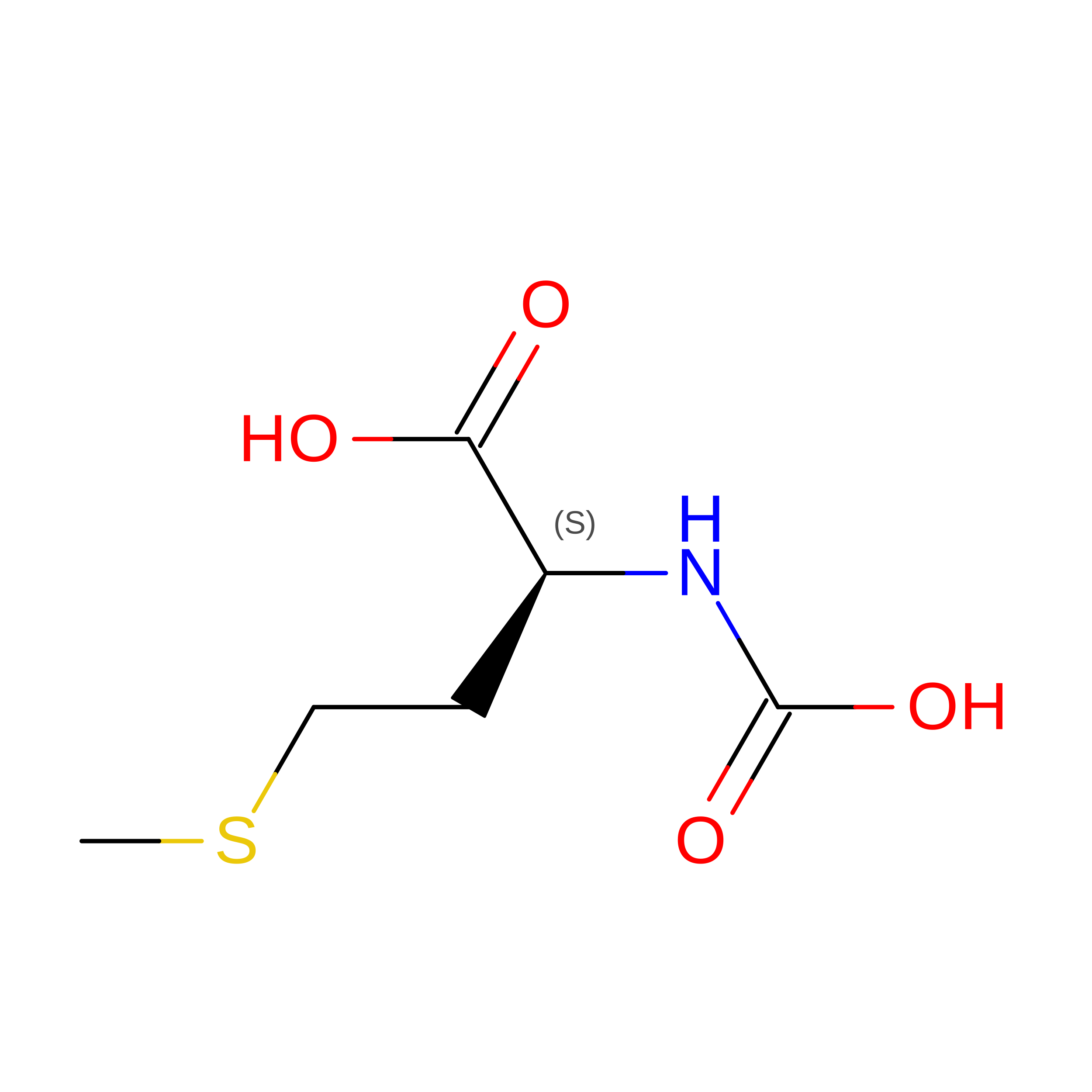
L-PEPTIDE LINKINGC6 H11 N O4 SMET

Experimental Data & Validation

Experimental Data

  • Method: X-RAY DIFFRACTION
  • Resolution: 1.80 Å
  • R-Value Work:  0.183 (Depositor) 
  • R-Value Observed: 0.183 (Depositor) 
Space Group: P 31 2 1
Unit Cell:
Length ( Å )Angle ( ˚ )
a = 71.97α = 90
b = 71.97β = 90
c = 115.04γ = 120
Software Package:
Software NamePurpose
X-PLORmodel building
X-PLORrefinement
X-PLORphasing

Structure Validation

View Full Validation Report


Entry History 

Deposition Data

Revision History  (Full details and data files)

  • Version 1.0: 1994-06-22
    Type: Initial release
  • Version 1.1: 2008-03-24
    Changes: Version format compliance
  • Version 1.2: 2011-07-13
    Changes: Derived calculations, Version format compliance
  • Version 1.3: 2024-06-05
    Changes: Data collection, Database references, Derived calculations, Other
  • Version 1.4: 2024-11-20
    Changes: Structure summary