Download Mendeley
Crystal Structure of Toxoplasma Gondii Hypoxanthine-Guanine Phosphoribosyltransferase with Xmp, Pyrophosphate and Two Mg2+ Ions Bound: Insights Into the Catalytic Mechanism
Heroux, A., White, E.L., Ross, L.J., Davis, R.L., Borhani, D.W.(1999) Biochemistry 38: 14495
- PubMed: 10545171 Search on PubMed
- DOI: https://doi.org/10.1021/bi990508i
- Primary Citation Related Structures:
1QK5 - PubMed Abstract:
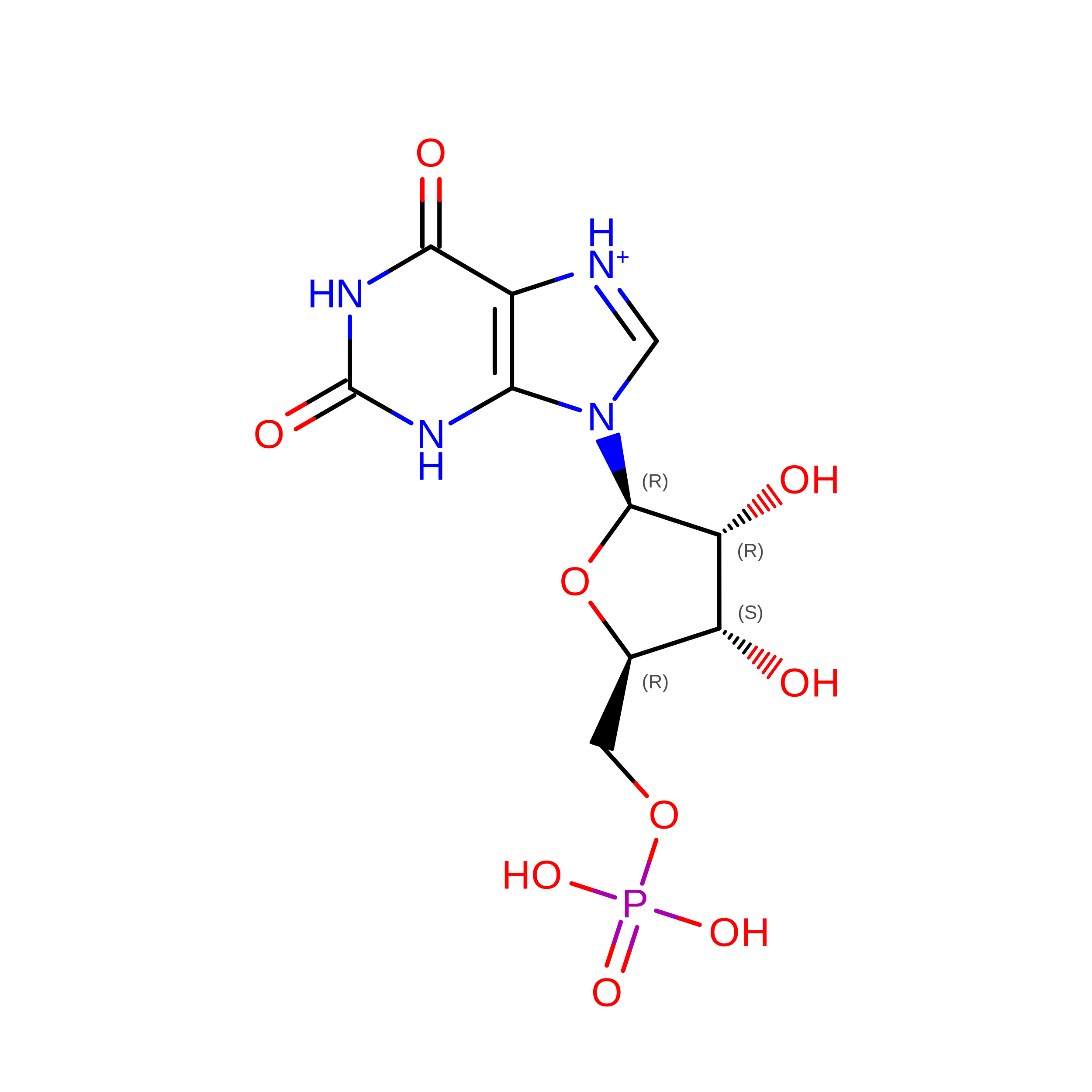
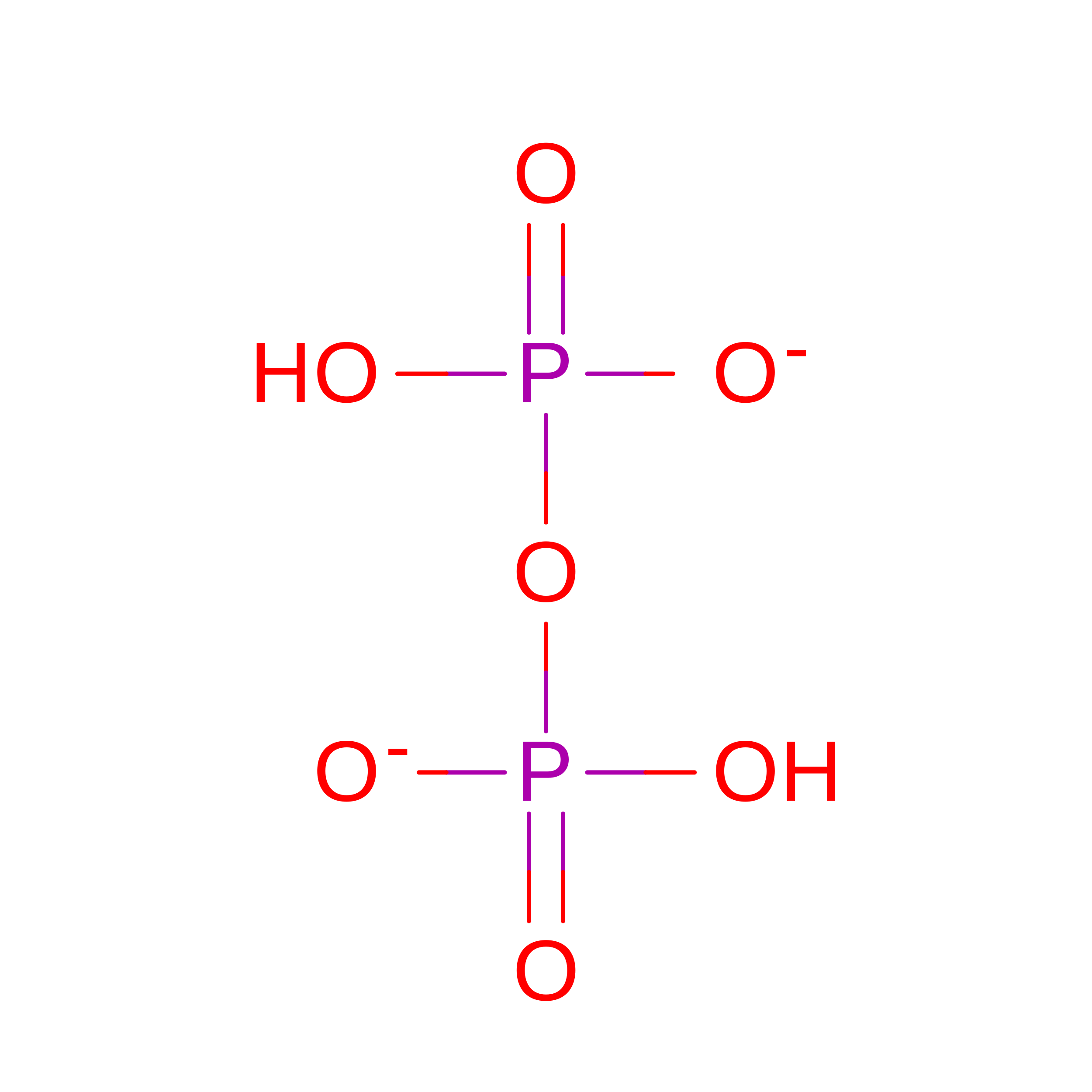
The crystal structure of the Toxoplasma gondii hypoxanthine-guanine phosphoribosyltransferase (HGPRT)-xanthosine 5'-monophosphate (XMP)-pyrophosphate-Mg(2+) ternary complex has been determined at 1. 60 A resolution. This biproduct, post-transition state structure is of a T. gondii HGPRT mutant (Asp150Ala or D150A). The D150A mutant has reduced activity (k(cat) lower by 11-, 296-, and 8.6-fold for hypoxanthine, guanine, and xanthine, respectively) compared to wild-type T. gondii HGPRT. The Michaelis constants for purine bases are altered only slightly, whereas those for alpha-D-5-phosphoribosyl 1-pyrophosphate (PRPP) are lower by approximately 6.5-fold. The ternary complex crystallizes in space group C222(1) (a = 55.21 A, b = 112.25 A, and c = 144.28 A) with two subunits in the asymmetric unit; the HGPRT tetramer is completed by the application of 2-fold crystallographic symmetry. All active sites contain XMP ¿bound in a fashion similar to that of the guanosine 5'-monophosphate (GMP) and inosine 5'-monophosphate (IMP) complexes reported in the preceding article [Héroux, A., et al. (1999) Biochemistry 38, 14485-14494]¿, pyrophosphate, and two Mg(2+) ions. Each Mg(2+) ion is octahedrally coordinated by two terminal pyrophosphate oxygen atoms and several ordered water molecules. This structure shows how HGPRT uses two Mg(2+) ions to orient and activate the pyrophosphate moiety of PRPP for attack by a purine base, and why mutation in humans of the residue corresponding to Asp206, the only HGPRT amino acid that directly contacts the Mg(2+) ions, causes Lesch-Nyhan syndrome (HGPRT(Kinston), D193N). The Leu78-Lys79 peptide bond in the active site adopts the cis configuration, which it must to bind PRPP or pyrophosphate. The contribution of cis-trans isomerization of this peptide bond to the energetics of substrate binding and product release is discussed. A comprehensive description of the HGPRT reaction mechanism is also proposed.
- Drug Discovery Division, Southern Research Institute, Birmingham, Alabama 35205, USA.
Organizational Affiliation: