Download Mendeley
The 1.8-A X-ray structure of the Escherichia coli PotD protein complexed with spermidine and the mechanism of polyamine binding.
Sugiyama, S., Matsuo, Y., Maenaka, K., Vassylyev, D.G., Matsushima, M., Kashiwagi, K., Igarashi, K., Morikawa, K.(1996) Protein Sci 5: 1984-1990
- PubMed: 8897598 Search on PubMedSearch on PubMed Central
- DOI: https://doi.org/10.1002/pro.5560051004
- Primary Citation Related Structures:
1POT - PubMed Abstract:
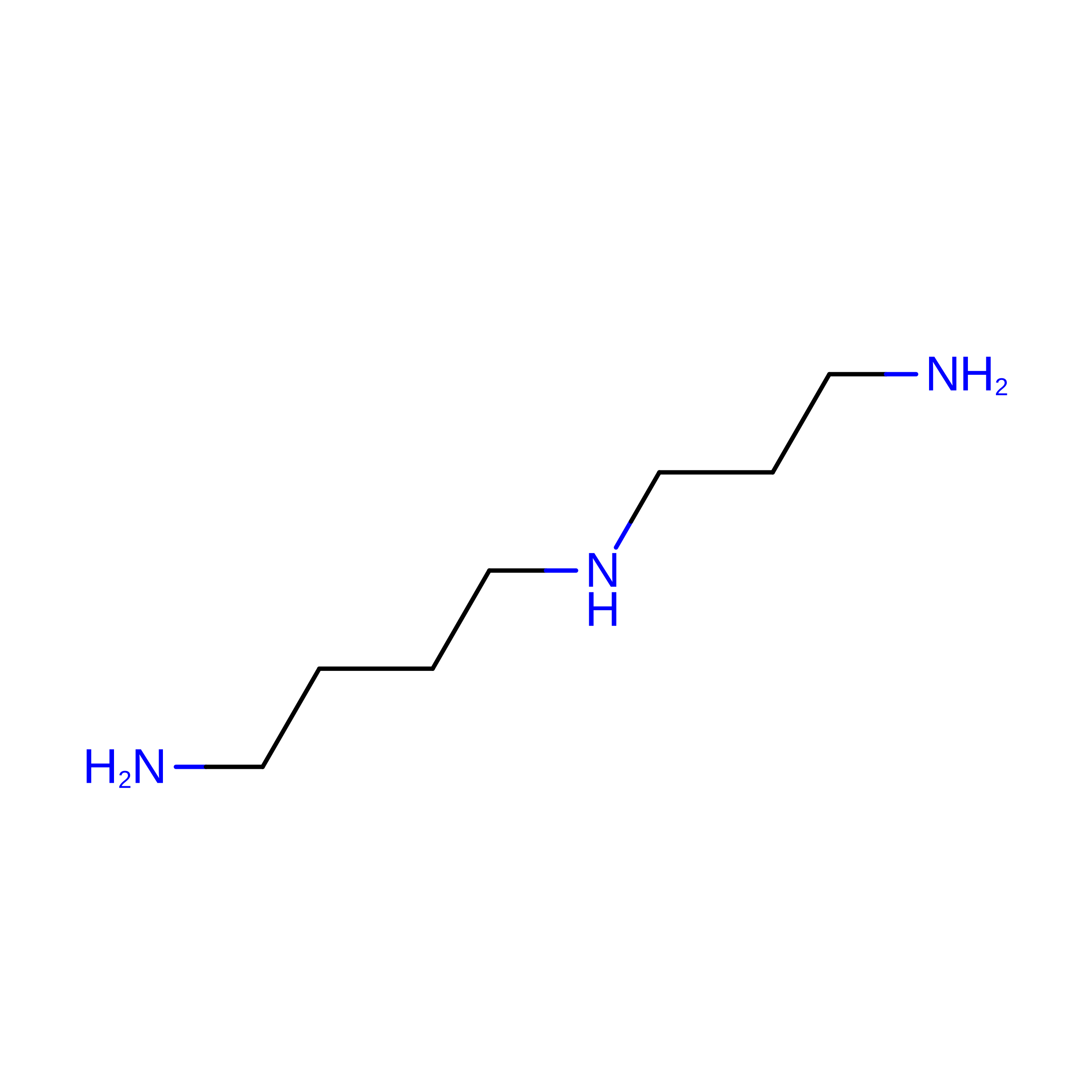
The PotD protein from Escherichia coli is one of the components of the polyamine transport system present in the periplasm. This component specifically binds either spermidine or putrescine. The crystal structure of the E. coli PotD protein complexed with spermidine was solved at 1.8 A resolution and revealed the detailed substrate-binding mechanism. The structure provided the detailed conformation of the bound spermidine. Furthermore, a water molecule was clearly identified in the binding site lying between the amino-terminal domain and carboxyl-terminal domain. Through this water molecule, the bound spermidine molecule forms two hydrogen bonds with Thr 35 and Ser 211. Another periplasmic component of polyamine transport, the PotF protein, exhibits 35% sequence identity with the PotD protein, and it binds only putrescine, not spermidine. To understand these different substrate specificities, model building of the PotF protein was performed on the basis of the PotD crystal structure. The hypothetical structure suggests that the side chain of Lys 349 in PotF inhibits spermidine binding because of the repulsive forces between its positive charge and spermidine. On the other hand, putrescine could be accommodated into the binding site without any steric hindrance because its molecular size is much smaller than that of spermidine, and the positively charged amino group is relatively distant from Lys 349.
- Protein Engineering Research Institute, Osaka, Japan.
Organizational Affiliation: