1H98 | pdb_00001h98

New Insights into Thermostability of Bacterial Ferredoxins: High Resolution Crystal Structure of the Seven-Iron Ferredoxin from Thermus thermophilus


Experimental Data Snapshot

  • Method: X-RAY DIFFRACTION
  • Resolution: 1.64 Å
  • R-Value Free: 
    0.189 (Depositor) 
  • R-Value Work: 
    0.159 (Depositor) 
  • R-Value Observed: 
    0.159 (Depositor) 

Starting Model: experimental
View more details

wwPDB Validation 3D Report Full Report

Validation slider image for 1H98

This is version 1.3 of the entry. See complete history

Literature

New Insights Into the Thermostability of Bacterial Ferredoxins: High-Resolution Crystal Structure of the Seven-Iron Ferredoxin from Thermus Thermophilus

Macedo-Ribeiro, S.Martins, B.M.Pereira, P.J.B.Buse, G.Huber, R.Soulimane, T.

(2001) J Biol Inorg Chem 6: 663

  • DOI: https://doi.org/10.1007/s007750100243
  • Primary Citation Related Structures: 
    1H98

  • PubMed Abstract: 

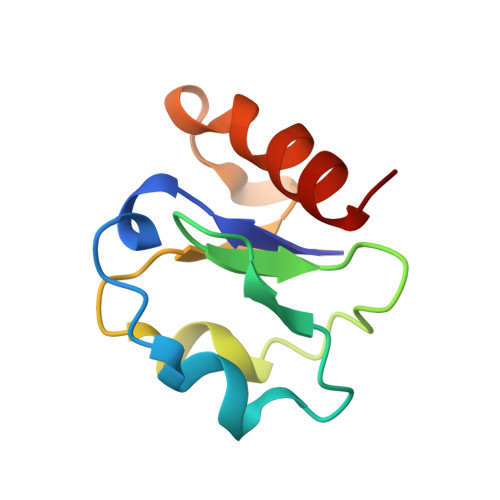
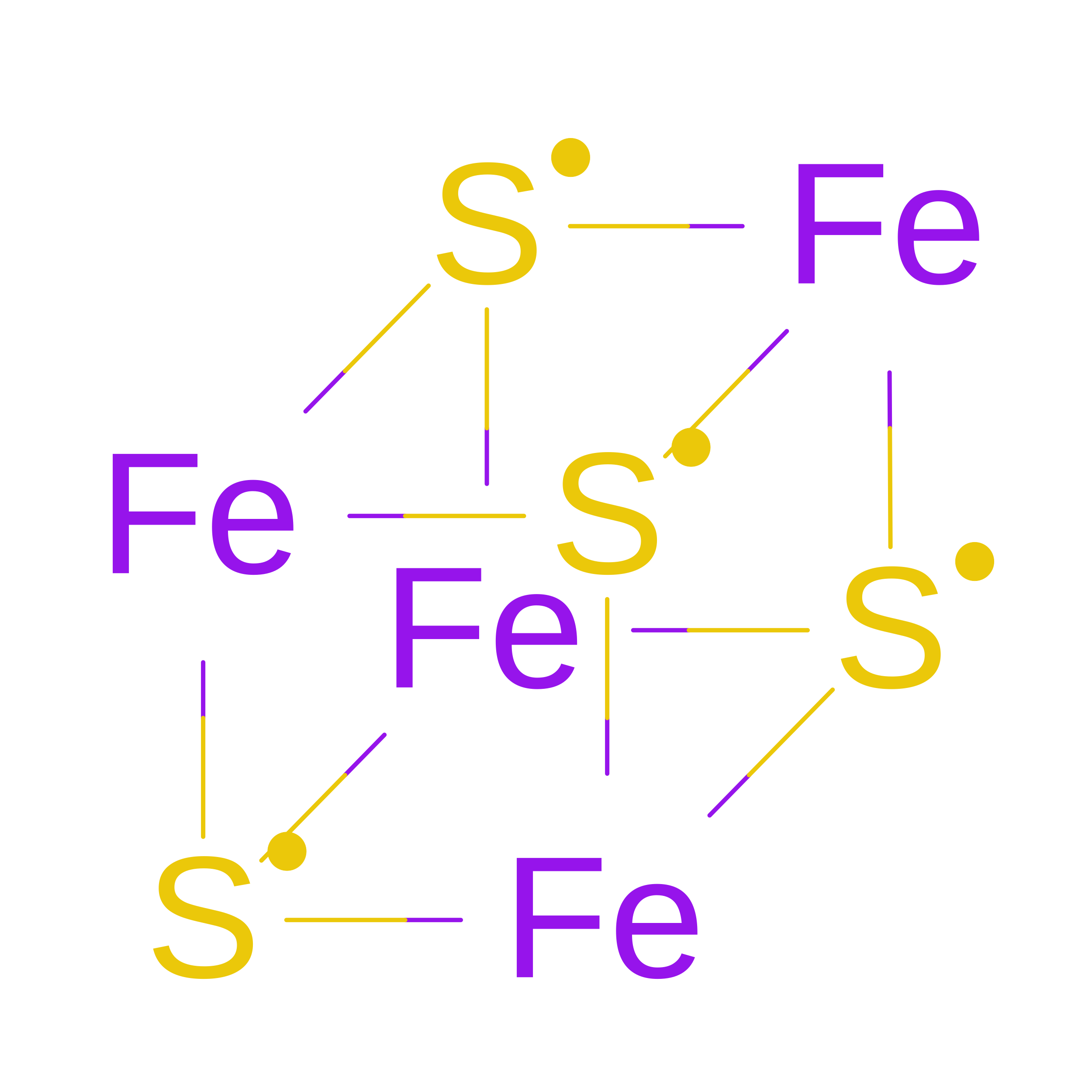
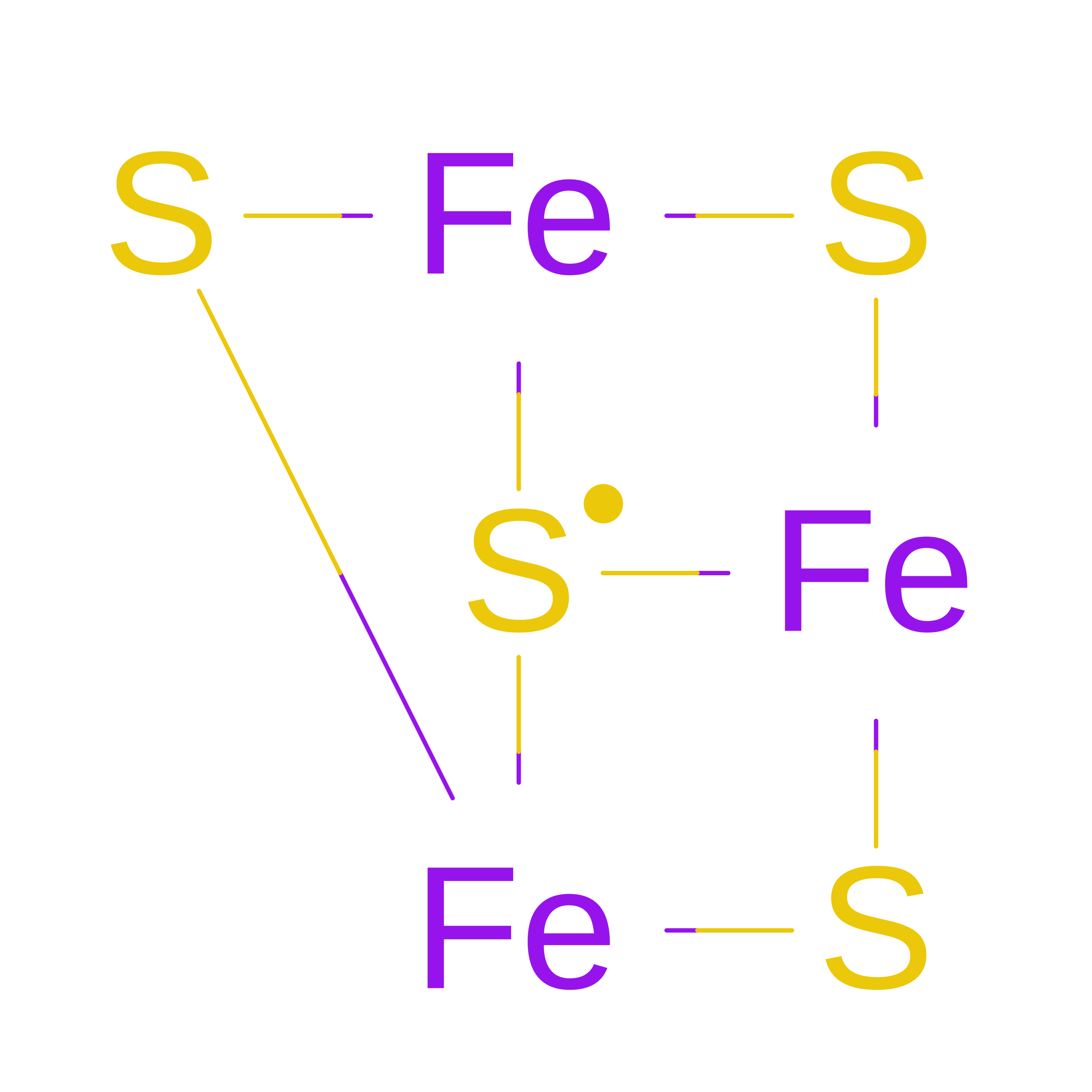
    The crystal structure of the seven-iron ferredoxin from Thermus thermophilus (FdTt) has been determined at 1.64 A resolution, allowing us to unveil the common mechanisms of thermostabilization within "bacterial-type" ferredoxins. FdTt and other homologous thermophilic seven-iron ferredoxins are smaller than their mesophilic counterparts. Thermostabilizing features are optimized in a minimal structural and functional unit, with an extensive cross-linking of secondary structure elements mediated by improved polar and hydrophobic interactions. Most of the potentially stabilizing features are focused on the vicinity of the functional [3Fe-4S] cluster. The structural [4Fe-4S] cluster is shielded in thermophilic FdTt by an increased number of polar interactions involving the two N-terminal residues. Comparisons with the hyperthermostable ferredoxin from Thermotoga maritima reveal that (1) a reduction in the number of non-glycine residues in strained conformations, (2) improved polar interactions within the common iron-sulfur cluster binding (betaalphabeta)2 motif, and (3) an optimized charge distribution at the protein surface, constitute a common strategy for increasing the thermal stability of these ferredoxins.


  • Organizational Affiliation
    • Max-Planck-Institut für Biochemie, Abteilung Strukturforschungm, Martinsried, Germany. sandra@aramis.ibmc.up.pt

Macromolecule Content 

  • Total Structure Weight: 9.34 kDa 
  • Atom Count: 668 
  • Modeled Residue Count: 77 
  • Deposited Residue Count: 78 
  • Unique protein chains: 1

Macromolecules

Find similar proteins by:|  3D Structure
Entity ID: 1
MoleculeChains  Sequence LengthOrganismDetailsImage
FERREDOXIN78Thermus aquaticusMutation(s): 0 
UniProt
Find proteins for P03942 (Thermus thermophilus (strain ATCC 27634 / DSM 579 / HB8))
Explore P03942 
Go to UniProtKB:  P03942
Entity Groups
Sequence Clusters30% Identity50% Identity70% Identity90% Identity95% Identity100% Identity
UniProt GroupP03942
Sequence Annotations
Expand
Reference Sequence

Small Molecules

Ligands 2 Unique
IDChains Name / Formula / InChI Key2D Diagram3D Interactions
SF4

Query on SF4


Download:Ideal Coordinates CCD File
B [auth A]IRON/SULFUR CLUSTER
Fe4 S4
LJBDFODJNLIPKO-UHFFFAOYSA-N
F3S

Query on F3S


Download:Ideal Coordinates CCD File
C [auth A]FE3-S4 CLUSTER
Fe3 S4
FCXHZBQOKRZXKS-UHFFFAOYSA-N

Experimental Data & Validation

Experimental Data

  • Method: X-RAY DIFFRACTION
  • Resolution: 1.64 Å
  • R-Value Free:  0.189 (Depositor) 
  • R-Value Work:  0.159 (Depositor) 
  • R-Value Observed: 0.159 (Depositor) 
Space Group: P 21 21 21
Unit Cell:
Length ( Å )Angle ( ˚ )
a = 29.7α = 90
b = 42.12β = 90
c = 62.99γ = 90
Software Package:
Software NamePurpose
X-PLORrefinement
MOSFLMdata reduction
CCP4data scaling
AMoREphasing

Structure Validation

View Full Validation Report


Entry History 

Deposition Data

Revision History  (Full details and data files)

  • Version 1.0: 2001-11-27
    Type: Initial release
  • Version 1.1: 2011-05-07
    Changes: Version format compliance
  • Version 1.2: 2011-07-13
    Changes: Version format compliance
  • Version 1.3: 2023-12-13
    Changes: Data collection, Database references, Derived calculations, Refinement description