1H41 | pdb_00001h41

Pseudomonas cellulosa E292A alpha-D-glucuronidase mutant complexed with aldotriuronic acid


Experimental Data Snapshot

  • Method: X-RAY DIFFRACTION
  • Resolution: 1.50 Å
  • R-Value Free: 
    0.153 (Depositor) 
  • R-Value Work: 
    0.118 (Depositor), 0.152 (DCC) 
  • R-Value Observed: 
    0.118 (Depositor) 

Starting Model: experimental
View more details

wwPDB Validation 3D Report Full Report

Validation slider image for 1H41

Ligand Structure Quality Assessment 


This is version 1.4 of the entry. See complete history

Literature

The Alpha-Glucuronidase,Glca67A,of Cellvibrio Japonicus Utilizes the Carboxylate and Methyl Groups of Aldobiouronic Acid as Important Substrate Recognition Determinants

Nagy, T.Nurizzo, D.Davies, G.J.Biely, P.Lakey, J.H.Bolam, D.N.Gilbert, H.J.

(2003) J Biological Chem 278: 20286

  • DOI: https://doi.org/10.1074/jbc.M302205200
  • Primary Citation Related Structures: 
    1H41

  • PubMed Abstract: 

    alpha-Glucuronidases are key components of the ensemble of enzymes that degrade the plant cell wall. They hydrolyze the alpha1,2-glycosidic bond between 4-O-methyl-d-glucuronic acid (4-O-MeGlcA) and the xylan or xylooligosaccharide backbone. Here we report the crystal structure of an inactive mutant (E292A) of the alpha-glucuronidase, GlcA67A, from Cellvibrio japonicus in complex with its substrate. The data show that the 4-O-methyl group of the substrate is accommodated within a hydrophobic sheath flanked by Val-210 and Trp-160, whereas the carboxylate moiety is located within a positively charged region of the substrate-binding pocket. The carboxylate side chains of Glu-393 and Asp-365, on the "beta-face" of 4-O-MeGlcA, form hydrogen bonds with a water molecule that is perfectly positioned to mount a nucleophilic attack at the anomeric carbon of the target glycosidic bond, providing further support for the view that, singly or together, these amino acids function as the catalytic base. The capacity of reaction products and product analogues to inhibit GlcA67A shows that the 4-O-methyl group, the carboxylate, and the xylose sugar of aldobiouronic acid all play an important role in substrate binding. Site-directed mutagenesis informed by the crystal structure of enzyme-ligand complexes was used to probe the importance of highly conserved residues at the active site of GlcA67A. The biochemical properties of K288A, R325A, and K360A show that a constellation of three basic amino acids (Lys-288, Arg-325, and Lys-360) plays a critical role in binding the carboxylate moiety of 4-O-MeGlcA. Disruption of the apolar nature of the pocket created by Val-210 (V210N and V210S) has a detrimental effect on substrate binding, although the reduction in affinity is not reflected by an inability to accommodate the 4-O-methyl group. Replacing the two tryptophan residues that stack against the sugar rings of the substrate with alanine (W160A and W543A) greatly reduced activity.


  • Organizational Affiliation
    • School of Cell and Molecular Biosciences, The University of Newcastle upon Tyne, United Kingdom.

Macromolecule Content 

  • Total Structure Weight: 163.51 kDa 
  • Atom Count: 13,218 
  • Modeled Residue Count: 1,401 
  • Deposited Residue Count: 1,416 
  • Unique protein chains: 1

Macromolecules

Find similar proteins by:|  3D Structure
Entity ID: 1
MoleculeChains  Sequence LengthOrganismDetailsImage
ALPHA-GLUCURONIDASE
A, B
708Cellvibrio japonicusMutation(s): 1 
EC: 3.2.1.139 (PDB Primary Data), 3.2.1 (UniProt)
UniProt
Find proteins for B3PC73 (Cellvibrio japonicus (strain Ueda107))
Explore B3PC73 
Go to UniProtKB:  B3PC73
Entity Groups
Sequence Clusters30% Identity50% Identity70% Identity90% Identity95% Identity100% Identity
UniProt GroupB3PC73
Sequence Annotations
Expand
Reference Sequence

Small Molecules

Ligands 3 Unique
IDChains Name / Formula / InChI Key2D Diagram3D Interactions
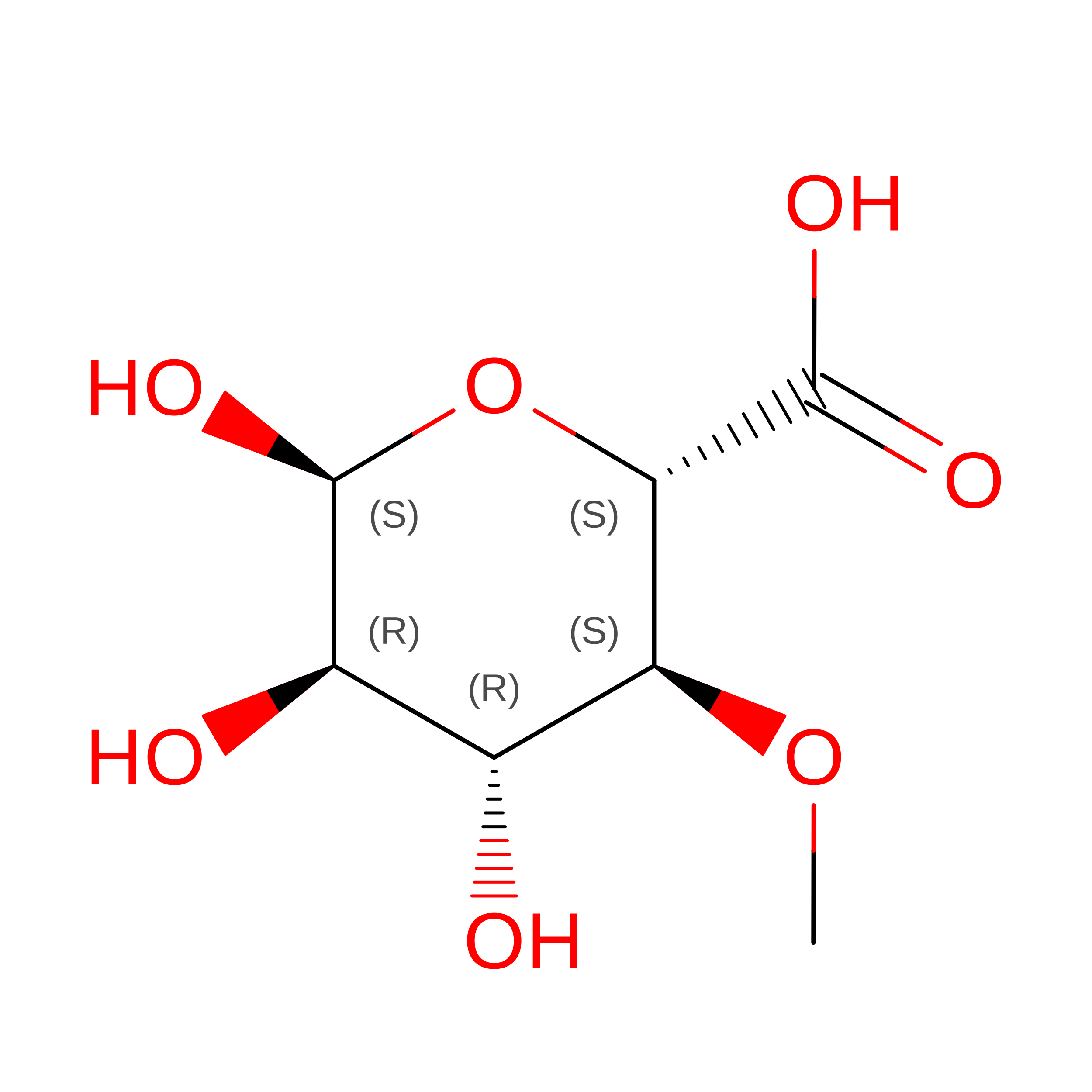
GCV

Query on GCV


Download:Ideal Coordinates CCD File
C [auth A],
W [auth B]
4-O-methyl-alpha-D-glucopyranuronic acid
C7 H12 O7
WGLLPAPKWFDHHV-NRGGUMNKSA-N
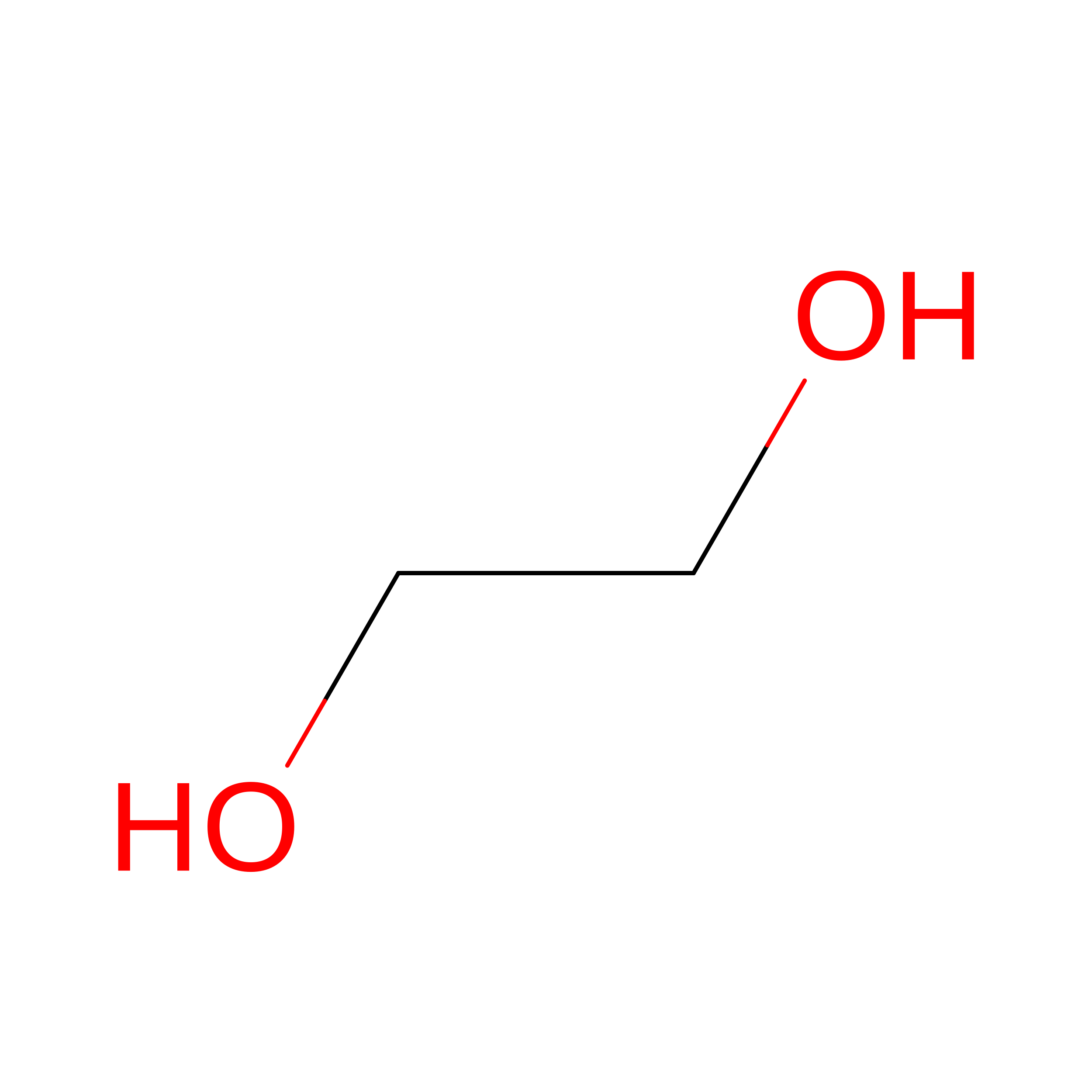
EDO

Query on EDO


Download:Ideal Coordinates CCD File
AA [auth B]
BA [auth B]
CA [auth B]
D [auth A]
DA [auth B]
AA [auth B],
BA [auth B],
CA [auth B],
D [auth A],
DA [auth B],
E [auth A],
EA [auth B],
F [auth A],
FA [auth B],
G [auth A],
GA [auth B],
H [auth A],
HA [auth B],
I [auth A],
IA [auth B],
J [auth A],
JA [auth B],
K [auth A],
KA [auth B],
L [auth A],
M [auth A],
N [auth A],
O [auth A],
P [auth A],
Q [auth A],
X [auth B],
Y [auth B],
Z [auth B]
1,2-ETHANEDIOL
C2 H6 O2
LYCAIKOWRPUZTN-UHFFFAOYSA-N
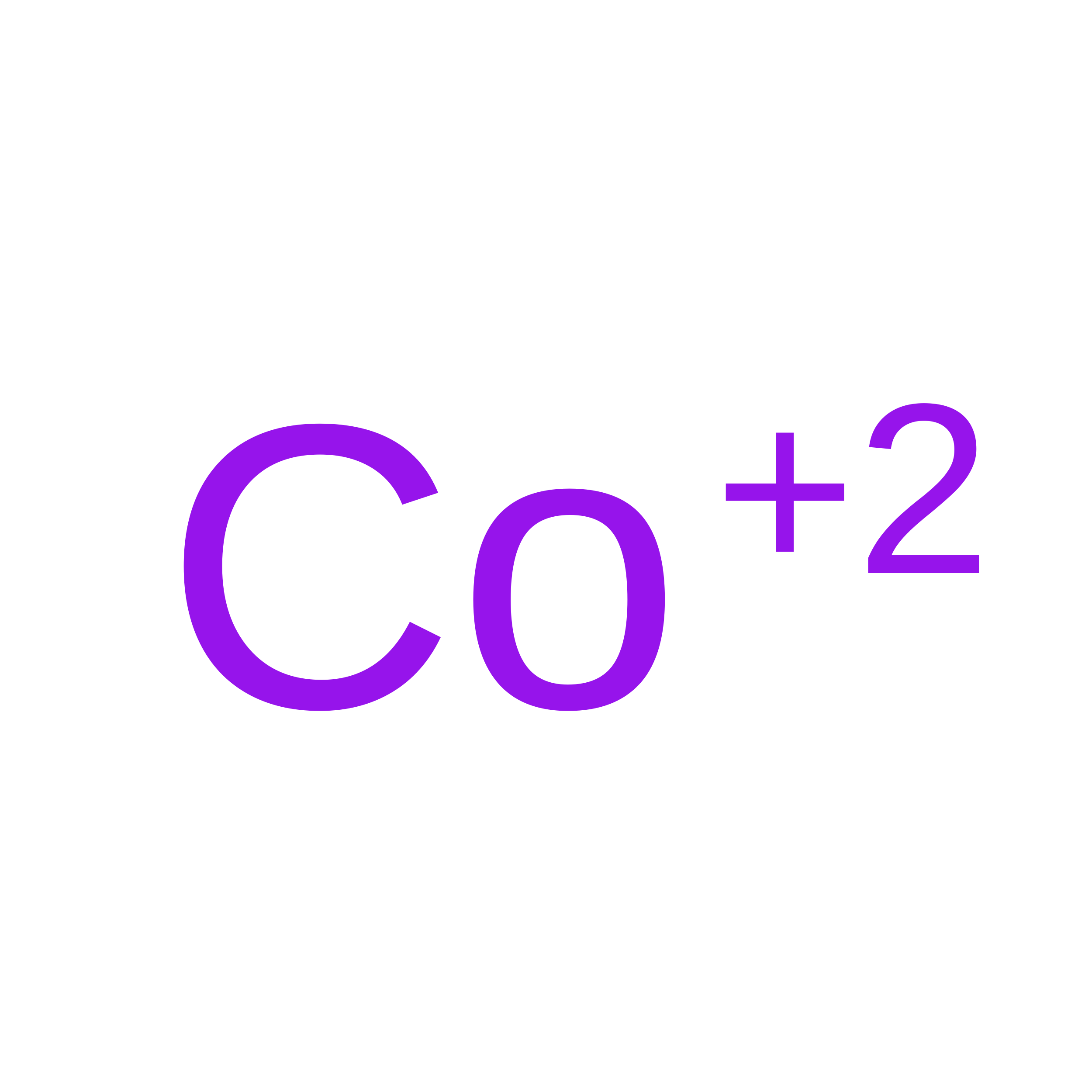
CO

Query on CO


Download:Ideal Coordinates CCD File
LA [auth B]
MA [auth B]
NA [auth B]
OA [auth B]
PA [auth B]
LA [auth B],
MA [auth B],
NA [auth B],
OA [auth B],
PA [auth B],
R [auth A],
S [auth A],
T [auth A],
U [auth A],
V [auth A]
COBALT (II) ION
Co
XLJKHNWPARRRJB-UHFFFAOYSA-N

Experimental Data & Validation

Experimental Data

  • Method: X-RAY DIFFRACTION
  • Resolution: 1.50 Å
  • R-Value Free:  0.153 (Depositor) 
  • R-Value Work:  0.118 (Depositor), 0.152 (DCC) 
  • R-Value Observed: 0.118 (Depositor) 
Space Group: P 1
Unit Cell:
Length ( Å )Angle ( ˚ )
a = 69.412α = 115.09
b = 74.393β = 93.04
c = 87.462γ = 109.44
Software Package:
Software NamePurpose
REFMACrefinement
DENZOdata reduction
SCALEPACKdata scaling

Structure Validation

View Full Validation Report


Ligand Structure Quality Assessment 


Entry History 

Deposition Data

Revision History  (Full details and data files)

  • Version 1.0: 2003-05-01
    Type: Initial release
  • Version 1.1: 2011-05-08
    Changes: Version format compliance
  • Version 1.2: 2011-07-13
    Changes: Version format compliance
  • Version 1.3: 2020-07-29
    Type: Remediation
    Reason: Carbohydrate remediation
    Changes: Data collection, Derived calculations, Other, Structure summary
  • Version 1.4: 2023-12-13
    Changes: Data collection, Database references, Refinement description, Structure summary