1GVU | pdb_00001gvu

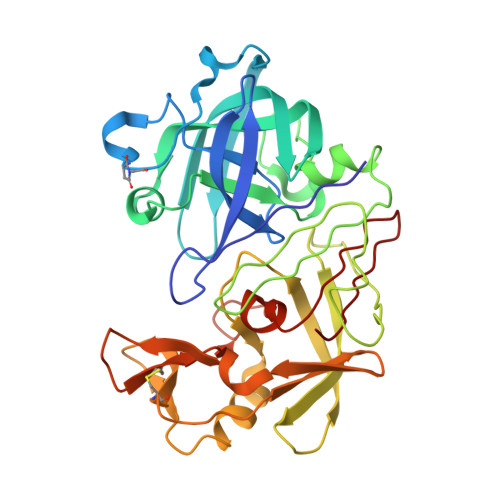
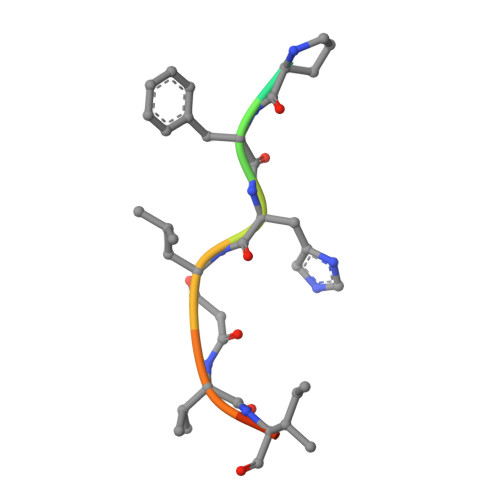
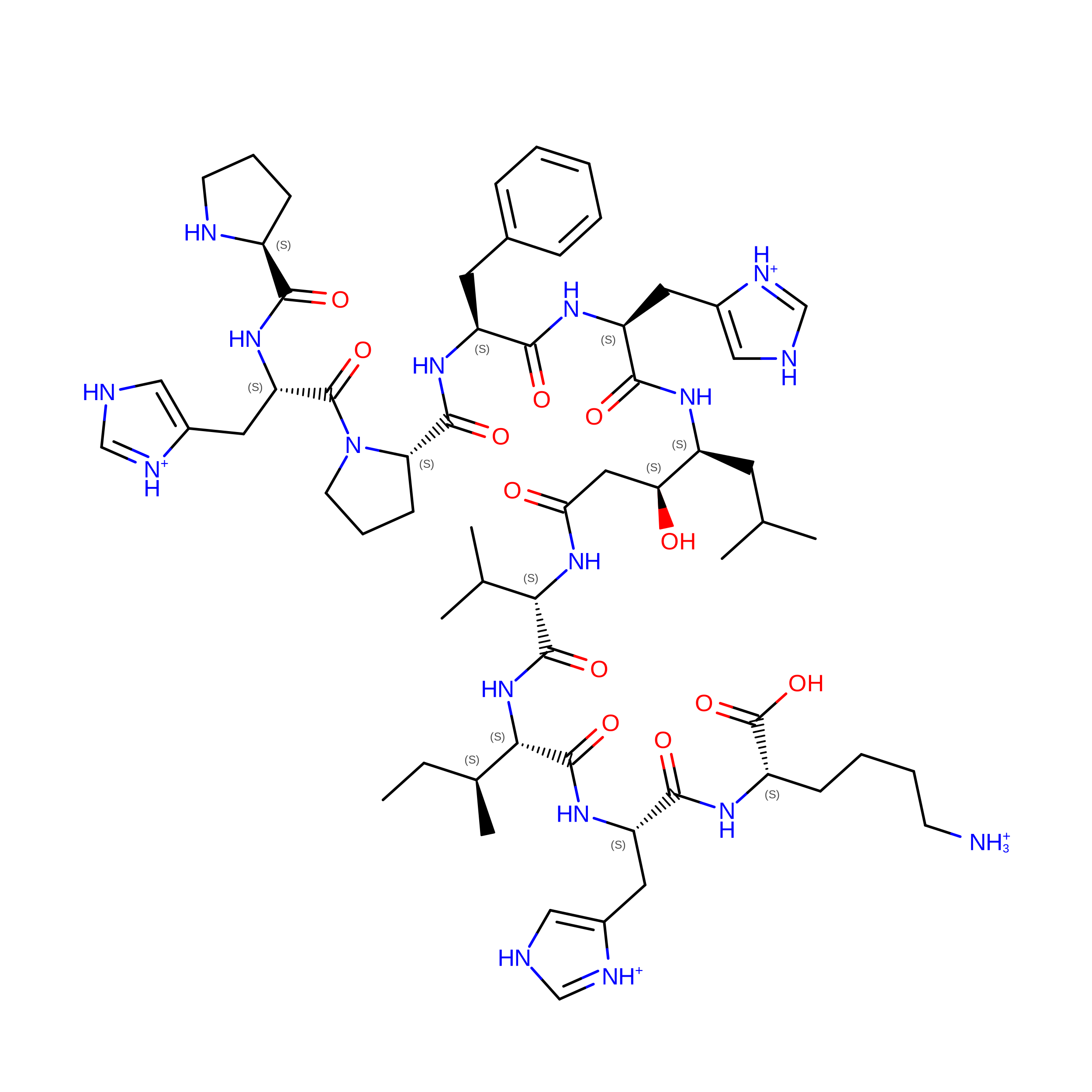
Endothiapepsin complex with H189


Experimental Data Snapshot

  • Method: X-RAY DIFFRACTION
  • Resolution: 0.94 Å
  • R-Value Free: 
    0.139 (Depositor) 
  • R-Value Observed: 
    0.116 (Depositor) 

wwPDB Validation 3D Report Full Report

Validation slider image for 1GVU

This is version 2.0 of the entry. See complete history

Literature

Five Atomic Resolution Structures of Endothiapepsin Inhibitor Complexes: Implications for the Aspartic Proteinase Mechanism

Coates, L.Erskine, P.T.Crump, M.P.Wood, S.P.Cooper, J.B.

(2002) J Mol Biology 318: 1405

  • DOI: https://doi.org/10.1016/s0022-2836(02)00197-3
  • Primary Citation Related Structures: 
    1GVT, 1GVU, 1GVV, 1GVW, 1GVX

  • PubMed Abstract: 

    Endothiapepsin is derived from the fungus Endothia parasitica and is a member of the aspartic proteinase class of enzymes. This class of enzyme is comprised of two structurally similar lobes, each lobe contributing an aspartic acid residue to form a catalytic dyad that acts to cleave the substrate peptide bond. The three-dimensional structures of endothiapepsin bound to five transition state analogue inhibitors (H189, H256, CP-80,794, PD-129,541 and PD-130,328) have been solved at atomic resolution allowing full anisotropic modelling of each complex. The active sites of the five structures have been studied with a view to studying the catalytic mechanism of the aspartic proteinases by locating the active site protons by carboxyl bond length differences and electron density analysis. In the CP-80,794 structure there is excellent electron density for the hydrogen on the inhibitory statine hydroxyl group which forms a hydrogen bond with the inner oxygen of Asp32. The location of this proton has implications for the catalytic mechanism of the aspartic proteinases as it is consistent with the proposed mechanism in which Asp32 is the negatively charged aspartate. A number of short hydrogen bonds (approximately 2.6 A) with ESD values of around 0.01 A that may have a role in catalysis have been identified within the active site of each structure; the lengths of these bonds have been confirmed using NMR techniques. The possibility and implications of low barrier hydrogen bonds in the active site are considered.


  • Organizational Affiliation
    • School of Biological Sciences, University of Southampton, UK. leightonc@bigfoot.com

Macromolecule Content 

  • Total Structure Weight: 35.26 kDa 
  • Atom Count: 2,937 
  • Modeled Residue Count: 335 
  • Deposited Residue Count: 339 
  • Unique protein chains: 2

Macromolecules

Find similar proteins by:|  3D Structure
Entity ID: 1
MoleculeChains  Sequence LengthOrganismDetailsImage
ENDOTHIAPEPSIN329Cryphonectria parasiticaMutation(s): 0 
EC: 3.4.23.22
UniProt
Find proteins for P11838 (Cryphonectria parasitica)
Explore P11838 
Go to UniProtKB:  P11838
Entity Groups
Sequence Clusters30% Identity50% Identity70% Identity90% Identity95% Identity100% Identity
UniProt GroupP11838
Sequence Annotations
Expand
Reference Sequence
Find similar proteins by:  Sequence   |   3D Structure  
Entity ID: 2
MoleculeChains  Sequence LengthOrganismDetailsImage
INHIBITOR, H189B [auth I]10synthetic constructMutation(s): 0 
UniProt
Find proteins for P01017 (Bos taurus)
Explore P01017 
Go to UniProtKB:  P01017
Entity Groups
Sequence Clusters30% Identity50% Identity70% Identity90% Identity95% Identity100% Identity
UniProt GroupP01017
Sequence Annotations
Expand
Reference Sequence

Small Molecules

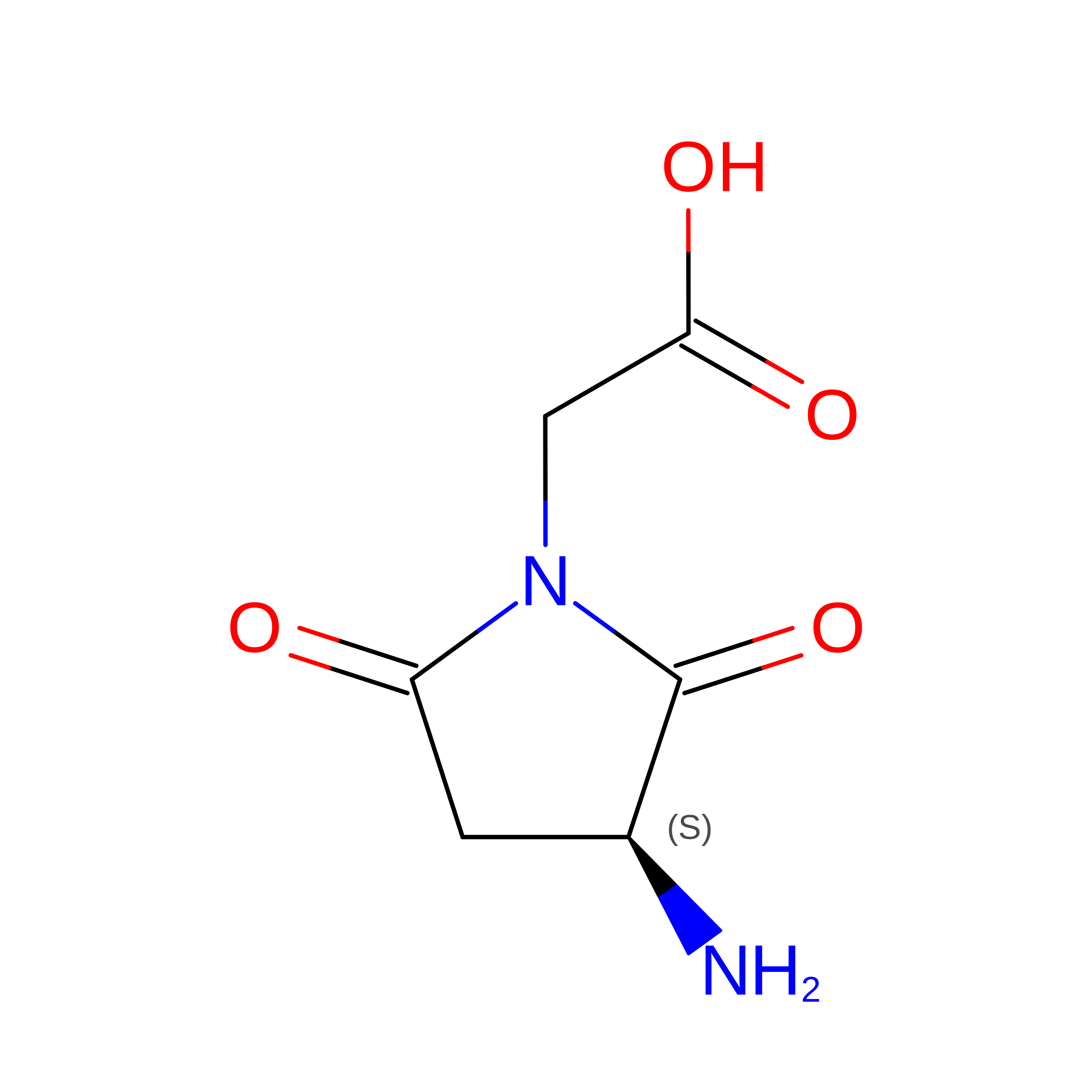
Modified Residues  1 Unique
IDChains TypeFormula2D DiagramParent
SUI
Query on SUI
A
L-PEPTIDE LINKINGC6 H8 N2 O4ASP, GLY
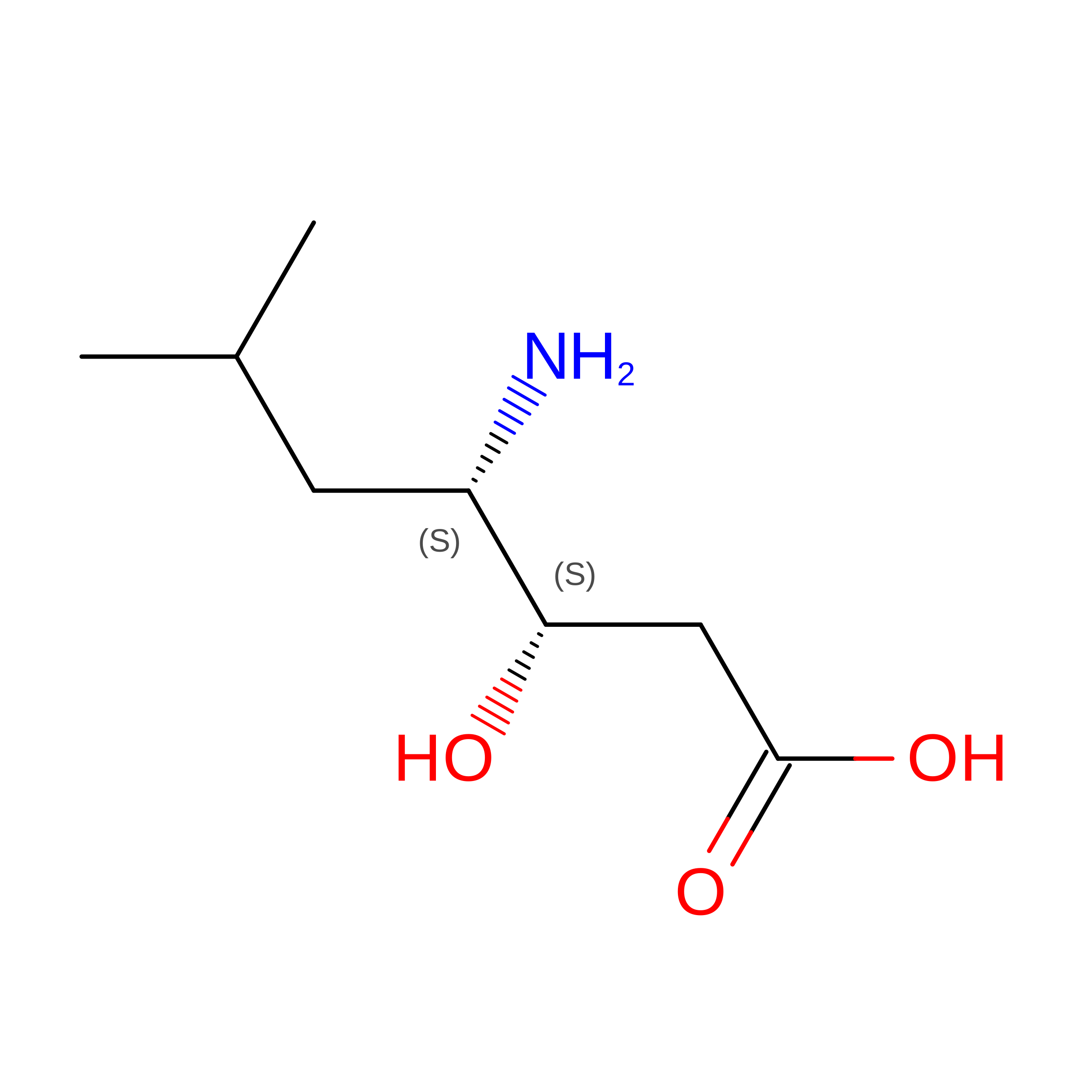
STA
Query on STA
B [auth I]PEPTIDE-LIKEC8 H17 N O3

--

Biologically Interesting Molecules (External Reference) 

1 Unique
Entity ID: 2
IDChains NameType/Class2D Diagram3D Interactions
PRD_000430
Query on PRD_000430
B [auth I]H 189Peptide-like / Inhibitor

Experimental Data & Validation

Experimental Data

  • Method: X-RAY DIFFRACTION
  • Resolution: 0.94 Å
  • R-Value Free:  0.139 (Depositor) 
  • R-Value Observed: 0.116 (Depositor) 
Space Group: P 1 21 1
Unit Cell:
Length ( Å )Angle ( ˚ )
a = 42.477α = 90
b = 75.779β = 95.43
c = 42.987γ = 90
Software Package:
Software NamePurpose
SHELXL-97refinement
MOSFLMdata reduction
SCALAdata scaling

Structure Validation

View Full Validation Report


Entry History 

Deposition Data

Revision History  (Full details and data files)

  • Version 1.0: 2002-07-04
    Type: Initial release
  • Version 1.1: 2011-07-13
    Changes: Atomic model, Database references, Derived calculations, Non-polymer description, Structure summary, Version format compliance
  • Version 1.2: 2013-03-06
    Changes: Other
  • Version 2.0: 2023-11-15
    Changes: Atomic model, Data collection, Database references, Derived calculations, Source and taxonomy