1G13 | pdb_00001g13

HUMAN GM2 ACTIVATOR STRUCTURE


Experimental Data Snapshot

  • Method: X-RAY DIFFRACTION
  • Resolution: 2.00 Å
  • R-Value Free: 
    0.258 (Depositor), 0.264 (DCC) 
  • R-Value Work: 
    0.215 (Depositor), 0.224 (DCC) 

wwPDB Validation 3D Report Full Report

Validation slider image for 1G13

This is version 1.4 of the entry. See complete history

Literature

Crystal structure of human GM2-activator protein with a novel beta-cup topology.

Wright, C.S.Li, S.C.Rastinejad, F.

(2000) J Mol Biology 304: 411-422

  • DOI: https://doi.org/10.1006/jmbi.2000.4225
  • Primary Citation Related Structures: 
    1G13

  • PubMed Abstract: 

    GM2 activator protein (GM2-AP) belongs to a small group of non- enzymatic lysosomal proteins that act as cofactors in the sequential degradation of gangliosides. It has been postulated that GM2-AP extracts single GM2 molecules from membranes and presents them in soluble form to beta-hexosaminidase A for cleavage of N-acetyl-d-galactosamine and conversion to GM3. The high affinity of GM2-AP for GM2 is based on specfic recognition of the oligosaccharide moiety as well as the ceramide lipid tail. Genetic defects in GM2-AP result in an atypical form of Tay-Sachs disease known as variant AB GM2 gangliosidosis. The 2.0 A resolution crystal structure of GM2-AP reported here reveals a previously unobserved fold whose main feature is an eight-stranded cup-shaped anti-parallel beta-pleated sheet. The striking feature of the GM2-AP structure is that it possesses an accessible central hydrophobic cavity rather than a buried hydrophobic core. The dimensions of this cavity (12 Ax14 Ax22 A) are suitable for binding 18-carbon lipid acyl chains. Flexible surface loops and a short alpha-helix decorate the mouth of the beta-cup and may control lipid entry to the cavity.


  • Organizational Affiliation
    • Department of Pharmacology, X-ray Crystallography Laboratory, University of Virginia, Charlottesville, VA 22908-0735, USA. csw2n@virginia.edu

Macromolecule Content 

  • Total Structure Weight: 53.33 kDa 
  • Atom Count: 4,093 
  • Modeled Residue Count: 486 
  • Deposited Residue Count: 486 
  • Unique protein chains: 1

Macromolecules

Find similar proteins by:|  3D Structure
Entity ID: 1
MoleculeChains  Sequence LengthOrganismDetailsImage
GANGLIOSIDE M2 ACTIVATOR PROTEIN
A, B, C
162Homo sapiensMutation(s): 2 
UniProt & NIH Common Fund Data Resources
Find proteins for P17900 (Homo sapiens)
Explore P17900 
Go to UniProtKB:  P17900
PHAROS:  P17900
GTEx:  ENSG00000196743 
Entity Groups
Sequence Clusters30% Identity50% Identity70% Identity90% Identity95% Identity100% Identity
UniProt GroupP17900
Sequence Annotations
Expand
Reference Sequence

Small Molecules

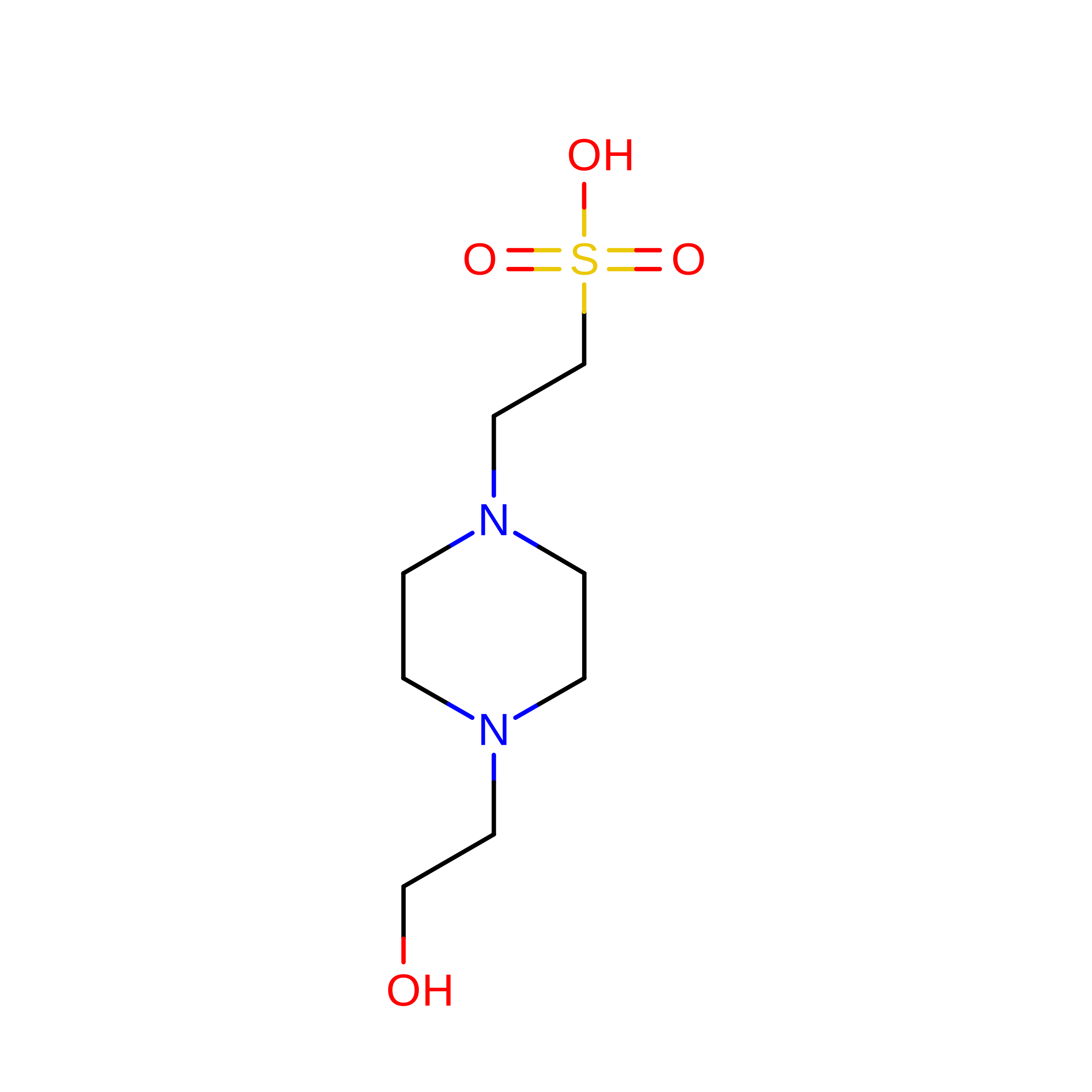
Ligands 1 Unique
IDChains Name / Formula / InChI Key2D Diagram3D Interactions
EPE

Query on EPE


Download:Ideal Coordinates CCD File
D [auth A]4-(2-HYDROXYETHYL)-1-PIPERAZINE ETHANESULFONIC ACID
C8 H18 N2 O4 S
JKMHFZQWWAIEOD-UHFFFAOYSA-N
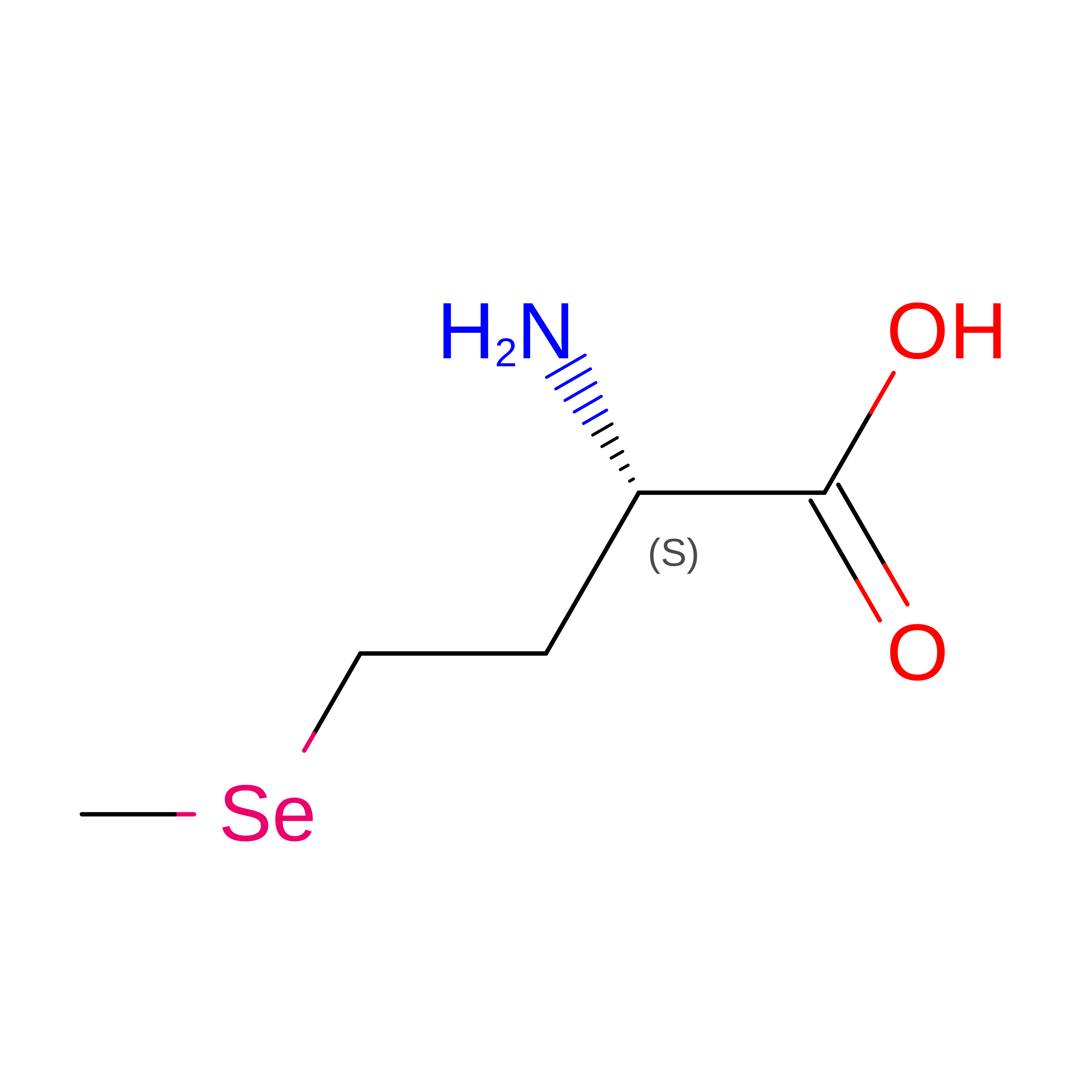
Modified Residues  1 Unique
IDChains TypeFormula2D DiagramParent
MSE
Query on MSE
A, B, C
L-PEPTIDE LINKINGC5 H11 N O2 SeMET

Experimental Data & Validation

Experimental Data

  • Method: X-RAY DIFFRACTION
  • Resolution: 2.00 Å
  • R-Value Free:  0.258 (Depositor), 0.264 (DCC) 
  • R-Value Work:  0.215 (Depositor), 0.224 (DCC) 
Space Group: P 21 21 21
Unit Cell:
Length ( Å )Angle ( ˚ )
a = 63.42α = 90
b = 85.63β = 90
c = 120.07γ = 90
Software Package:
Software NamePurpose
DENZOdata reduction
SCALEPACKdata scaling
SOLVEphasing
CNSrefinement

Structure Validation

View Full Validation Report


Entry History 

Deposition Data

Revision History  (Full details and data files)

  • Version 1.0: 2001-04-11
    Type: Initial release
  • Version 1.1: 2008-04-27
    Changes: Version format compliance
  • Version 1.2: 2011-07-13
    Changes: Version format compliance
  • Version 1.3: 2017-10-11
    Changes: Advisory, Refinement description
  • Version 1.4: 2024-10-30
    Changes: Advisory, Data collection, Database references, Derived calculations, Structure summary