Download Mendeley
Mechanisms of VEGFR2 activation by VEGF, neuropilin, and heparin.
Chen, L., Sun, Z., Qiao, J., Bai, X.C., Zhang, X.(2026) Sci Adv 12: eaeg6323-eaeg6323
- PubMed: 42455955 Search on PubMedSearch on PubMed Central
- DOI: https://doi.org/10.1126/sciadv.aeg6323
- Primary Citation Related Structures:
10RI, 10RJ, 10RK - PubMed Abstract:
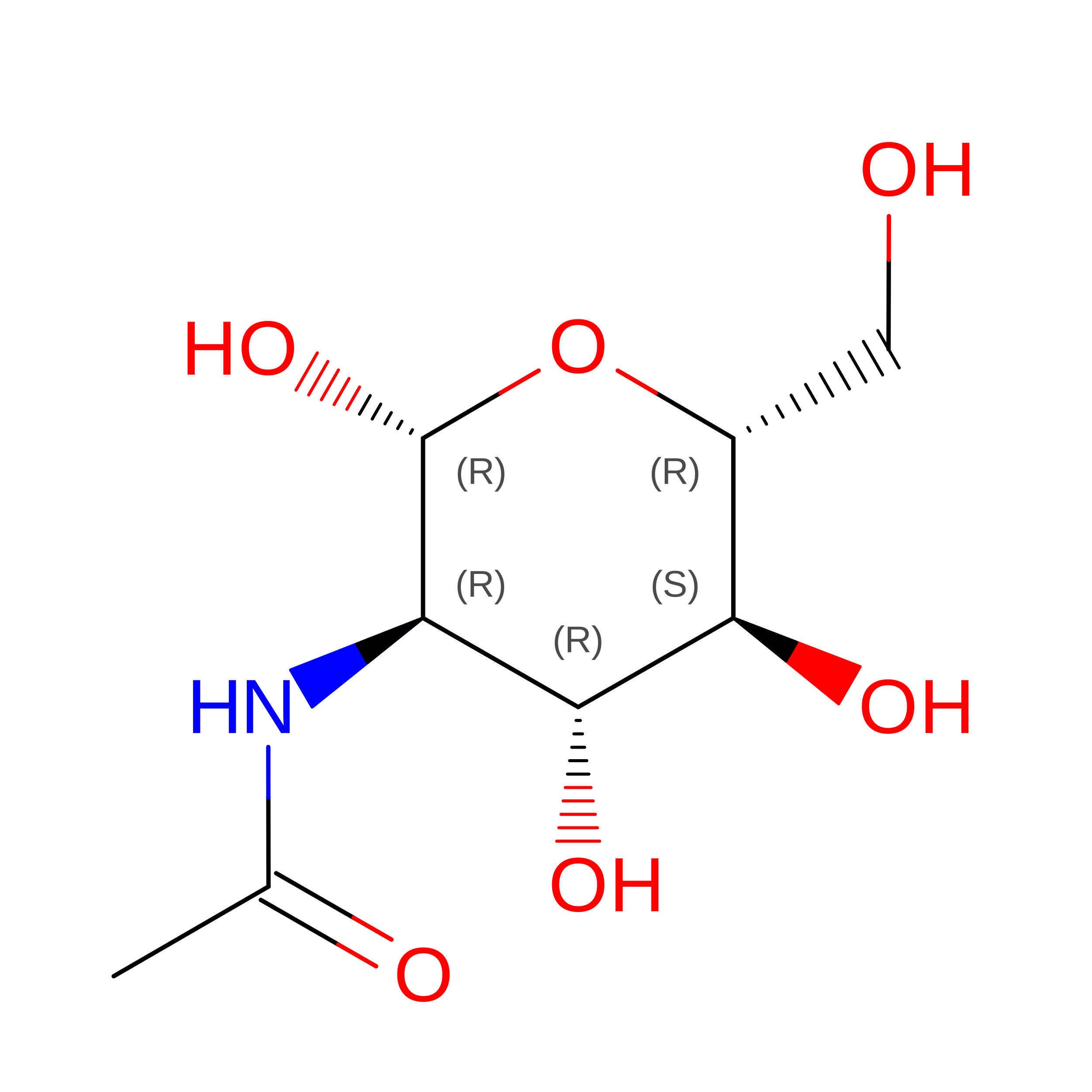
Vascular endothelial growth factor (VEGF) and its receptor VEGFR are master regulators of vasculogenesis and angiogenesis. VEGF activates VEGFR by inducing its dimerization and trans-autophosphorylation. The coreceptor neuropilin (Nrp1 and Nrp2) and heparan sulfate proteoglycan (HSPG) modulate VEGF-VEGFR signaling, but the underlying mechanisms remain incompletely understood. Here we report a cryo-EM structure of the dimeric mouse VEGF 164 -VEGFR2-Nrp1 ectodomain complex with a 2:2:2 stoichiometry, revealing direct Nrp1-VEGFR2 interactions that stabilize the VEGFR2 dimer. We also determined two cryo-EM structures of the VEGF 164 -VEGFR2-Nrp1 complex in the presence of short- or long-chain heparin, which bridges all three proteins and promotes the formation of two distinct tetrameric complexes. Long-chain heparin induces a cis tetrameric complex consistent with receptor clustering on the same cell surface, whereas short-chain heparin promotes a trans tetrameric assembly which might be formed by two dimeric complexes from opposing cells. Our structure-based mutational analyses support the model that both the Nrp1-VEGFR2 interface and the heparin-mediated clustering enhance VEGFR2 signaling.
- Department of Pharmacology, University of Texas Southwestern Medical Center, Dallas, TX, USA.
Organizational Affiliation: