Download Mendeley
Structural basis of phosphodiesterase-5 conformational organization revealed by a PDE6/PDE5 chimera.
Srivastava, D., Singh, S., Yu, C., Boyd, K., Artemyev, N.O.(2026) J Biol Chem 302: 111467-111467
- PubMed: 42001945 Search on PubMedSearch on PubMed Central
- DOI: https://doi.org/10.1016/j.jbc.2026.111467
- Primary Citation Related Structures:
10OZ - PubMed Abstract:
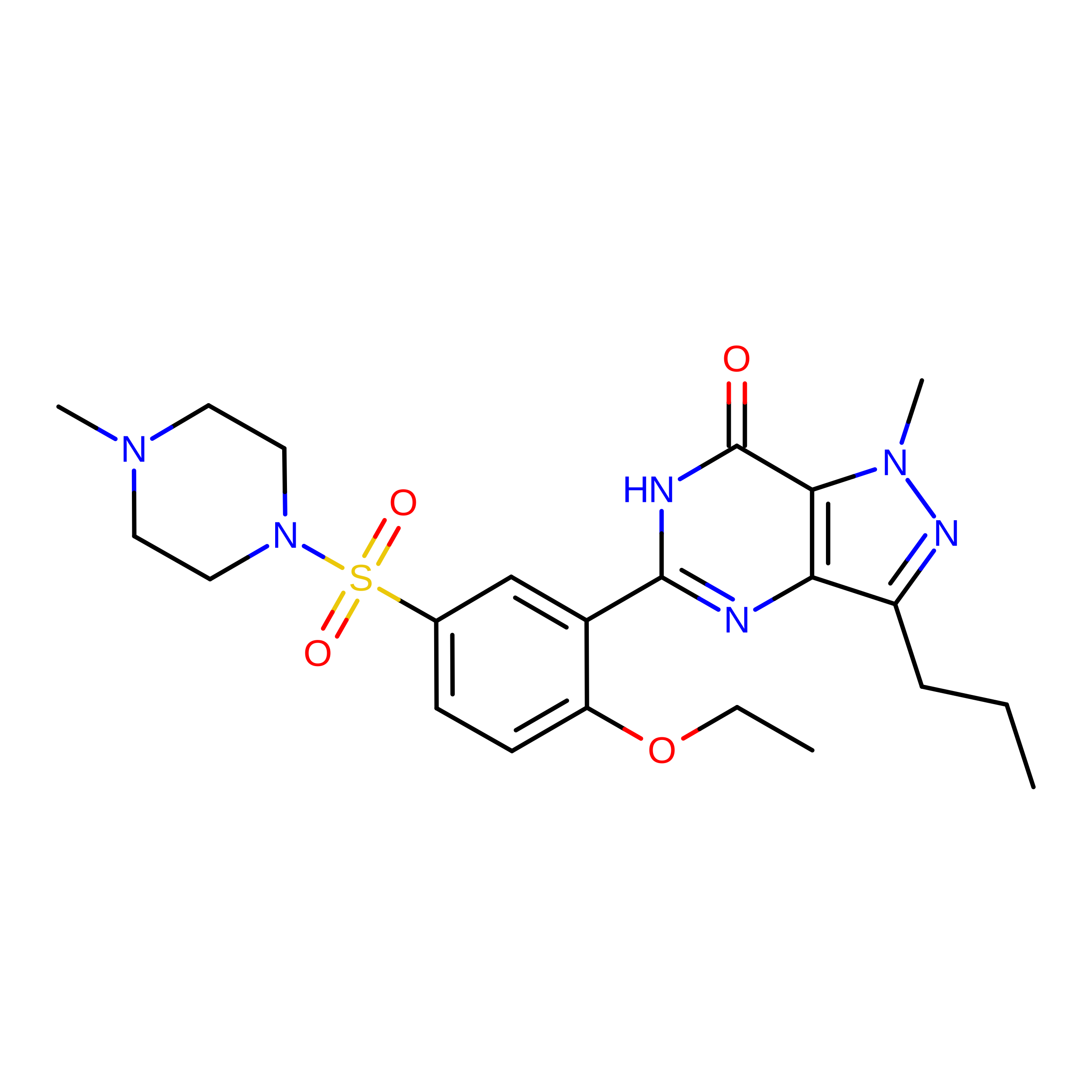
Phosphodiesterase 5 (PDE5) plays a critical role in the nitric oxide-cGMP signaling pathway. Consequently, PDE5 catalytic site inhibitors are widely used in the treatment of erectile dysfunction and pulmonary arterial hypertension. Despite a wealth of structural data on the individual PDE5 catalytic domain with bound drug molecules, understanding of the structural organization of the full-length enzyme and its allosteric activation by noncatalytic cGMP-binding is lacking. To begin to understand the structural organization of PDE5, we solved a cryo-EM structure of a chimeric PDE enzyme (PDE6C/5) comprised of the regulatory domains of cone PDE6C and the PDE5 catalytic domain. The PDE6C/5 structure revealed the protein in the open state conformation similar to that of PDE6, suggesting a comparable conformation for the cGMP-bound PDE5 molecule. The H- and M-loops outlying the catalytic pocket, which are conformationally variable in the structures of the isolated PDE5 catalytic domain, are immobilized in the PDE6/5 chimera via the interaction of the H-loop with a linker helix LH2. Decreased dynamics of these loops may underlie the higher catalytic activities of the full-length PDE5 and PDE6C/5 compared to those of the isolated PDE5 catalytic domain. Furthermore, the PDE6C/5 structure defines the folding requirement of the PDE6 catalytic domain for chaperone-dependent maturation that is important for vision.
- Department of Molecular Physiology and Biophysics, The University of Iowa Carver College of Medicine, Iowa City, Iowa, USA.
Organizational Affiliation: