Download Mendeley
Optimization of Covalent Warhead Trajectory for KRAS G12C Active-State Inhibition.
Condakes, M.L., Civiello, R.L., Lakkaraju, S.K., Sloane, J.L., Chourb, L.S., Downes, D.P., Drexler, D.M., Dzhekieva, L., El-Samin, M., Levins, C., Meyer, M.J., Mosure, K., Parker, M.F., Qi, J., Ruzanov, M., Sheriff, S., Stedman, J., Szapiel, N., Thompson, R.L., Zhang, Z., Zhuo, X., Stewart, M.L., Bronson, J.J.(2026) J Med Chem 69: 5925-5934
- PubMed: 41769786 Search on PubMed
- DOI: https://doi.org/10.1021/acs.jmedchem.5c03306
- Primary Citation Related Structures:
10JT - PubMed Abstract:
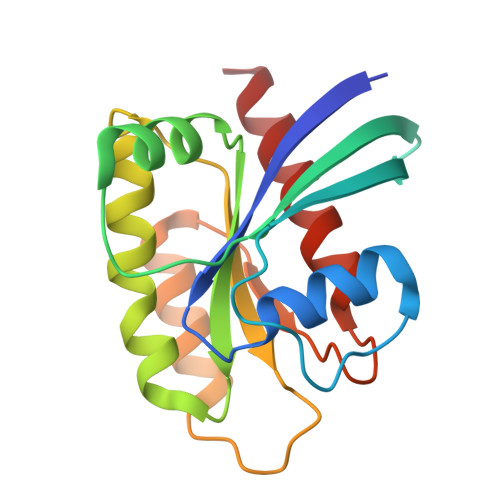
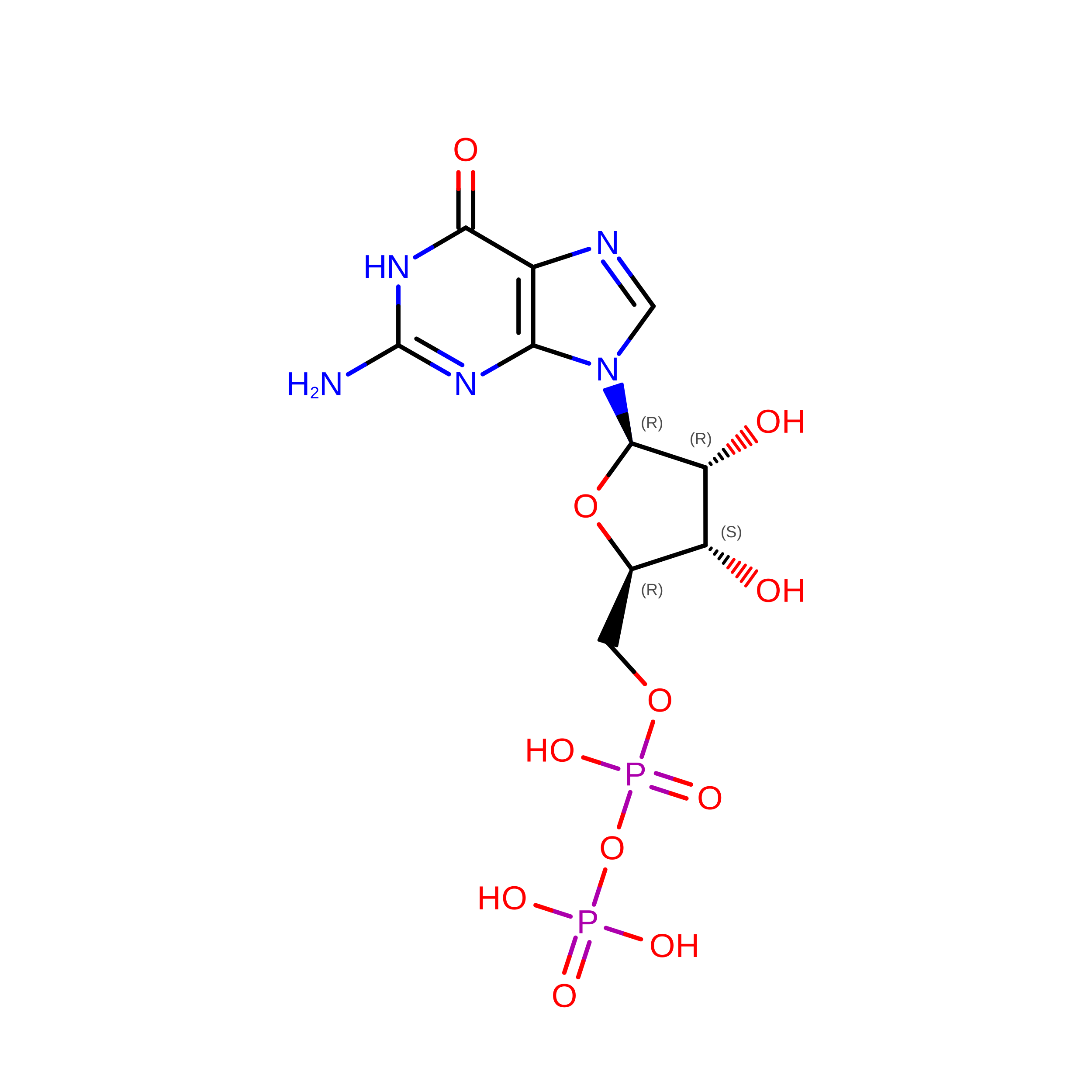
We describe here the impact of the covalent warhead trajectory on biochemical active-state potency, covalent kinetics, cellular potency, and pharmacokinetic parameters for KRAS G12C inhibitors. Using structure-based design augmented with computational models, trajectories were identified that successfully enhanced compound potency without requiring any additional optimization of the parent scaffold. In contrast to the trajectories of approved and clinical-stage KRAS G12C inactive state-selective inhibitors, which largely consist of a collinear arrangement of the core, (di)amine linker, and covalent warhead, these trajectories were characterized by an angled disposition of the covalent warhead. A cocrystal structure implicated an increased distance from the bound nucleotide of KRAS G12C as the basis for this increase in potency, suggesting a general design principle for targeting the active state of KRAS.
- Bristol Myers Squibb, 250 Water St., Cambridge, Massachusetts 02446, United States.
Organizational Affiliation: