Download Mendeley
Degron-independent recruitment of KAT2A expands the target space of CRBN molecular glues.
Ojeda, S., Wang, M., Baek, K., Bourgeois, W., Sommerschield, A., Yue, H., Metivier, R.J., Karagiannis, P., Levitz, T.S., Xiong, Y., Donovan, K.A., Armstrong, S.A., Fischer, E.S.(2026) Science 393: 188-194
- PubMed: 42424456 Search on PubMedSearch on PubMed Central
- DOI: https://doi.org/10.1126/science.aef5391
- Primary Citation Related Structures:
10DW - PubMed Abstract:
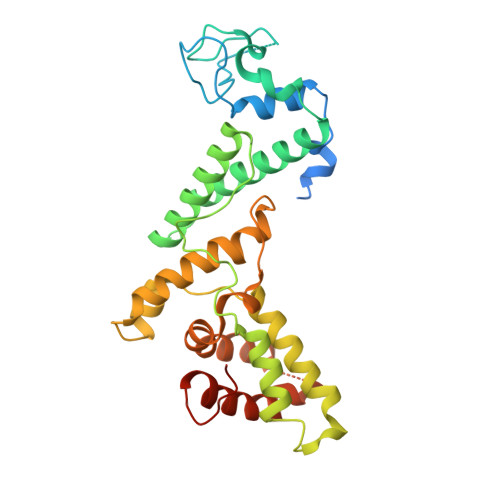
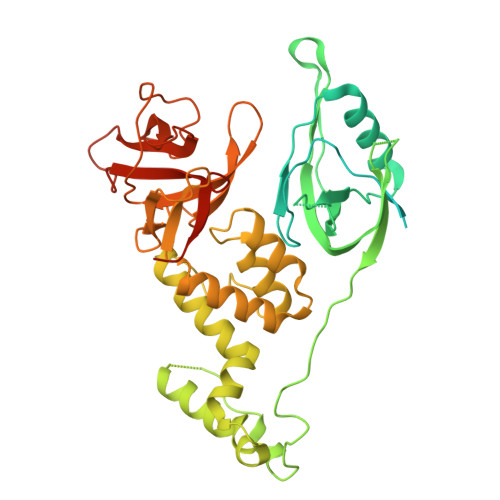
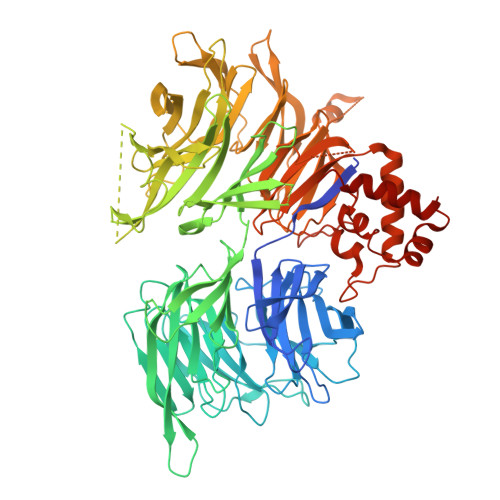
Lysine acetyltransferases (KATs) cooperate with oncogenes such as c-Myc, estrogen receptor, and lysine methyltransferase 2A (KMT2A) fusions to sustain malignant programs. Targeting of KAT proteins has shown clinical efficacy; however, achieving homolog selectivity for most KATs remains a major challenge. By extending cereblon (CRBN)-based molecular glues beyond the canonical degron space, we developed an exquisitely selective degrader of KAT2A. Cryo-electron microscopy revealed that CRBN recruits KAT2A independently of a degron; instead, the molecular glue engages a surface-exposed tyrosine, mimicking antibody-like molecular recognition. Selective KAT2A degradation leads to potent ablation of histone H3 lysine 9 acetylation (H3K9Ac), antiproliferative effects in acute myeloid leukemia cell lines, and in vivo efficacy in a patient-derived xenograft model, establishing KAT2A as a targetable vulnerability to treat a wide range of malignancies. More generally, degron-independent recruitment extends the CRBN-targetable proteome.
- Department of Cancer Biology, Dana-Farber Cancer Institute, Boston, MA, USA.
Organizational Affiliation: